Technology kept in order. Promote your business. Apps made for you. Automate your work with AI One partner
Talk to usTogether, we agree services, priorities and support times to suit your business. Learn more.
Get tools to the work site.
Track how an area changes over time.
Compare lines and construction sites weeks apart.
 Yacon
Technology kept in order. Promote your business. Apps made for you. Automate your work with AI One partner
Talk to usTogether, we agree services, priorities and support times to suit your business. Learn more.
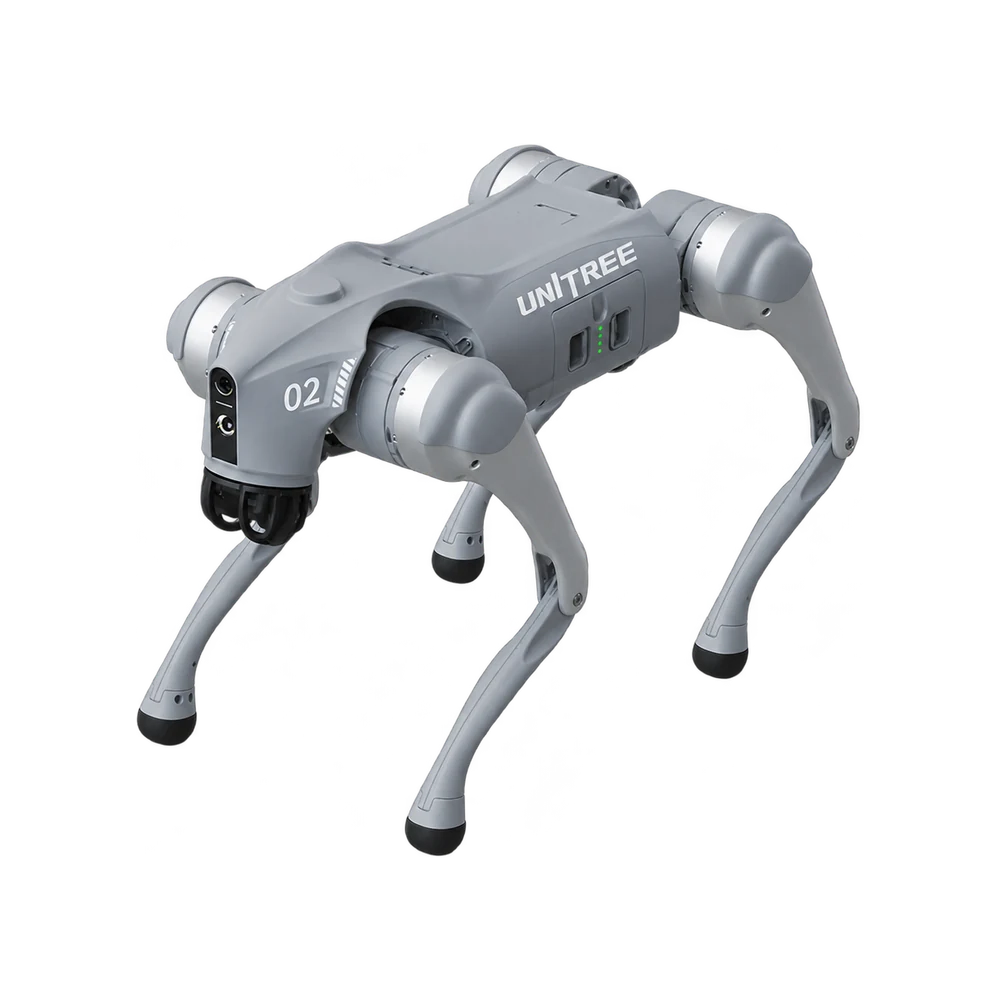
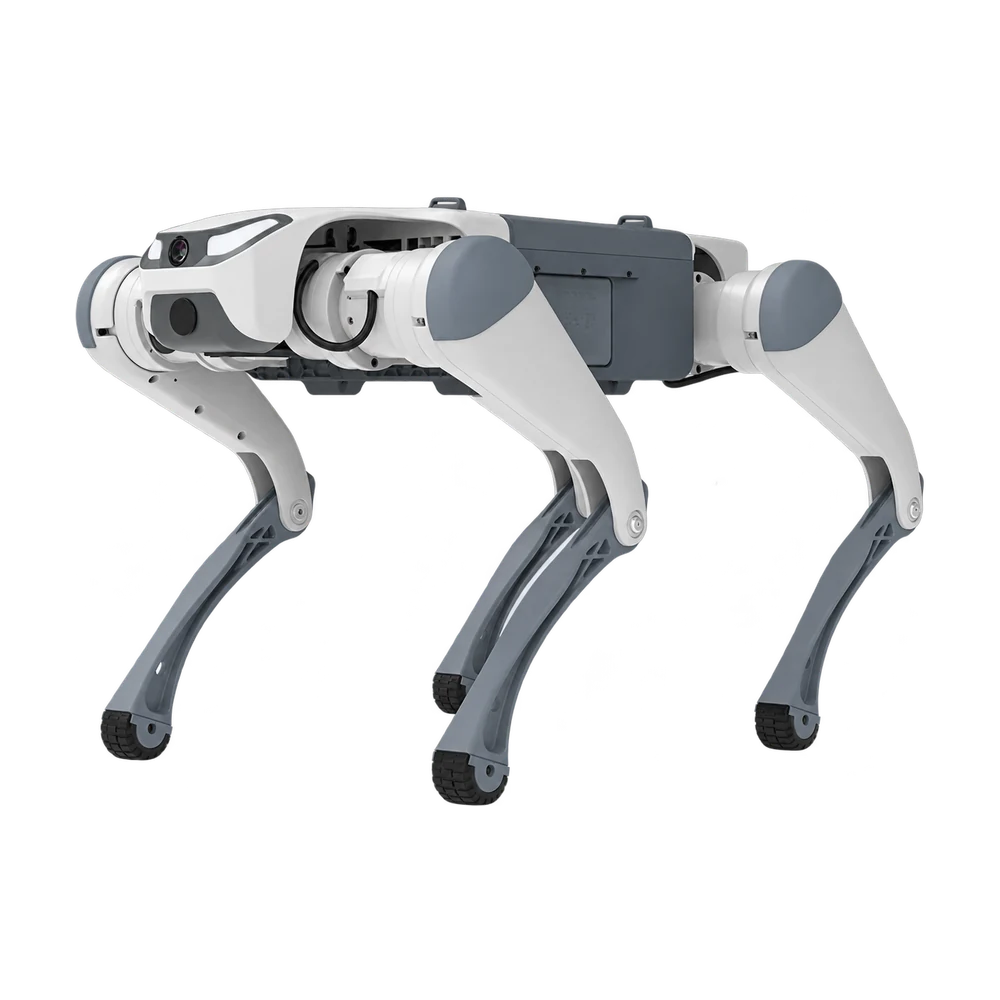
Unitree’s entry-level quadruped is agile, connected and ready for demonstrations, education and prototyping, with artificial intelligence and ultra-wide lidar. Its compact format brings legged robotics into classrooms, labs and exhibition spaces. Drive it from the app and view live footage from its camera. The EDU version opens the platform to custom application development for schools, universities and robotics labs.
The standard L2 lidar covers a full 360° horizontally, detecting obstacles to either side as the robot walks.
Leg control lets it change gait between floors, gravel and ramps. These surfaces are useful for comparing foot placement.
The wide-angle HD camera shows the route from the quadruped’s perspective. Use the images to review a test.
With the battery fitted, the robot weighs around 15 kg. Allow for that weight when moving it to the test site.
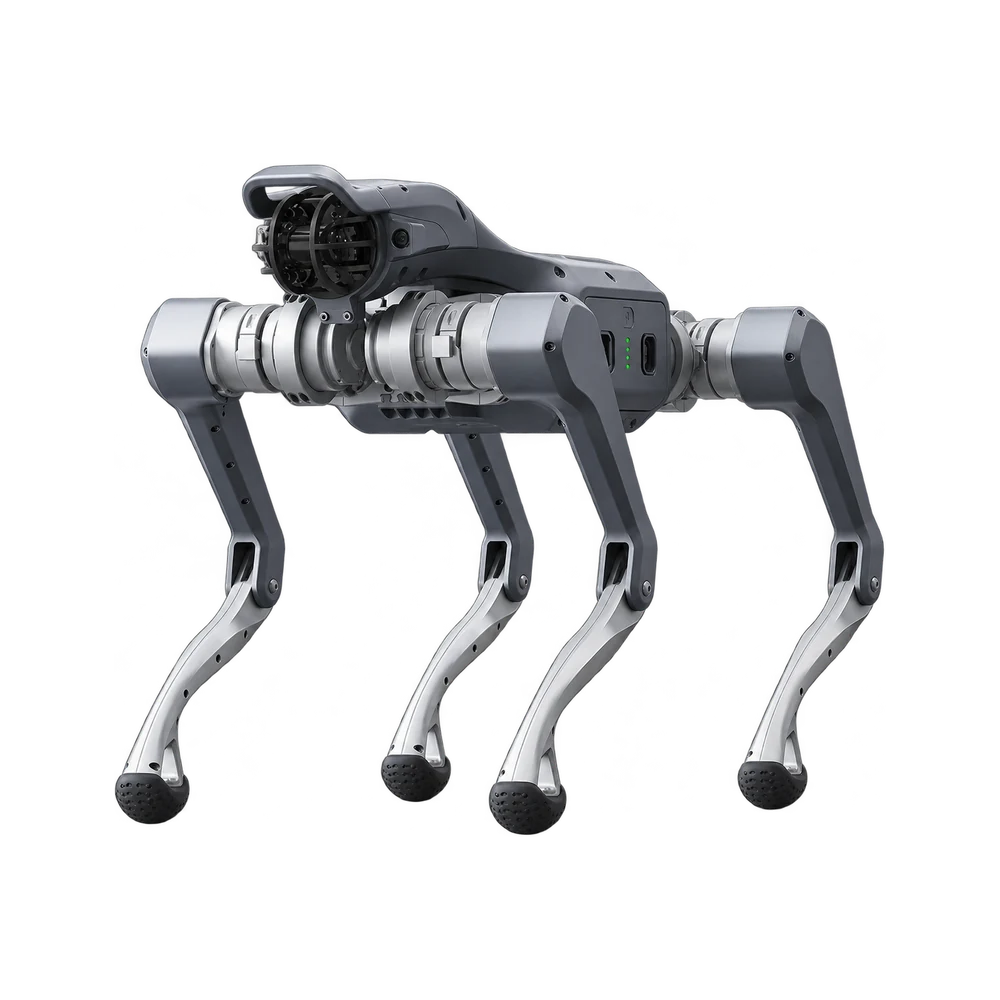
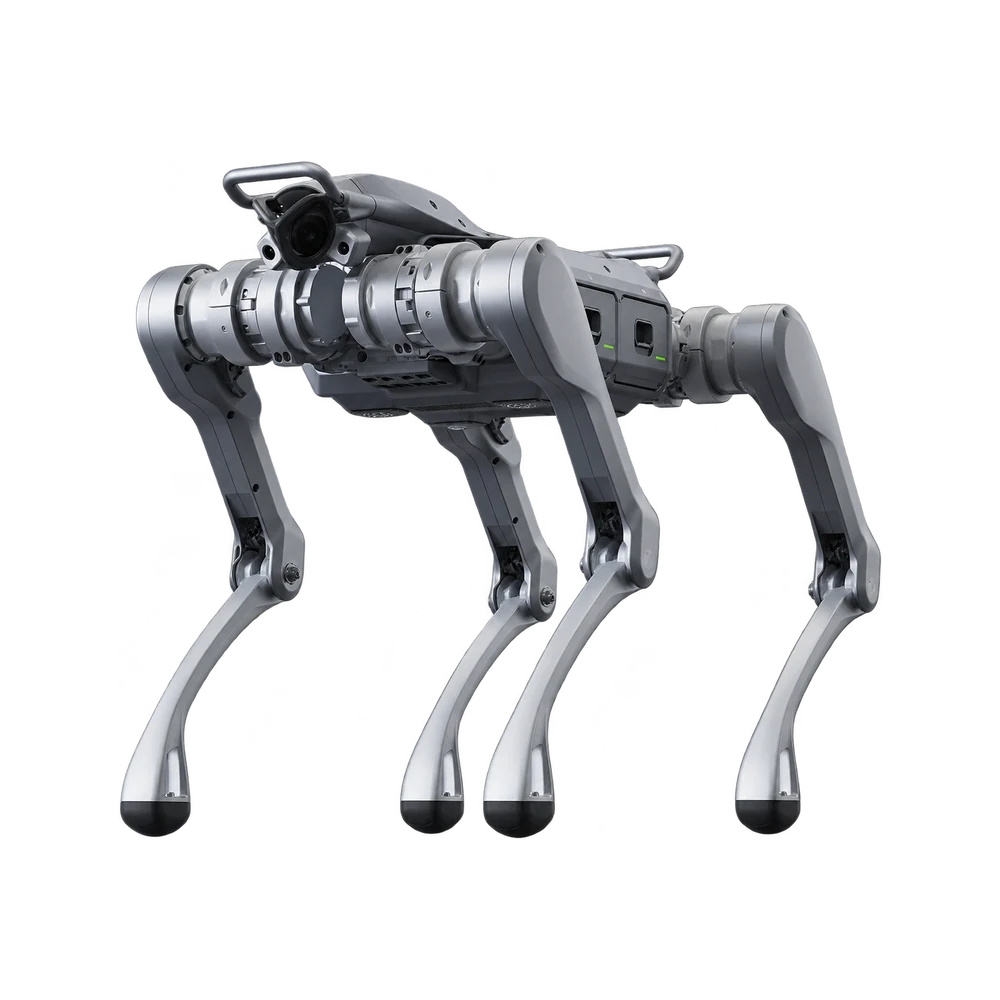
The As2 brings load-carrying capability and mobility on stairs and slopes to a compact quadruped weighing around 20 kg. It suits field teams transporting instruments and labs looking for an agile mobile robotics platform. Payload capacity varies across the range. Pro, X and EDU add ISS 3.0 side following, useful when a technician needs both hands for the job.
For continuous walking, Unitree rates Air at about 10 kg, Pro at 13 kg and X and EDU at 15 kg. Choose the variant to match the instruments you carry.
Twelve motors drive the four legs. The joints share movement between hip and knee as the terrain changes.
Pro, X and EDU have IP54-rated enclosures. Unitree does not specify this rating for Air.
With the battery fitted, the robot weighs around 20 kg. Allow for that weight when moving it to the test site.
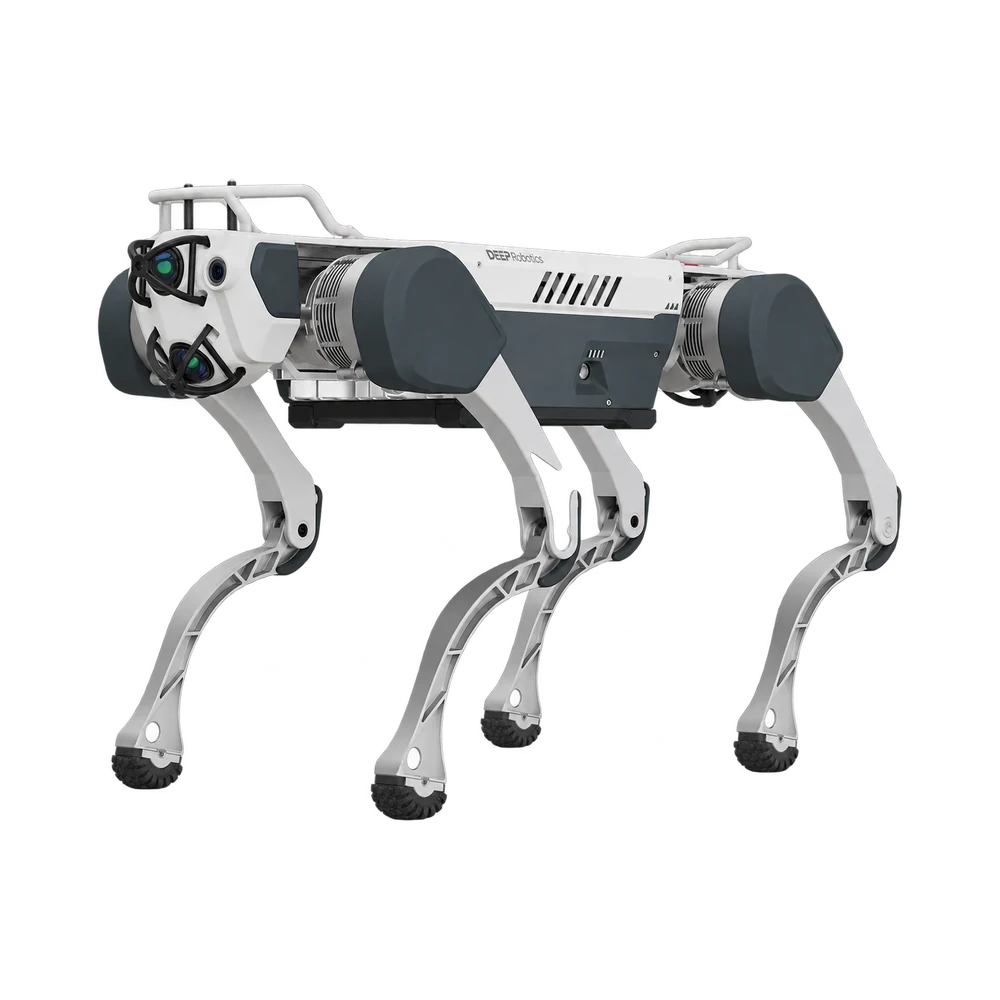
The X30 is DEEP Robotics’ industrial quadruped for inspection, surveying and mapping in facilities that are difficult to traverse. Integrated perception supports navigation in darkness and under flickering lights. Its mobility covers industrial stairs, walkways and changes in level. For plant operators and integrators, this combination extends inspection rounds to technical areas spread across several floors.
It climbs and descends industrial stairs. DEEP Robotics reports an incline of up to 45° in its tests.
It combines sensor readings to navigate without light. It can also continue through areas with flickering lighting.
The IP67 rating describes how the enclosure protects against dust and water. Compare it with the conditions along your route.
The battery pulls out for a quick change. Keep a charged spare ready for the next test.
The B2 is a heavy-duty industrial quadruped for equipment transport and plant inspection. It carries over 40 kg during continuous walking, providing capacity for sensors, onboard computers and application-specific instruments. Its four legs retain access to stairs and uneven sections on service routes. Unitree offers autonomous charging as an option for installations with recurring missions.
Unitree specifies over 40 kg of payload during continuous walking. Compare this figure with the weight of instruments mounted on the back.
The manufacturer specifies steps of 20–25 cm for a continuous flight of stairs. Use this figure to assess the stairways on site.
The battery can be changed quickly by hand. Unitree also offers an optional autonomous charging system for repeated rounds.
The IP67 rating describes how the enclosure protects against dust and water. Compare it with the conditions along your route.
Lite3 is DEEP Robotics’ family of quadrupeds for teaching and locomotion research. Its compact body and first-person view make movement easy to follow for both the operator and a demonstration audience. From Basic to Venture, Pro and LIDAR configurations, the range serves schools and labs working from introductory robotics through to laser-based perception projects.
The Basic version can stop at an obstacle when moving forward or backward. Compare its response in both directions.
The manufacturer specifies steps of 18 cm for a continuous flight of stairs. Use this figure to assess the stairways on site.
The first-person view streams images from the robot. In class, watch the same test from outside and from the quadruped’s perspective.
The family includes Basic, Venture, Pro and LIDAR. The dedicated LIDAR version is intended for laser scanning experiments.
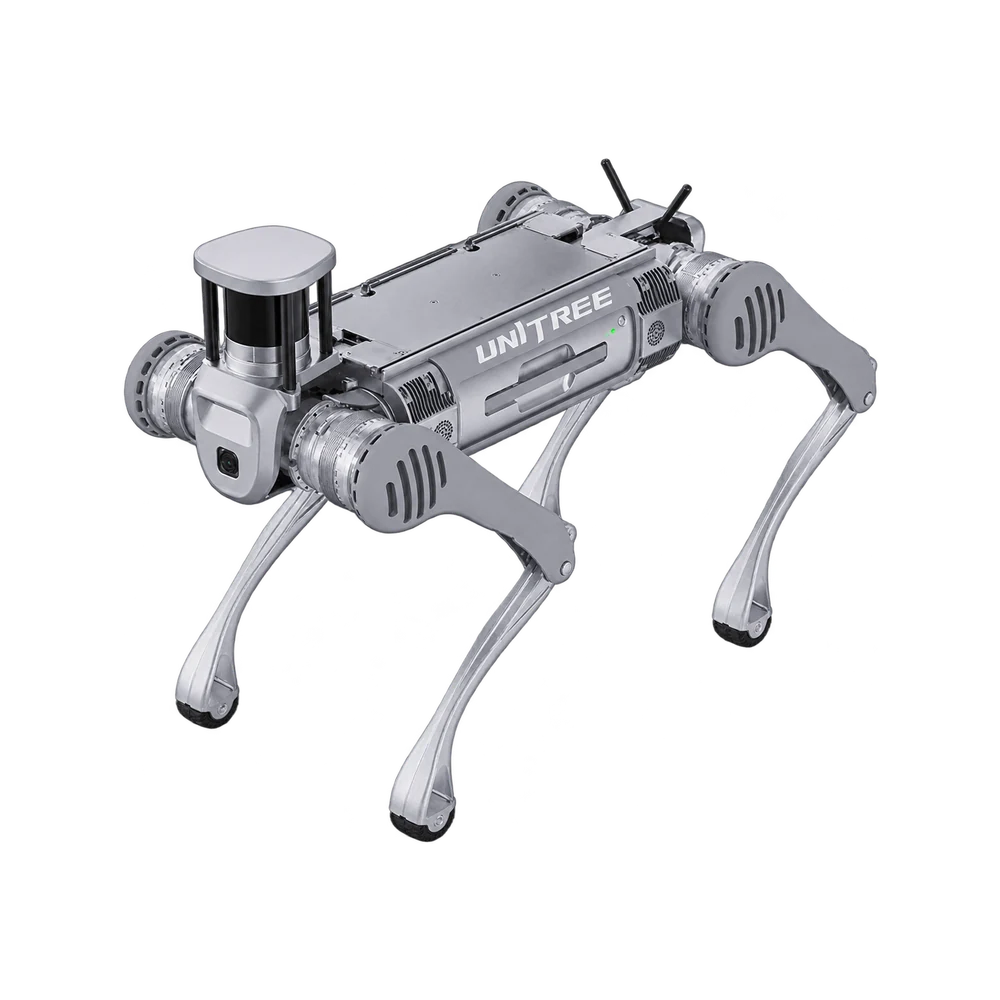
The A2 is Unitree’s quadruped platform for integrators and inspection teams taking measuring instruments across rough terrain. Power and communication interfaces accommodate application-specific equipment, and twin battery slots support extended survey rounds. The standard version combines lidar and an HD camera. Pro adds a second industrial lidar for rear coverage.
The base version pairs a lidar with an HD camera. The Pro adds rear lidar to sense the space behind the robot.
Two battery slots supply power in parallel. Change one battery while the other keeps the system running.
With the battery fitted, the robot weighs around 42 kg. Allow for that weight when moving it to the test site.
The IP56 rating describes how the enclosure protects against dust and water. Compare it with the conditions along your route.
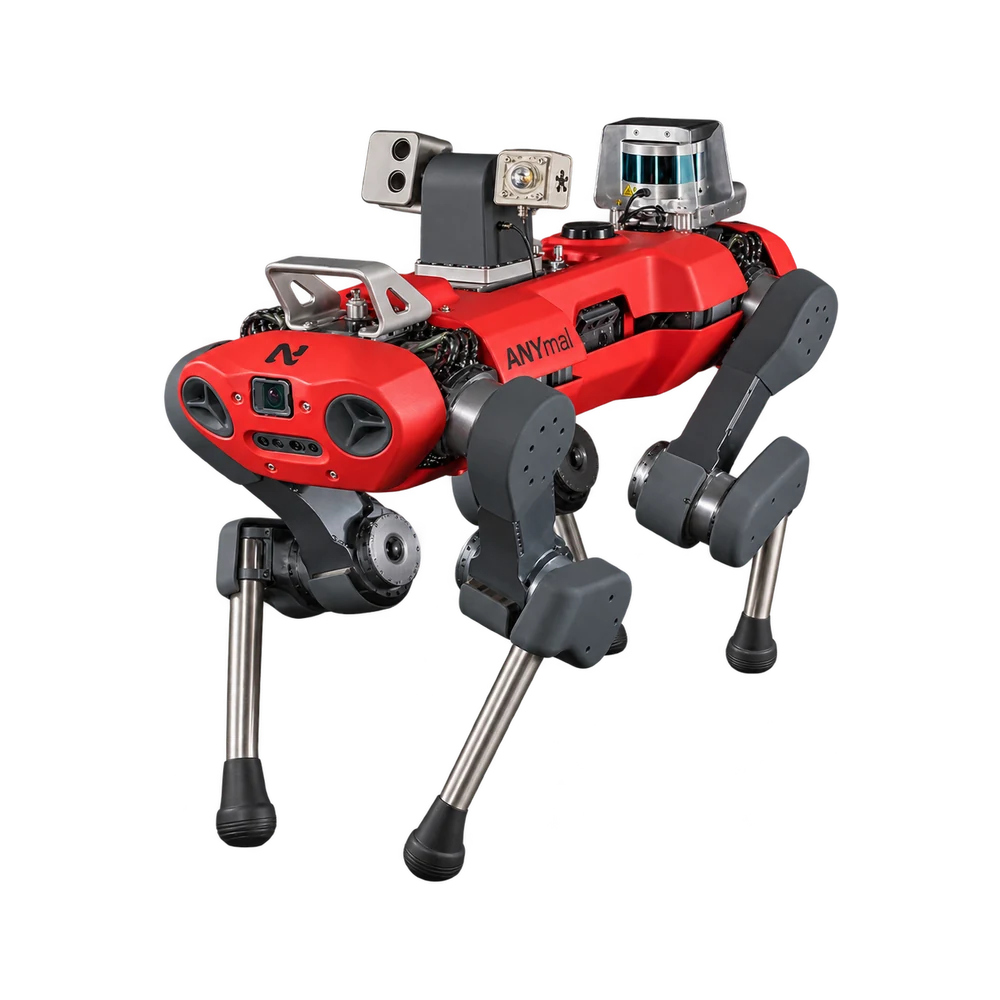
ANYmal is an autonomous inspection solution for plant maintenance and reliability teams. The quadruped combines multi-level mobility with a built-in inspection suite for visual and thermal images and acoustic recordings. ANYbotics’ operations platform connects mission planning with field findings. Maintenance teams can review readings from each machine and identify equipment that needs attention.
The 20× optical zoom brings a dial closer in the image. Read an instrument even when the robot must stop at a distance.
The thermal camera measures from −40 to 550 °C without contact. Compare the same motor’s temperature over successive rounds.
The microphone records audible and ultrasonic frequencies. Pair the sound of a pump with images taken at the same inspection point.
For leak checks you can add an acoustic imager or gas concentration sensors, depending on the measurement required.
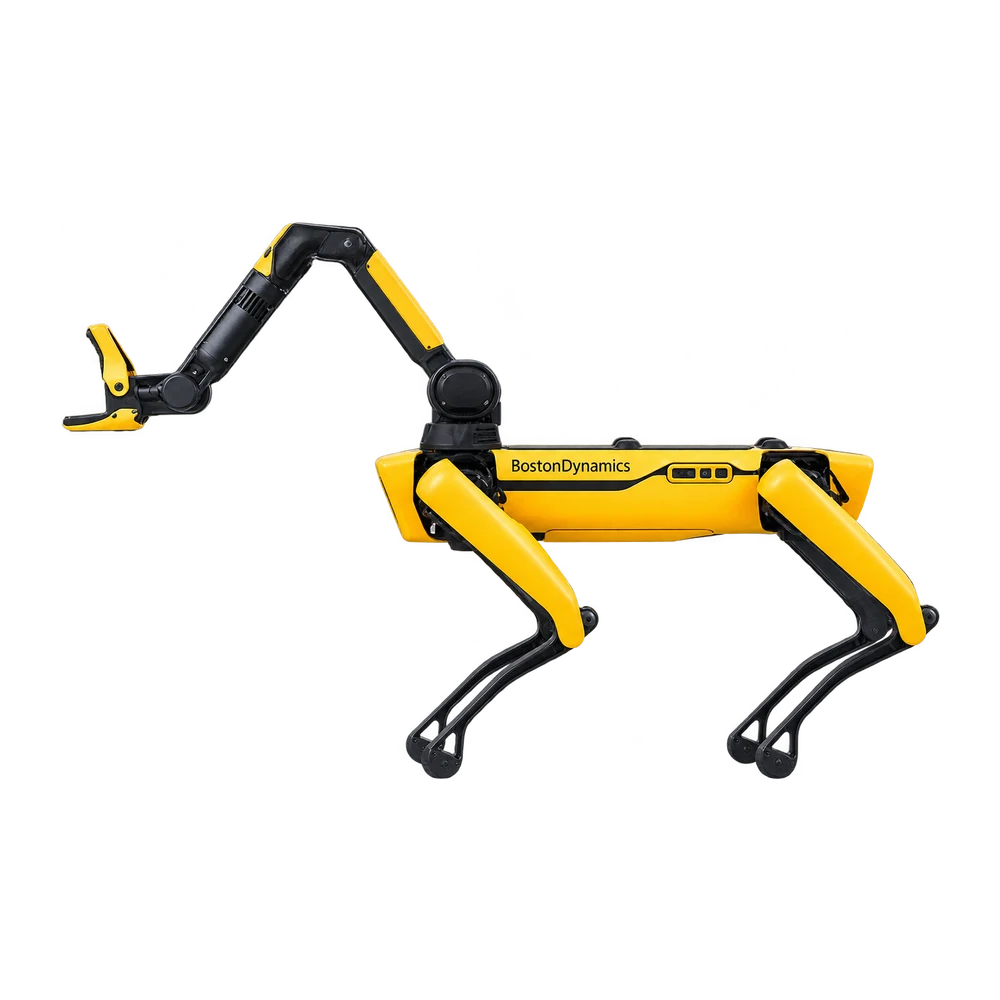
Spot brings mobile robotics into facilities built for people, from corridors to stairs between departments. It is a configurable platform for industrial operators, integrators and researchers collecting data beyond the reach of wheeled bases. The same robot can carry dedicated sensors or the optional Spot Arm. Orbit software complements the offering for organisations managing missions and reviewing inspection results remotely.
Drive the initial round and then use an autonomous mission to revisit checkpoints on later inspections.
Back mounts accept sensors and computing modules. Choose the configuration to match the data you need on the round.
Adding the Spot Arm lets the robot grasp objects. It is an accessory for missions that require physical intervention on site.
Boston Dynamics quotes an average runtime of 90 minutes. Mounted equipment and environmental conditions affect how long a round can last.
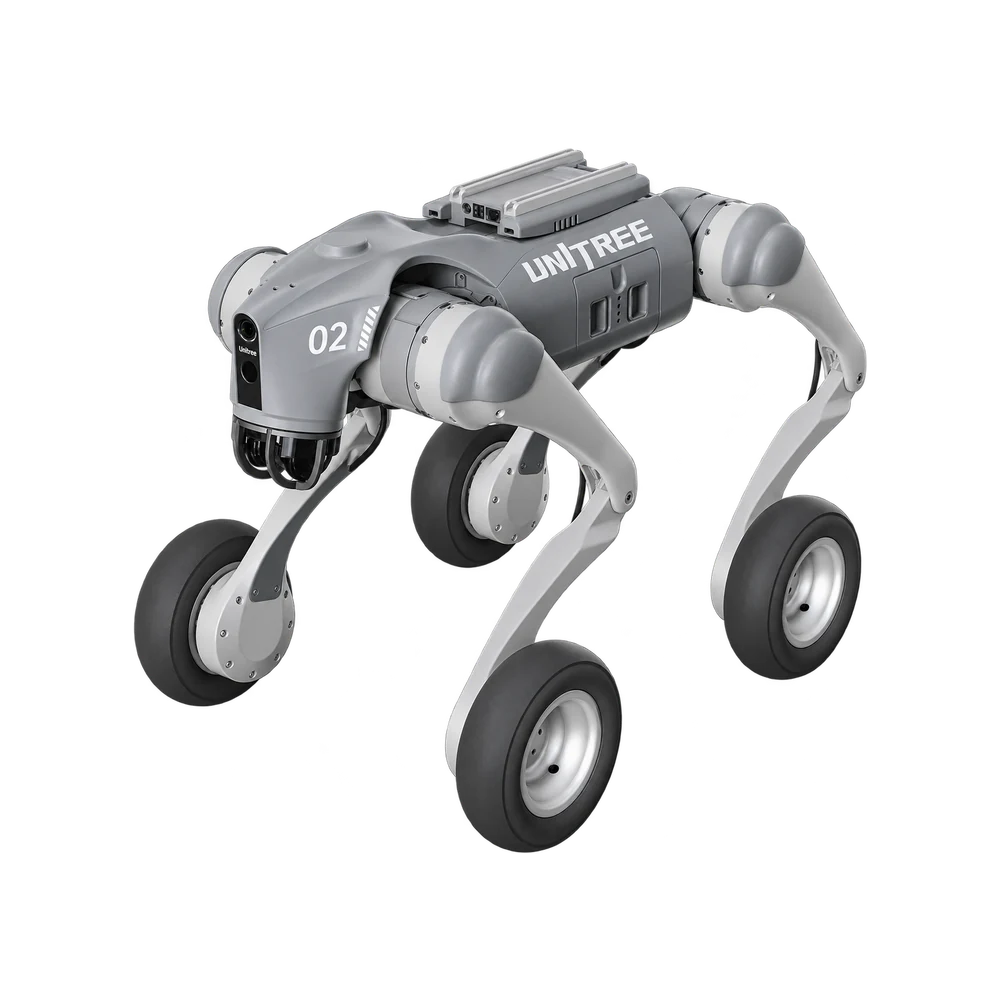
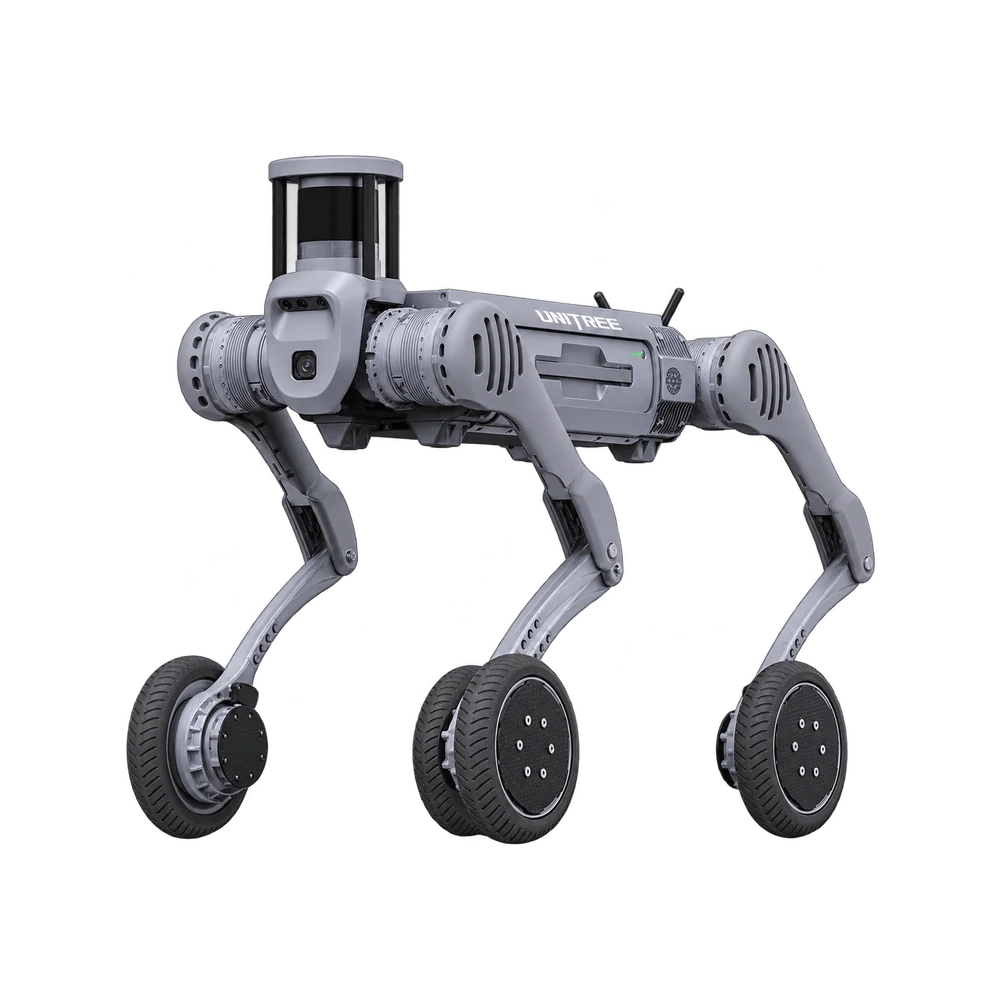
The Go2-W combines the compact Go2 format with the mobility of a four-wheel-drive platform. It serves mobile robotics labs and development teams interested in the transition between rolling, obstacle crossing and stair climbing. Lidar and a camera are integrated, and the platform supports custom application development. Wheels and articulated legs extend its working range beyond level surfaces.
Each wheel has a hub motor and a 7-inch pneumatic tyre. The robot can cross level ground without lifting each leg.
Wide-angle lidar and an HD camera sense the scene while travelling. Compare the distance to an obstacle with its appearance in the image.
Unitree specifies around 8 kg of payload, with a maximum of about 12 kg. Use the first figure to size the equipment you carry.
With the battery fitted, the robot weighs around 18 kg. Allow for that weight when moving it to the test site.
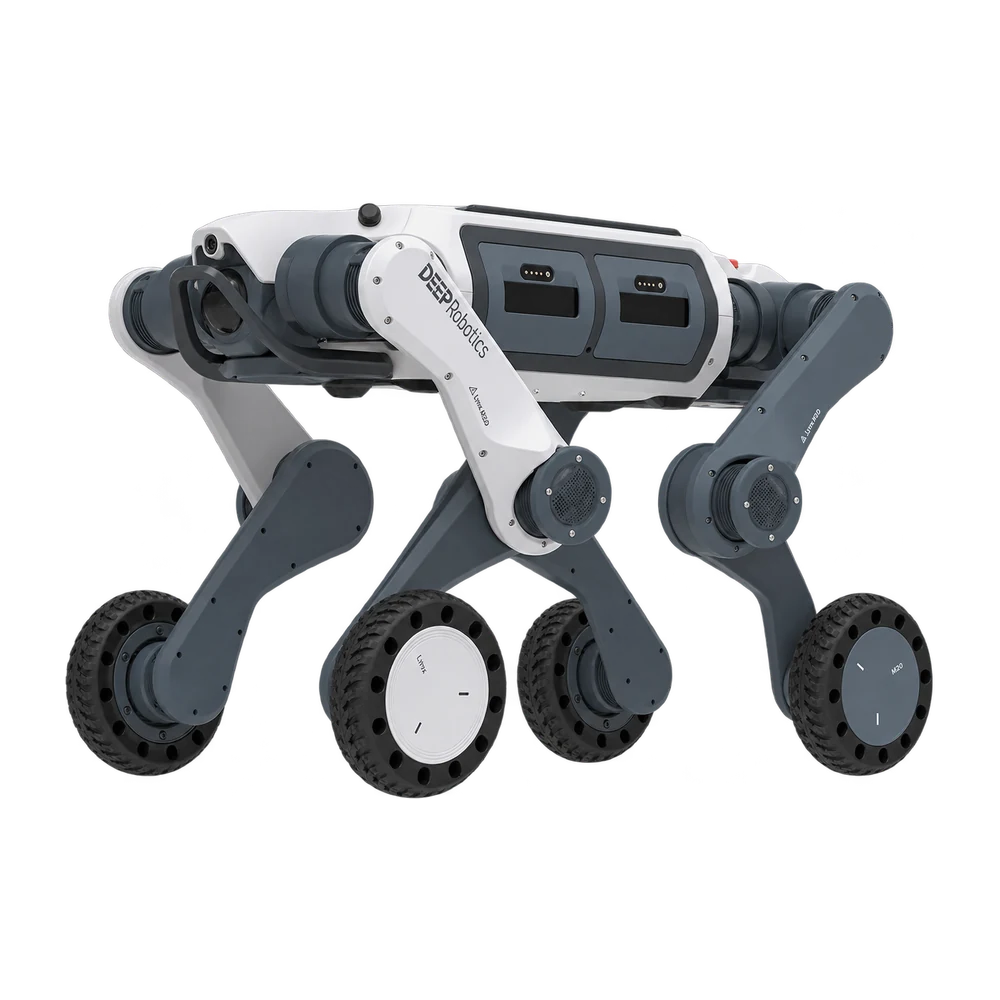
The LYNX M20 is an industrial wheel-legged robot for large-site inspection and field data collection. It rolls between assets while retaining the ability to cross steps and broken ground. DEEP Robotics documents deployment in electrical substations, where checkpoints are spread across several routes. Optional autonomous charging is available for operators scheduling regular rounds.
The wheels cover continuous stretches of a substation. At a change in level, the four legs adjust their footing to cross it.
The manufacturer specifies a 15 kg payload for the M20. This includes the instruments mounted on the robot for the round.
Front and rear lights illuminate both directions of travel. The route stays visible when the robot retraces its steps.
The IP66 rating describes how the enclosure protects against dust and water. Compare it with the conditions along your route.
The As2-W is a compact wheeled quadruped for carrying supplies alongside a person. ISS 3.0 side following lets it accompany an operator, a feature for teams travelling with tools and supplies. Seven-inch wheels handle transfers along tracks, while articulated legs negotiate gravel and changes in level. It is the As2 family’s option for mobile outdoor work.
The ISS 3.0 system follows a person from the side. The robot can accompany you with supplies along an outdoor track.
Seven-inch wheels carry it over regular surfaces. Its articulated legs change position for stairs or gravel.
The battery stores 648 Wh. Actual running time depends on the load and the movements required during the test.
The IP54 rating describes how the enclosure protects against dust and water. Compare it with the conditions along your route.
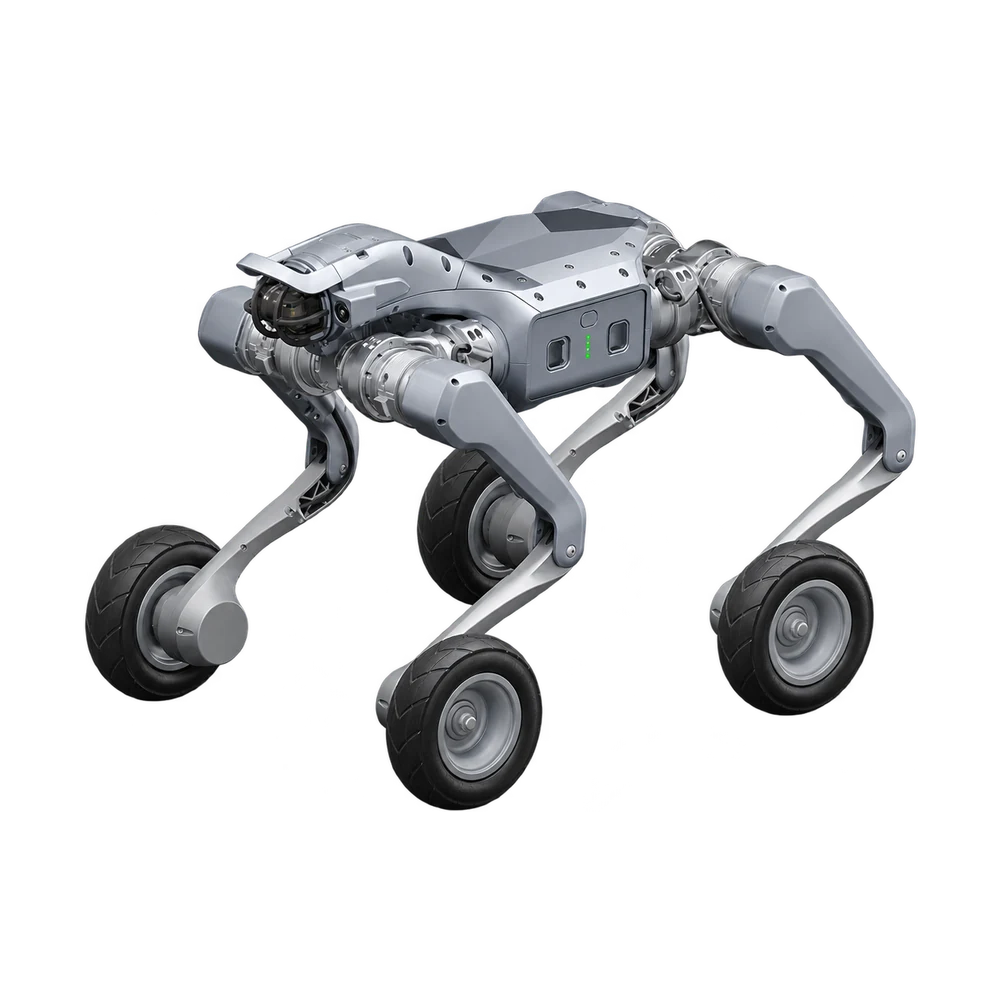
The A2-W brings the industrial A2 platform to routes between buildings, yards and production departments. Wheel drive covers the transfer sections and articulated legs retain access across thresholds and uneven ground. It serves integrators of inspection and site logistics solutions. Hot-swappable batteries and different lidar configurations support facilities with different routes and service schedules.
Wheel motors move the load along paved sections. Articulated legs can still reposition the wheels when the ground changes level.
Two battery slots supply power in parallel. Change one battery while the other keeps the system running.
The base version pairs a lidar with an HD camera. The Pro adds rear lidar to sense the space behind the robot.
The IP56 rating describes how the enclosure protects against dust and water. Compare it with the conditions along your route.
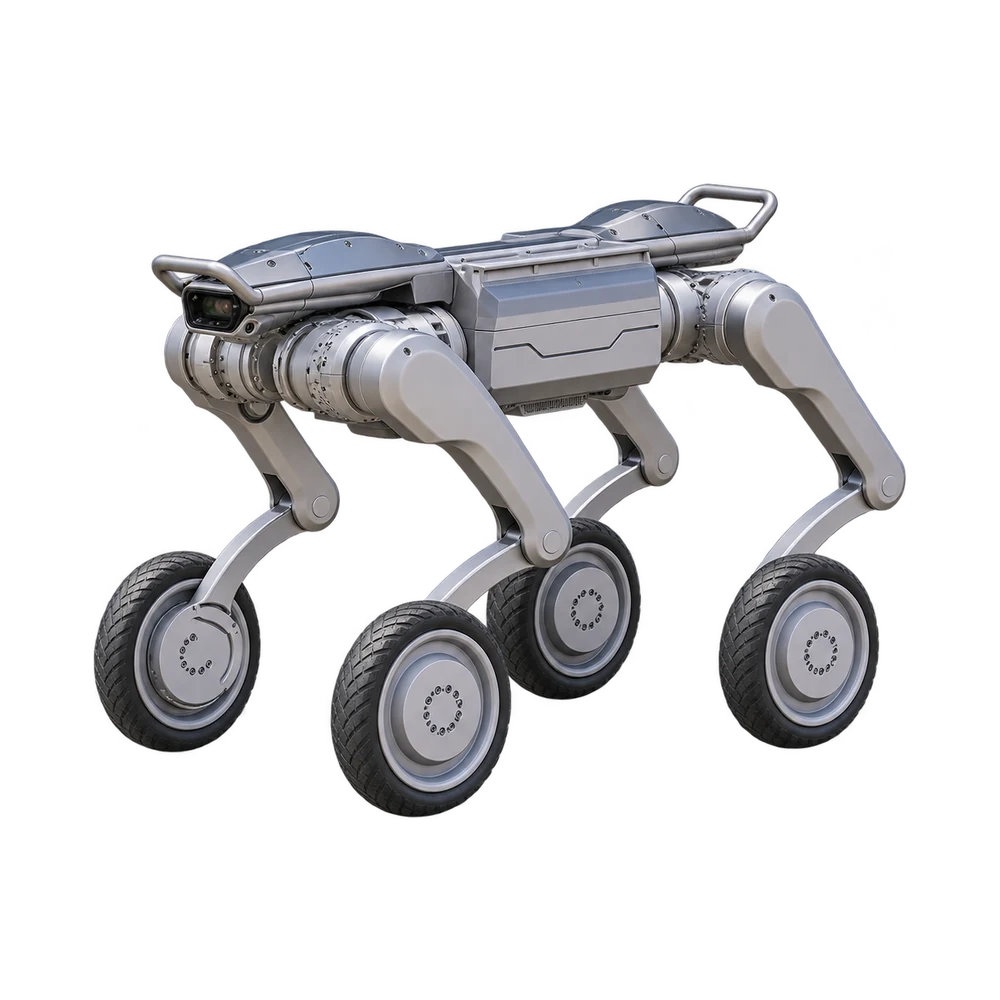
The B2-W is the wheeled version of the industrial B2 quadruped for heavy payloads on long, mixed-terrain routes. Its four-legged chassis combines continuous travel along service roads with the ability to cross steps and gravel. It suits industrial operators moving equipment between distant work points. In a dedicated Unitree test configuration it covered up to 25 km carrying 40 kg.
Each leg ends in a wheel 225 mm in diameter. The robot can roll continuously or reposition its feet to suit the surface.
In a specific test configuration, Unitree measured up to 25 km carrying 40 kg. Surface and equipment affect the actual range.
The manufacturer specifies steps of 20–25 cm for a continuous flight of stairs. Use this figure to assess the stairways on site.
The IP67 rating describes how the enclosure protects against dust and water. Compare it with the conditions along your route.
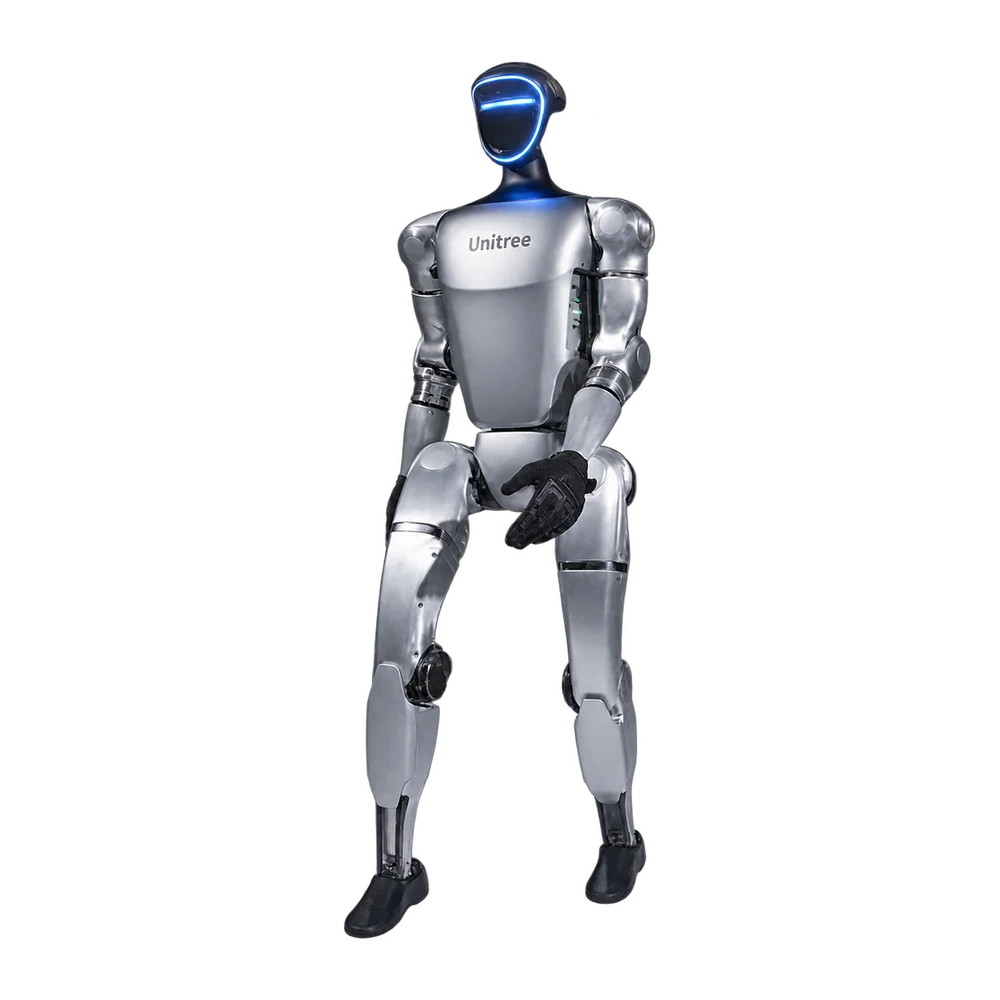
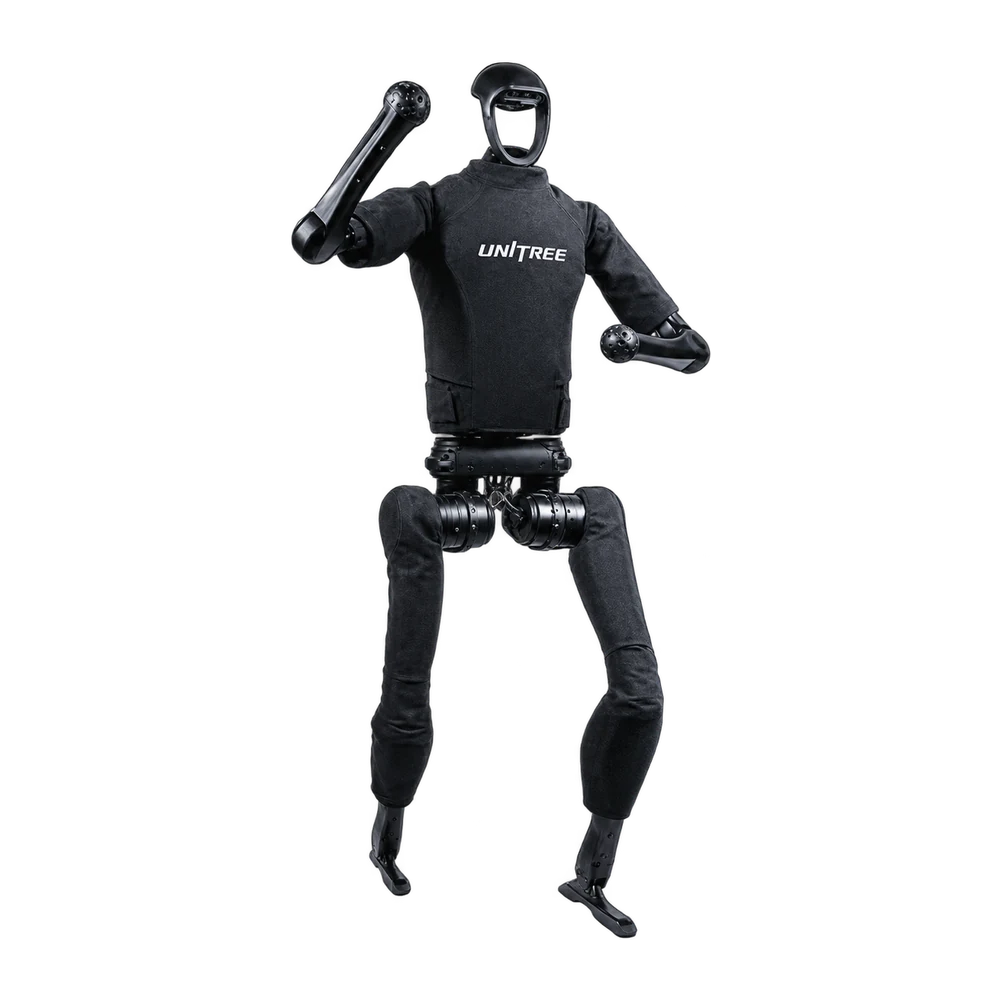
The G1 is Unitree’s compact humanoid for demonstrations, education and research into bipedal motion. Its 1.32 m body folds for transport between sites and labs while retaining humanoid proportions with articulated arms, torso and legs. The standard model serves motion demonstrations. EDU opens the platform to custom development and offers optional articulated hands for manipulation projects.
Folded, it measures 69 × 45 × 30 cm. Allow that space for transport and storage between sessions.
Each leg has six degrees of freedom. Observe how the hip, knee and ankle work together as the foot leaves the ground.
The EDU version supports custom motion development. The standard version provides 23 degrees of freedom for demonstrations.
The EDU can be fitted with a force-controlled three-finger hand. Optional tactile sensors measure contact.
The H2 is Unitree’s full-size humanoid for performances, demonstrations and whole-body motion development. At around 1.8 m tall with 31 degrees of freedom, it brings bipedal locomotion, arm gestures and torso and head orientation onto one platform. Its human scale suits projects where stage presence, gestures visible at a distance and comparison with human motion matter.
The torso moves on three axes. Combine twists and tilts to reproduce a whole-body sequence.
Each arm has seven degrees of freedom. Vary the elbow position as the hand approaches the part.
The head turns on two axes. It can change direction during a sequence without turning the whole body.
Each leg has six degrees of freedom. Observe how the hip, knee and ankle work together as the foot leaves the ground.
The R1 is Unitree’s lightweight humanoid for education, presentations and development in a compact bipedal format. The R1 model combines 26 degrees of freedom and a 1.23 m body in around 29 kg with battery. The range also includes Air with simplified mechanics and EDU for custom development. The family offers different levels of movement and programmability to suit the project.
R1 has 26 degrees of freedom and Air has 20. The EDU version also supports custom motion development.
The head turns on two axes. It can change direction during a sequence without turning the whole body.
The R1 waist moves on two axes. Coordinate tilt and rotation with the arms during a demonstration.
Each leg has six degrees of freedom. Observe how the hip, knee and ankle work together as the foot leaves the ground.
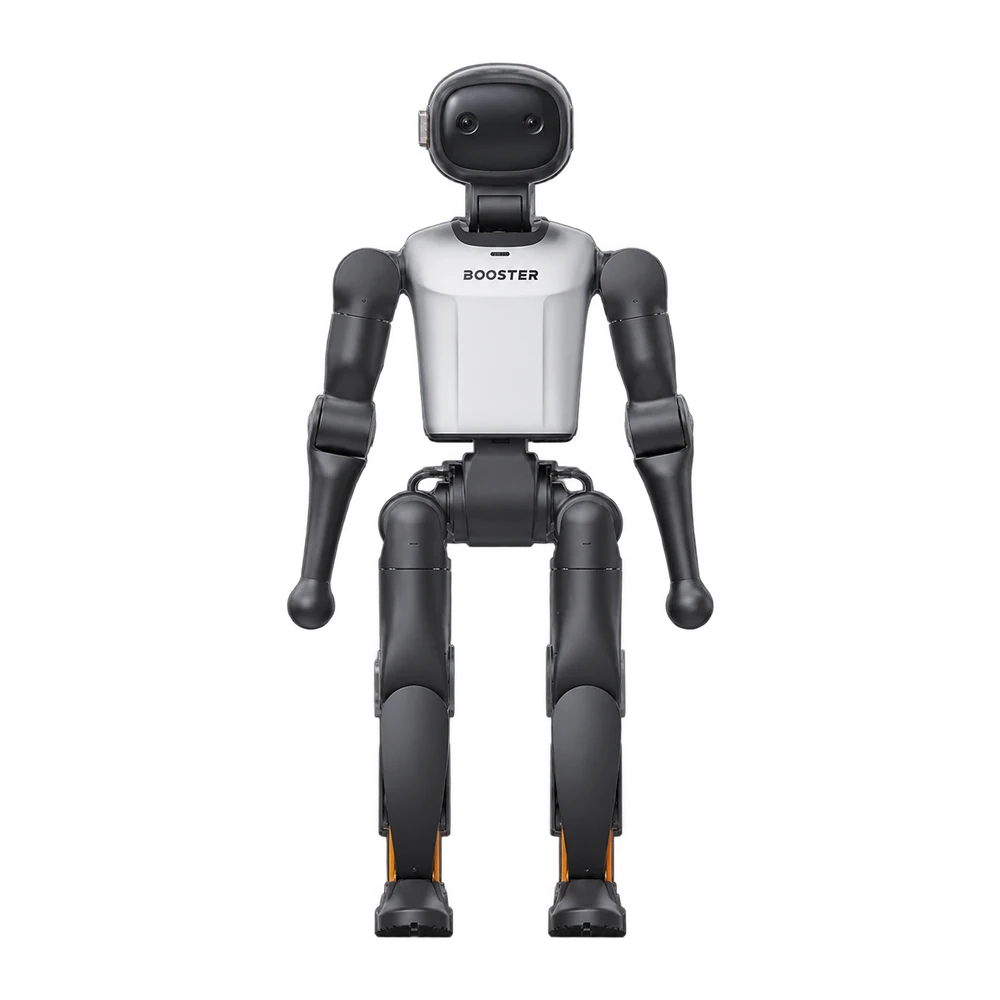
The K1 is Booster’s humanoid for education, robot soccer and interactive demonstrations. Its built-in software modes bring ball tracking, dialogue, dance and guided gesture learning to one platform. This repertoire gives schools, clubs and event organisers activities available from the outset. Development teams can also create custom behaviours for the platform.
Soccer mode tracks and chases the ball. Dedicated controls switch from following it to taking a shot.
In teaching mode you can physically guide a movement. The robot recognises it and plays it back for the class.
Conversation mode lets you change personas during a dialogue. Use it to try voice interaction in class.
The built-in repertoire includes greetings, handshakes and short dances. Trigger them from the controller during a demonstration.
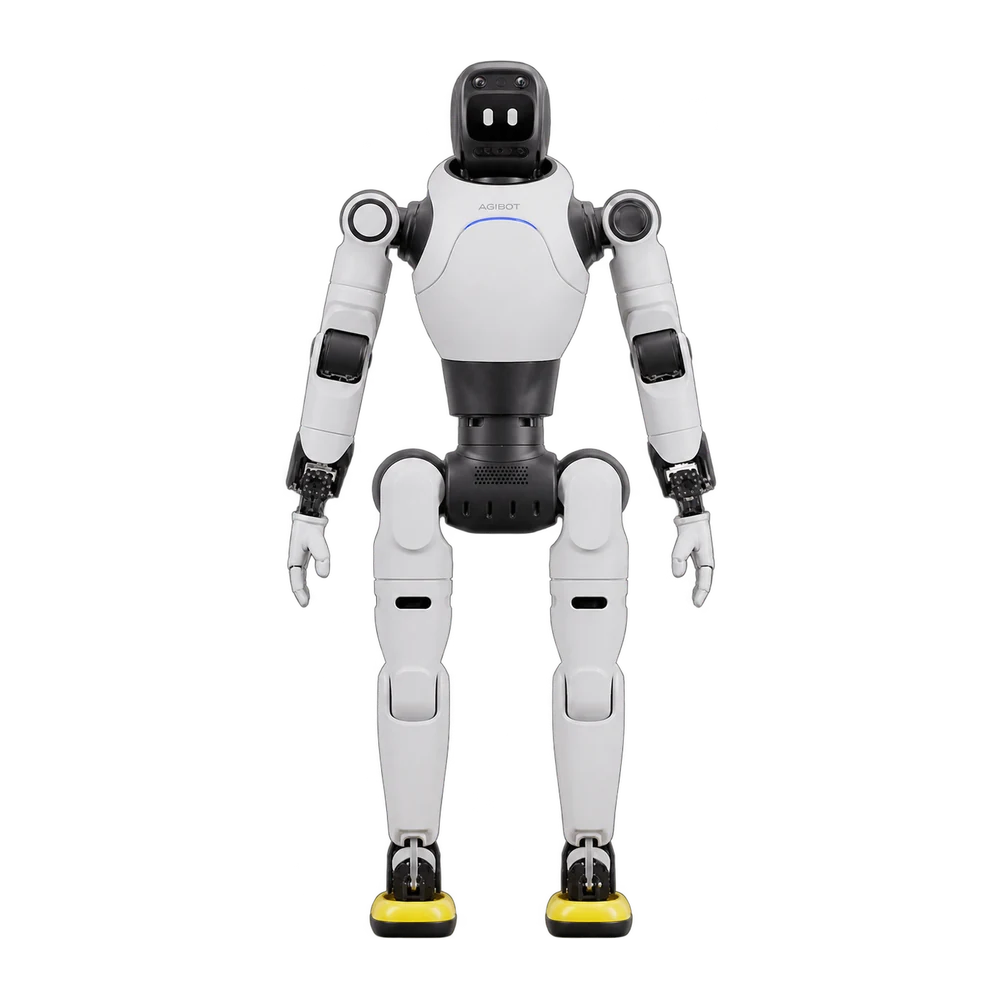
The X2 is AGIBOT’s humanoid for public interaction, live demonstrations and entertainment. It combines walking and choreography with speech, head gestures and touch responses, giving presenters and organisers a physical participant that also communicates through movement. Its roughly 1.31 m format suits exhibition spaces. Ultra adds depth sensing and lidar for more involved perception applications.
It walks and performs dance sequences, coordinating head movements with speech. Build a presentation that alternates gestures and dialogue.
A sensor on the head detects touch. The robot can respond by nodding or shaking its head in front of a visitor.
Microphones and a speaker handle dialogue. The supplied wireless microphone lets you speak from a distance.
The Ultra version includes an RGB-D camera and multiline lidar. These sensors support depth measurements and 3D mapping.
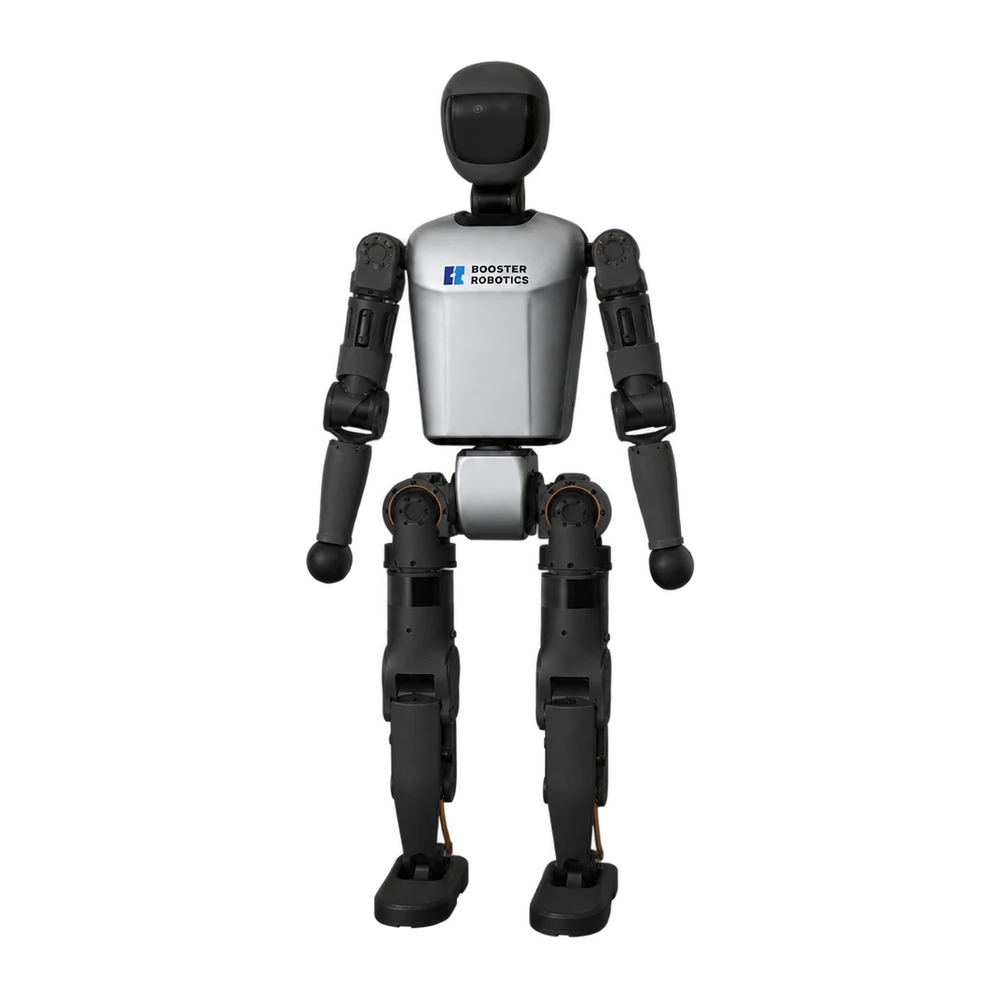
The T1 is a bipedal development platform for universities, research groups and robot sports teams. Its standard configuration offers 23 degrees of freedom and supports multidirectional walking, turning and coordinated whole-body movement. Depth vision and audio in the head serve projects connecting perception, orientation and action. Available software behaviours vary with the arm configuration.
The depth camera sits in the movable head. Change the viewpoint without moving the robot’s feet.
Each leg has six degrees of freedom. Observe how the hip, knee and ankle work together as the foot leaves the ground.
Four degrees of freedom per arm combine shoulder and elbow movement. Isolate a gesture before coordinating it with the gait.
The waist rotates around its vertical axis. Turn the torso during a step to study upper-body and leg coordination.
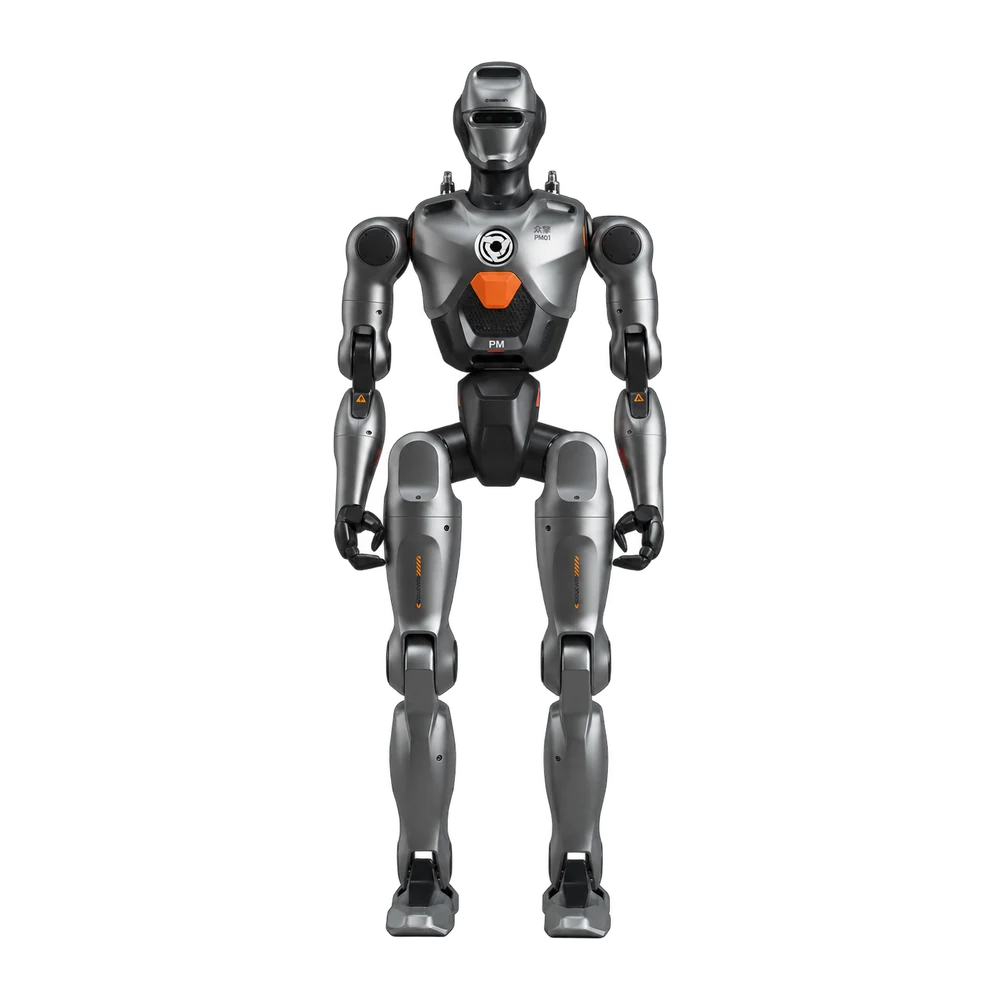
The PM01 is EngineAI’s open humanoid for research, education and embodied AI development. Two wide-angle stereo cameras at head and waist height provide complementary perspectives in motion. Torso rotation and 24 degrees of freedom support both locomotion and expressive sequences. It serves labs working on perception and body control on the same robot.
Two wide-angle stereo cameras view the scene from head and waist height. Compare what changes closer to the ground.
The waist has a total travel of 320°. The torso can sweep a wide arc while the legs remain aligned with the direction of travel.
Twenty-four degrees of freedom across the body let you combine limb movements for coordination tests and choreography.
Each leg has six degrees of freedom. Observe how the hip, knee and ankle work together as the foot leaves the ground.
The GR-2 is Fourier’s full-size humanoid for research into locomotion, dexterity and physical interaction with objects. Its 1.75 m body combines 53 degrees of freedom with articulated hands and tactile sensors. Grasping becomes part of a complete movement, from body positioning to fingertip contact. It serves universities and labs developing manipulation and humanoid control on a shared platform.
Each hand has 12 degrees of freedom. Vary finger positions to study grasps on differently shaped objects.
Six tactile sensor arrays per hand detect contact. Observe how the grasp changes against different surfaces.
Fourier specifies a 3 kg load per arm. Use this limit to choose parts for manipulation experiments.
The battery pulls out for a quick change. Keep a charged spare ready for the next test.
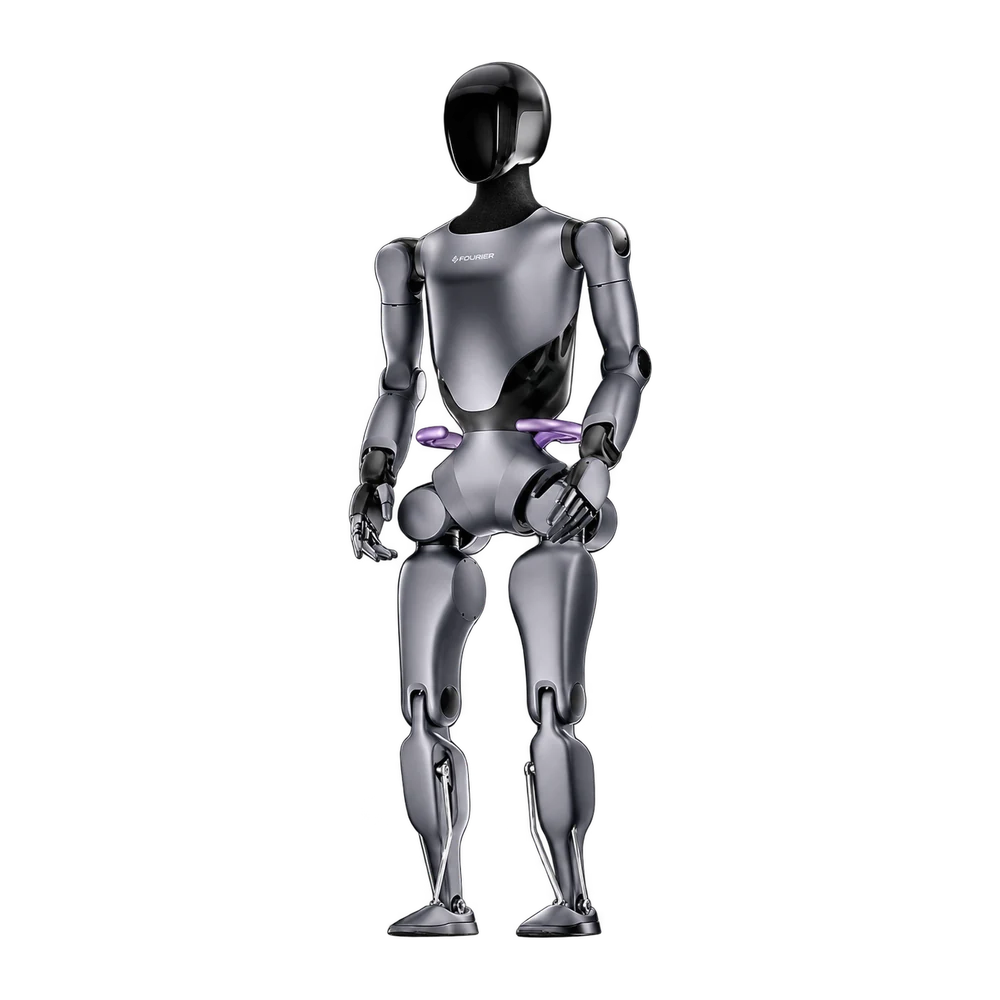
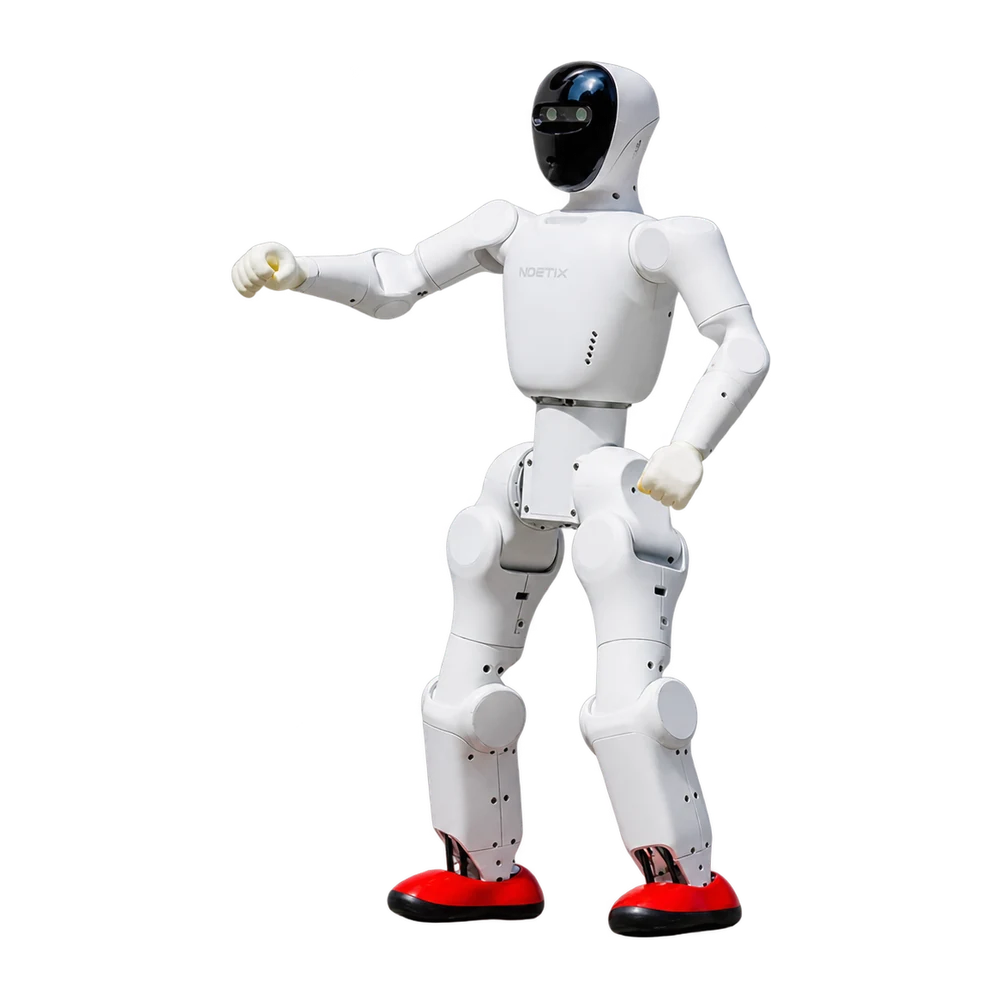
BUMI is Noetix’s compact humanoid for learning robotics and demonstrating movement. At 98 cm tall and around 17 kg, it combines 21 degrees of freedom, a camera, microphones and a speaker. App control makes it accessible for introductory interaction and locomotion projects. The education version adds low-level control access for labs developing joint behaviour directly.
Each leg has six degrees of freedom. Observe how the hip, knee and ankle work together as the foot leaves the ground.
Four degrees of freedom per arm combine shoulder and elbow movement. Isolate a gesture before coordinating it with the gait.
The waist rotates around its vertical axis. Turn the torso during a step to study upper-body and leg coordination.
Low-level control is available on the education version. Choose this variant to work directly with joint motion.
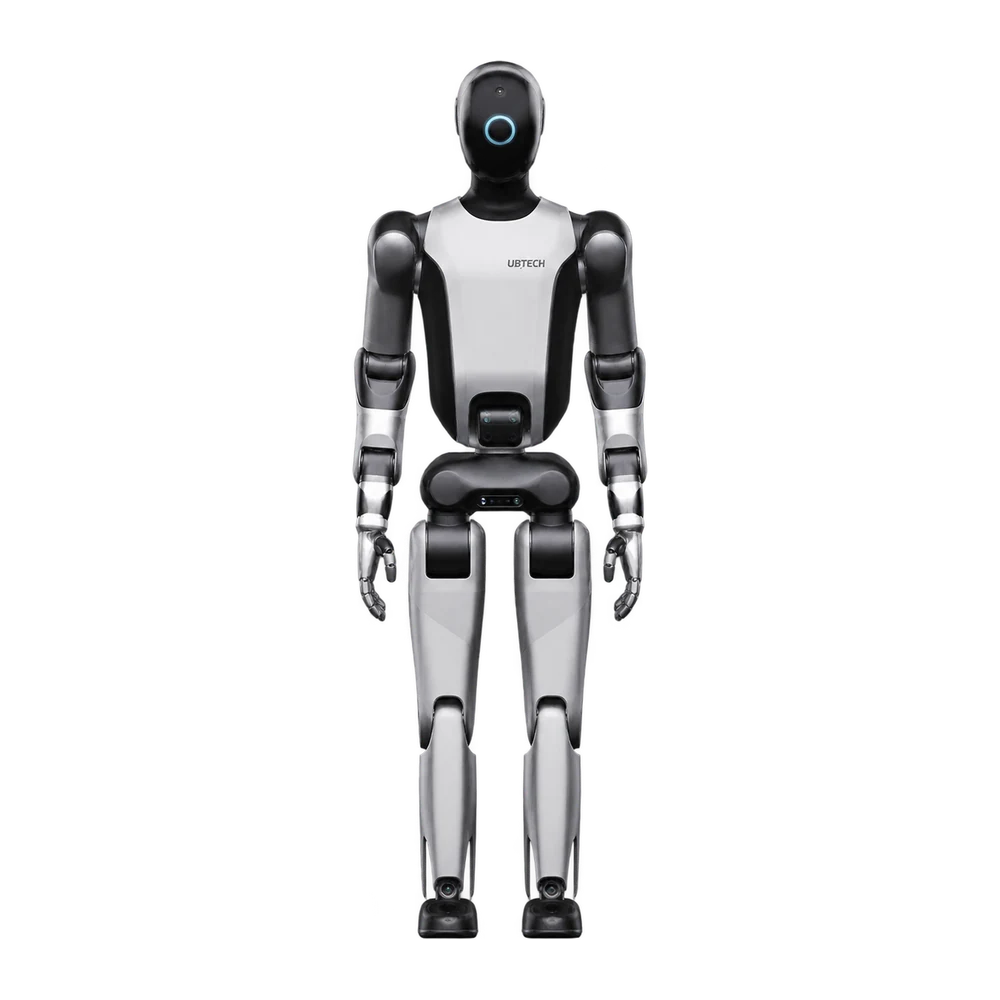
Walker S2 is UBTECH’s industrial humanoid for material and component handling in production departments. Coordination of legs, torso and arms lets it collect loads at floor level and lift them to working height. Its dual-battery system and autonomous exchange at a dedicated station address multi-shift operations. It is a platform for integrators and manufacturers developing humanoid applications on the line.
The robot squats and tilts its torso to pick up parts. UBTECH specifies a workspace from floor level up to 1.8 m.
UBTECH specifies 15 kg for a coordinated lift. Compare this value with the weight of the bins used on your floor.
At the dedicated station it uses both arms to swap the battery. The second battery keeps the robot powered during the change.
Two colour cameras in the head view the same object from different angles. The system builds a depth map in real time.
The H1 is Unitree’s full-size humanoid platform for dynamic locomotion research. Its approximately 1.8 m, 47 kg body combines high-torque actuators with bipedal walking and running. A 3D lidar and depth camera provide information about the surroundings during movement. It serves universities and development centres studying balance, perception and gait control at human scale.
Each leg has five degrees of freedom, including three at the hip. Observe how hip, knee and ankle coordinate while running.
The 3D lidar and depth camera sense the space around the body. Compare the observed scene with the robot’s gait.
With the battery fitted, the robot weighs around 47 kg. Allow for that weight when moving it to the test site.
The battery stores 864 Wh. Actual running time depends on the load and the movements required during the test.
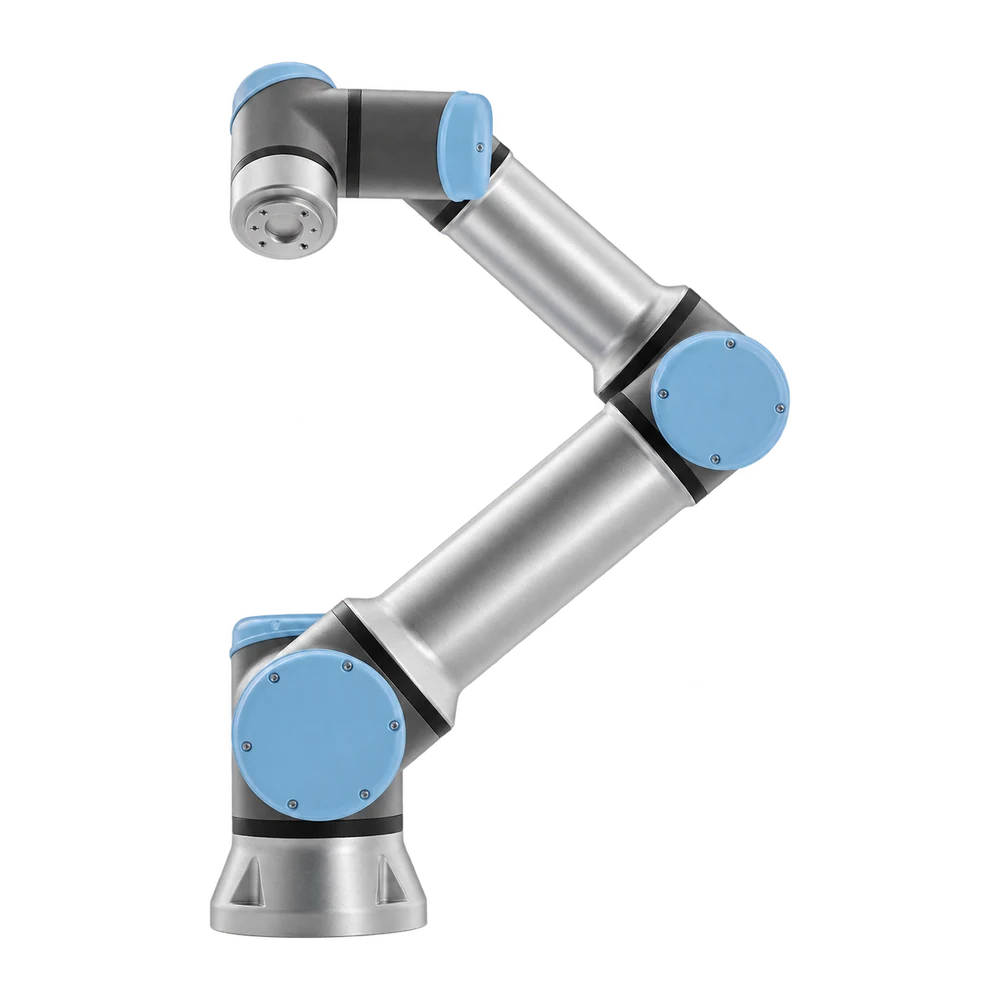
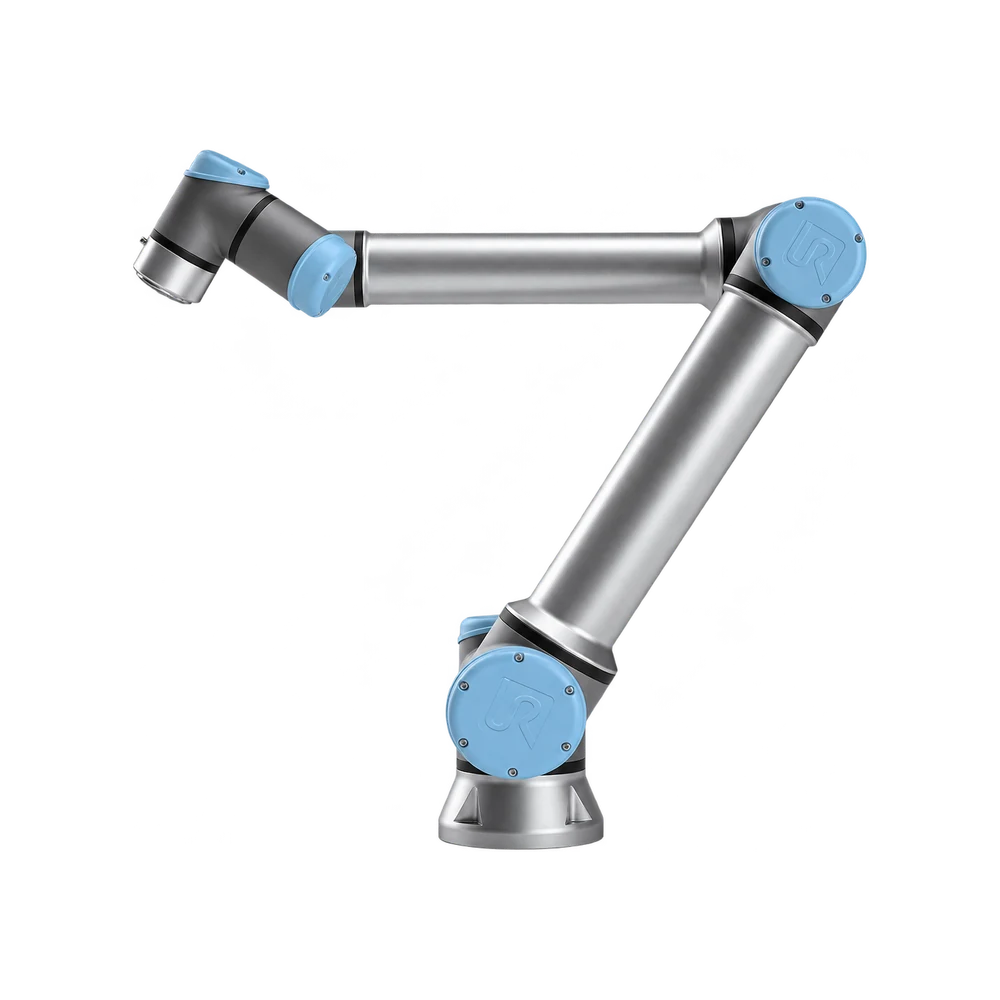
The compact Universal Robots cobot for heavy loads at the machine. The UR16e combines high payload with a compact envelope for work close to lathes, presses and production fixtures. It suits transfers of heavy parts between trays and machines as well as applications involving substantial tools. It fits cells where the working points sit close together and space for a longer arm is limited.
The payload is 16 kg. Count the part’s weight first to see how much capacity is left for the gripper.
The 900 mm reach helps you position the base relative to the pickup and drop-off points. Check the tool angle when testing the path.
Rated repeatability is ±0.05 mm. This measures how closely the arm returns to the same position when it repeats a programmed move.
The base measures 190 mm in diameter. Allow this much space for mounting, then check clearance for the moving arm.
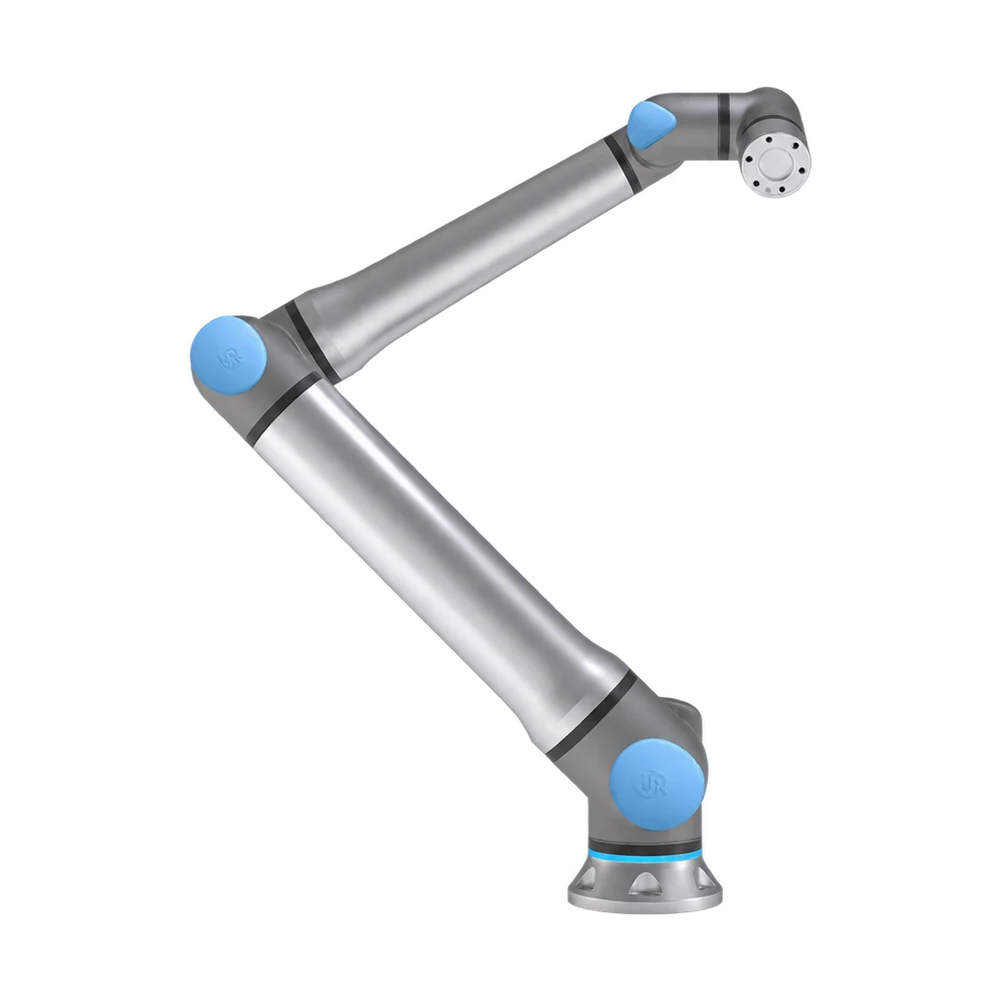
The long-reach Universal Robots cobot for end-of-line handling and palletising. The UR20 covers a broad area from one base, linking a conveyor exit with the far rows of a pallet. Its payload accommodates boxes or containers together with the gripping tool. It also suits transfers of bulky components between spaced-apart stations in departments where arm coverage determines the layout.
The 1750 mm reach helps you position the base relative to the pickup and drop-off points. Check the tool angle when testing the path.
Nominal payload is 20 kg including tool and part. Up to 25 kg is possible under the conditions specified in the manual.
The base measures 245 mm in diameter. Allow this much space for mounting, then check clearance for the moving arm.
Rated repeatability is ±0.1 mm. This measures how closely the arm returns to the same position when it repeats a programmed move.
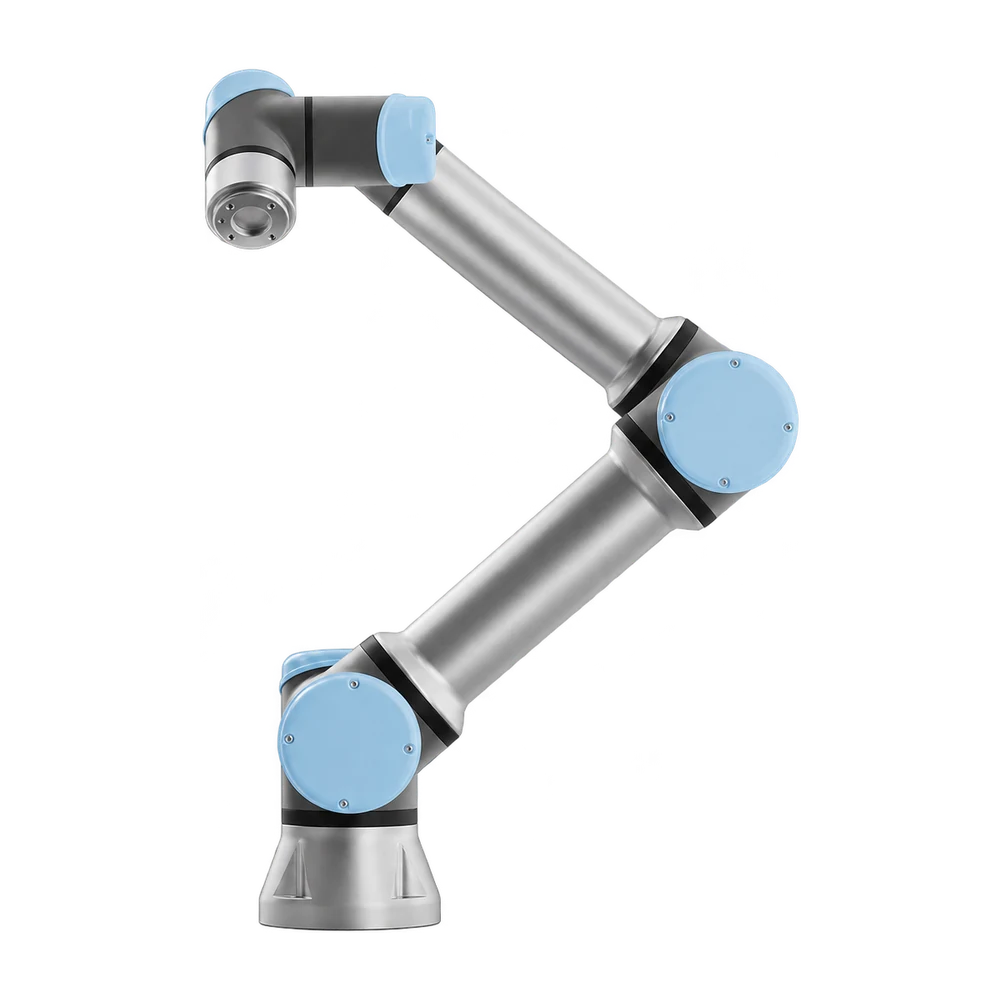
The medium-sized e-Series cobot for bench automation and tending smaller machines. The UR7e sits between the compact UR3e and the family’s higher-payload models. It can transfer components between fixtures, orient them for assembly or guide a tool during processing. Its format suits production islands where operators need bench access for replenishment, inspection and changeovers.
The payload is 7.5 kg. Count the part’s weight first to see how much capacity is left for the gripper.
Six axes orient the tool as the part moves from pickup to drop-off. You can test an approach from above or from the side.
The base measures 151 mm in diameter. Allow this much space for mounting, then check clearance for the moving arm.
Use PolyScope on the teach pendant to set the movements. Adjust a pickup point and run the cycle again at the workstation.
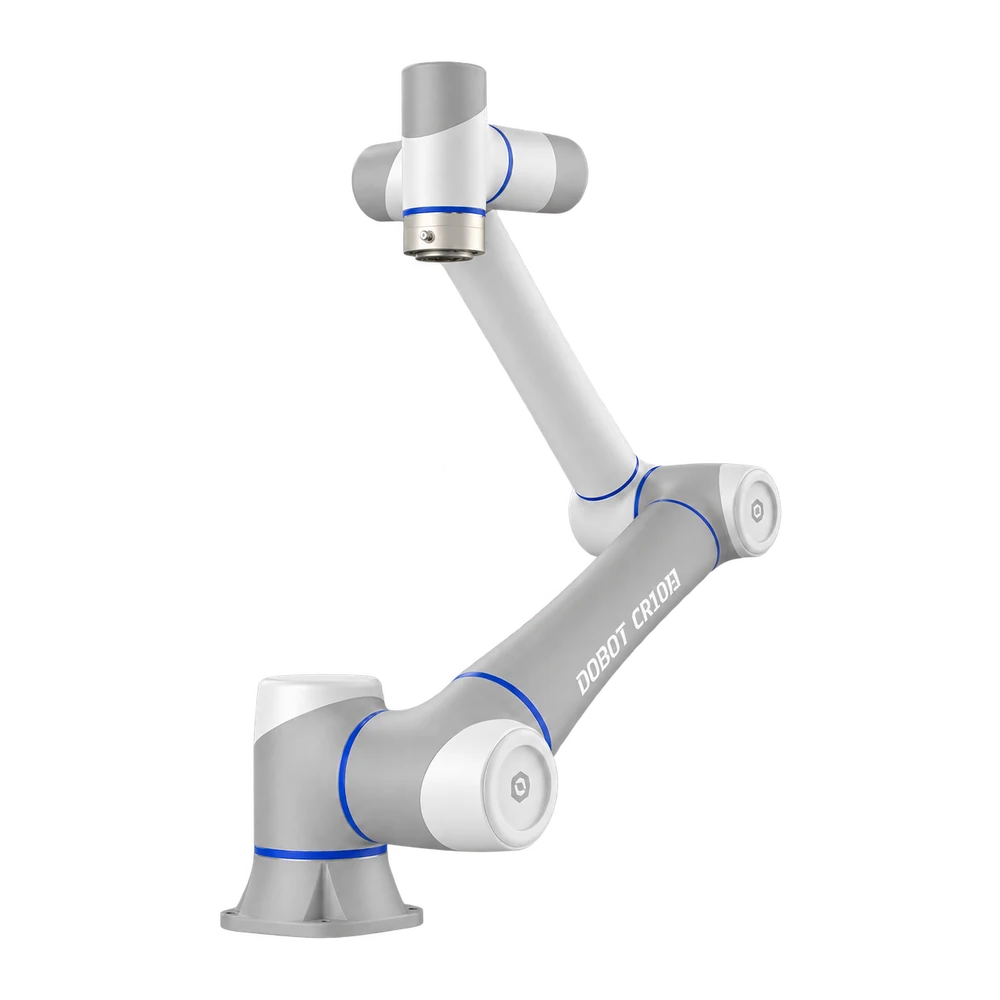
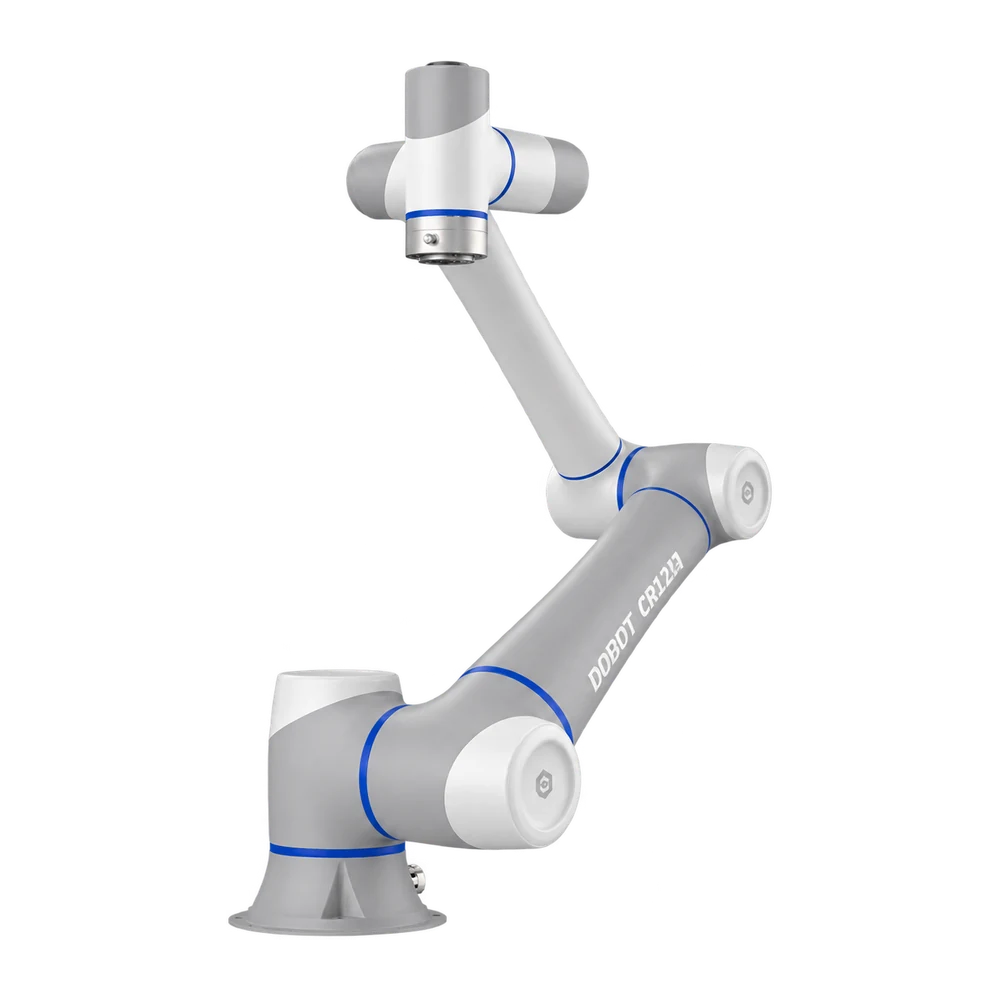
The long-reach cobot in the DOBOT CRA range for medium-weight components. It links conveyors, benches and assembly fixtures even when pickup and placement points are on opposite sides of the station. Its joints turn the component during transfer so it arrives in the orientation required for the next operation. It suits material handling, line feeding and assembly. Optional vision extends its use to parts arriving in different orientations.
The payload is 10 kg. Count the part’s weight first to see how much capacity is left for the gripper.
The 1300 mm reach helps you position the base relative to the pickup and drop-off points. Check the tool angle when testing the path.
Rated repeatability is ±0.03 mm. This measures how closely the arm returns to the same position when it repeats a programmed move.
With the optional VX500 camera, you can locate parts that arrive at a different position or angle before guiding the pick.
A DOBOT cobot for machine tending and batch handling. In the middle of the CRA range, its combination of payload and reach covers the machine, the blanks tray and the finished-parts tray from one station. Hand-guided teaching makes new loading and unloading sequences easier to set up at changeover. It suits workshops and production departments running different jobs in the same cell.
The payload is 12 kg. Count the part’s weight first to see how much capacity is left for the gripper.
The 1200 mm reach helps you position the base relative to the pickup and drop-off points. Check the tool angle when testing the path.
Rated repeatability is ±0.03 mm. This measures how closely the arm returns to the same position when it repeats a programmed move.
Guide the arm by hand to the points you want to record. This lets you set the approach to the part at the machine itself.
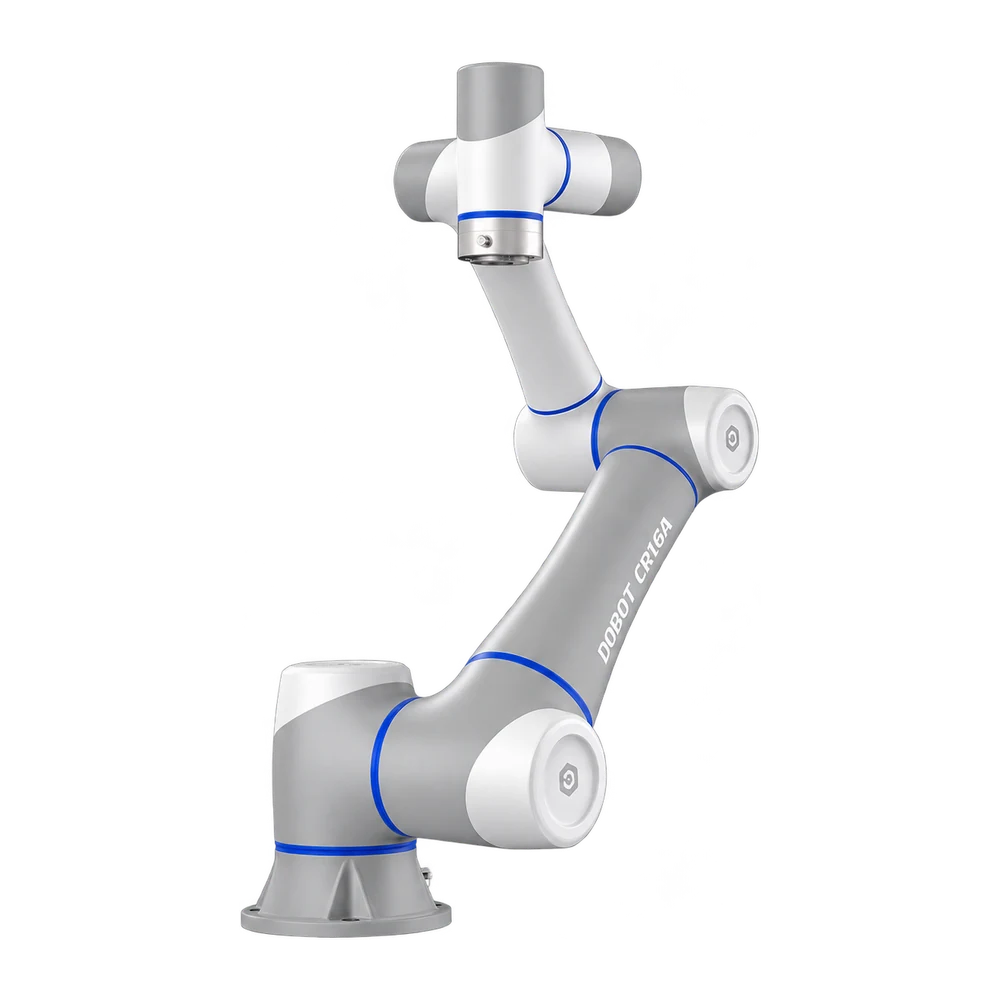
The CRA model for heavy workpieces and short transfers. The CR16A concentrates its lifting capacity in an arm suited to cells where trays, machine and unloading area are close together. It can turn a workpiece during transfer, making it a good fit for flanges, metal housings and components presented to a chuck or fixture. Its main applications are metalworking and repetitive handling on the workshop floor.
The payload is 16 kg. Count the part’s weight first to see how much capacity is left for the gripper.
The 1000 mm reach helps you position the base relative to the pickup and drop-off points. Check the tool angle when testing the path.
Rated repeatability is ±0.03 mm. This measures how closely the arm returns to the same position when it repeats a programmed move.
Six axes orient the tool as the part moves from pickup to drop-off. You can test an approach from above or from the side.
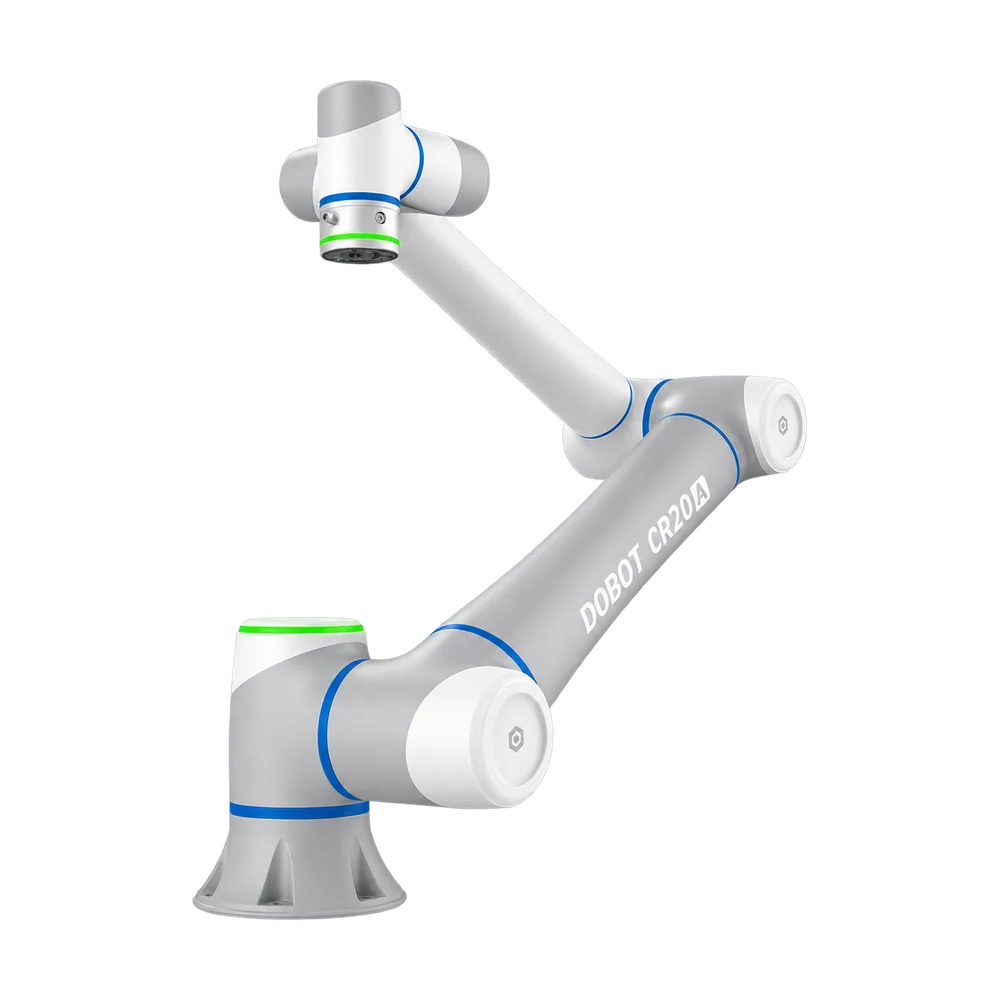
The long-reach CRA cobot for palletising and end-of-line handling. The CR20A can reach distant pallet rows while serving a pickup point near the conveyor exit. Its combination of payload and working radius suits boxes, containers and bulky components, including items that need turning before placement. It is aimed at packaging and internal logistics operations handling multiple formats and stacking patterns.
The payload is 20 kg. Count the part’s weight first to see how much capacity is left for the gripper.
The 1700 mm reach helps you position the base relative to the pickup and drop-off points. Check the tool angle when testing the path.
Rated repeatability is ±0.05 mm. This measures how closely the arm returns to the same position when it repeats a programmed move.
With the optional VX500 camera, you can locate parts that arrive at a different position or angle before guiding the pick.
The high-payload cobot in the DOBOT CRA range for heavy handling. The CR30A suits metal housings, full containers and workpieces that require substantial grippers. It offers greater lifting capacity than the CR20A over a more compact working radius. Typical installations are beside a machine or pallet, where total gripping load and the ability to orient the workpiece drive the choice of arm.
The payload is 30 kg. Count the part’s weight first to see how much capacity is left for the gripper.
The 1305 mm reach helps you position the base relative to the pickup and drop-off points. Check the tool angle when testing the path.
Rated repeatability is ±0.05 mm. This measures how closely the arm returns to the same position when it repeats a programmed move.
Guide the arm by hand to the points you want to record. This lets you set the approach to the part at the machine itself.
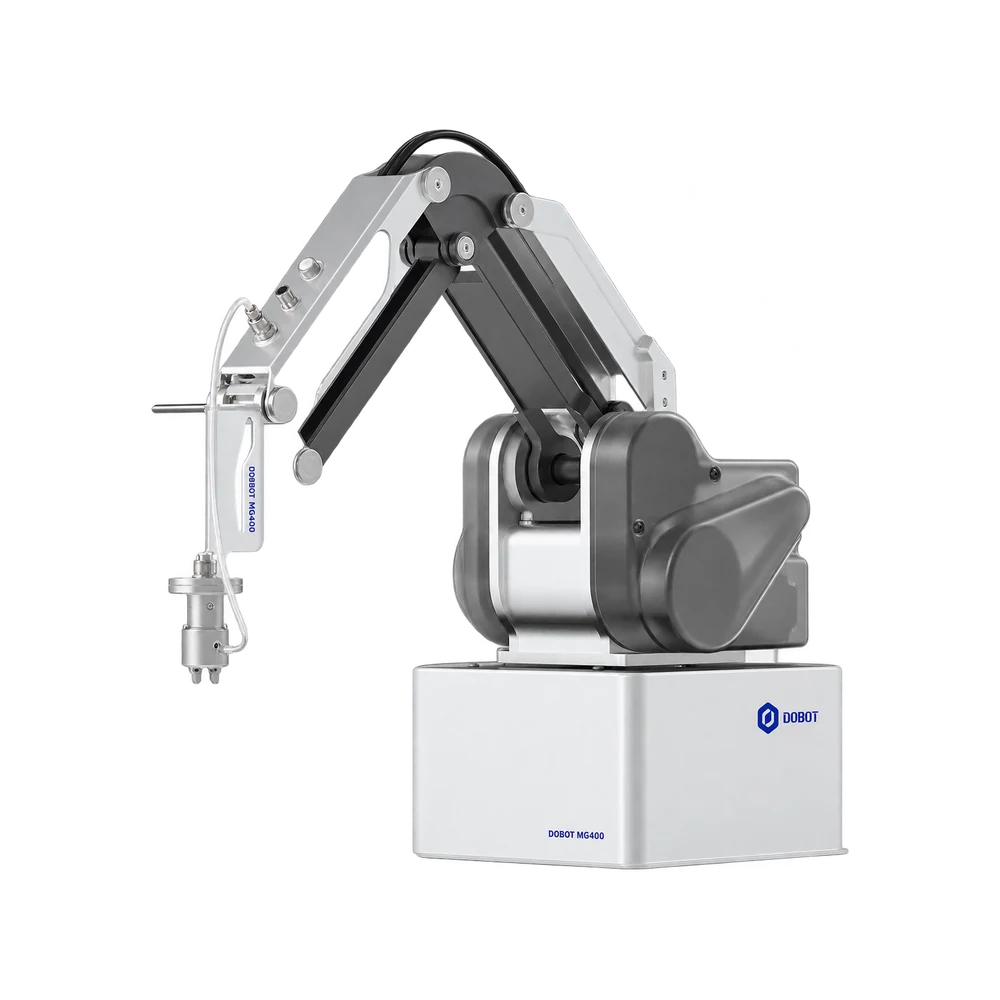
DOBOT’s desktop industrial arm for small batches and light automation. Its four-axis architecture suits handling pre-oriented parts, loading test fixtures and picking from trays. A base smaller than an A4 sheet allows a station to fit on an existing bench. Hand-guided programming suits departments that change product formats or batches frequently.
The 440 mm reach helps you position the base relative to the pickup and drop-off points. Check the tool angle when testing the path.
Rated repeatability is ±0.05 mm. This measures how closely the arm returns to the same position when it repeats a programmed move.
Guide the arm to the pickup and release positions. It can record them and repeat the cycle for a small batch.
Rated payload is 500 g, with a maximum of 750 g. Include the fitted tool in the total.
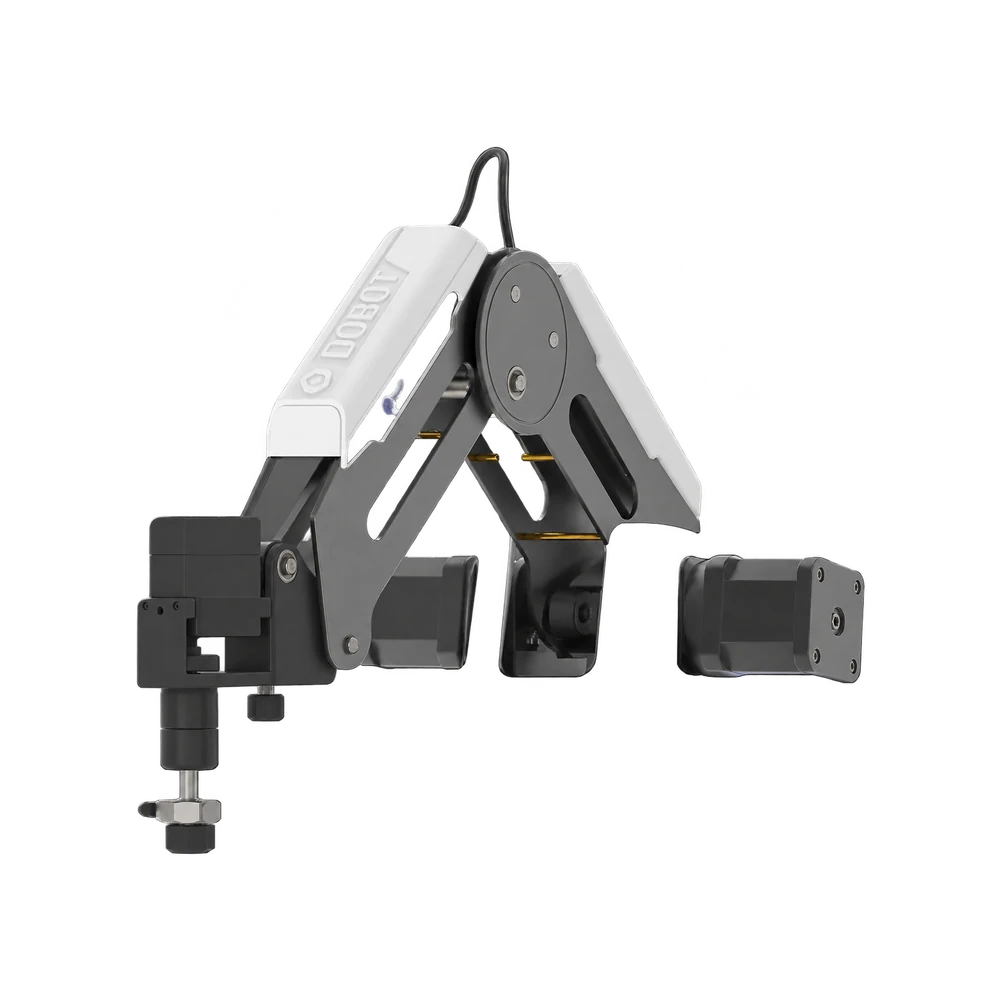
DOBOT’s desktop teaching arm for schools, labs and technical training. With interchangeable tools, Magician brings drawing, small-object handling and 3D printing to one platform, depending on the chosen kit. Movements remain visible on the bench, making the link between a command and its physical result easy to see. Block programming and Python support both introductory courses and lab projects.
Rated repeatability is ±0.2 mm. This measures how closely the arm returns to the same position when it repeats a programmed move.
Build an exercise with Blockly blocks in DobotLab and move to Python when you want to change its logic.
Use the pen holder to trace the path on paper. For a picking exercise fit a gripper or suction cup, depending on the kit.
The base is 158 × 158 mm. This lets you set aside a dedicated area on the bench for exercises.
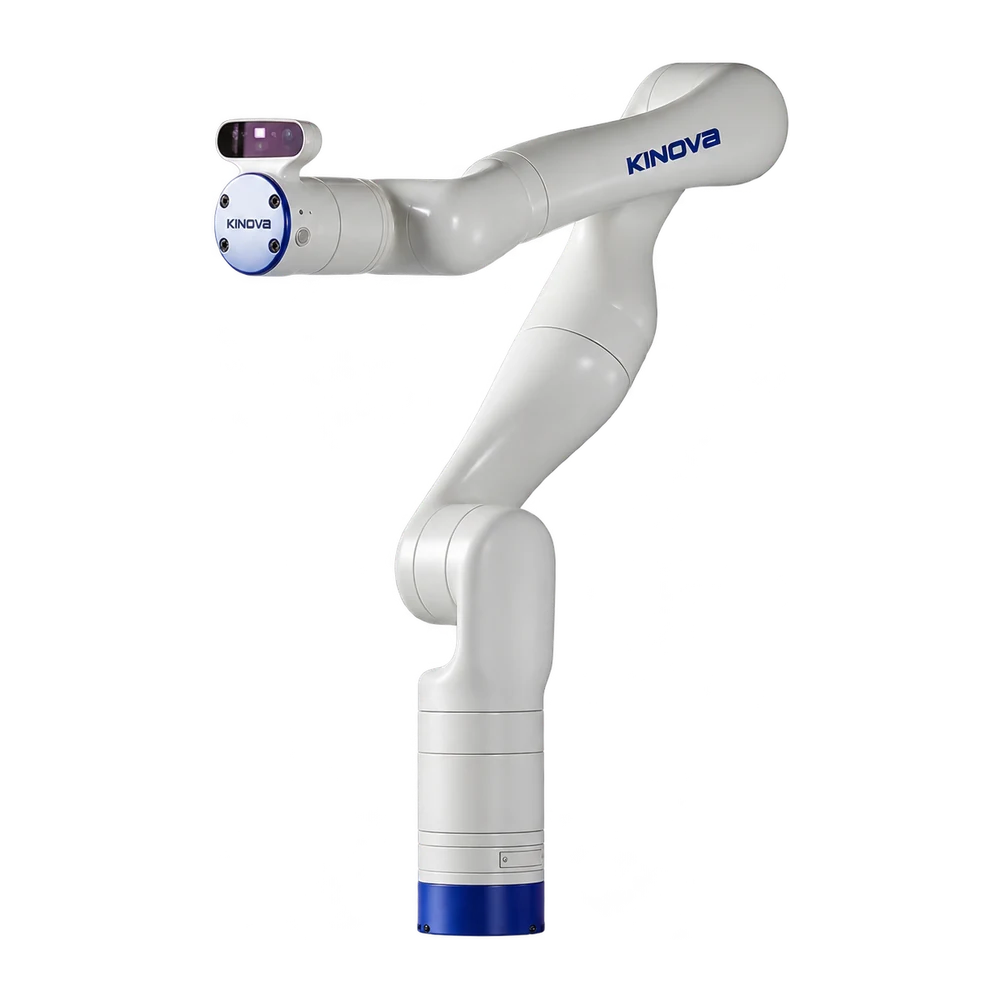
Kinova’s lightweight arm for manipulation research, mobile robotics and motion control. Gen3 provides joint position and torque data and an open interface for developing and comparing grasping strategies. Different arm configurations and an optional vision module adapt the platform to the project. It is designed for labs and research teams working with ROS, simulation and robot learning.
The six-axis model reaches 891 mm. The seven-axis model reaches 902 mm and adds a joint for exploring alternative paths.
Both versions support 2 kg continuously throughout their reach. Continuous payload rises to 4 kg at mid-range.
Use Kortex to experiment with low-level control at 1 kHz and read the torque sensors built into the actuators.
For vision-guided picking experiments you can select the optional 2D and 3D vision module that integrates with the arm.
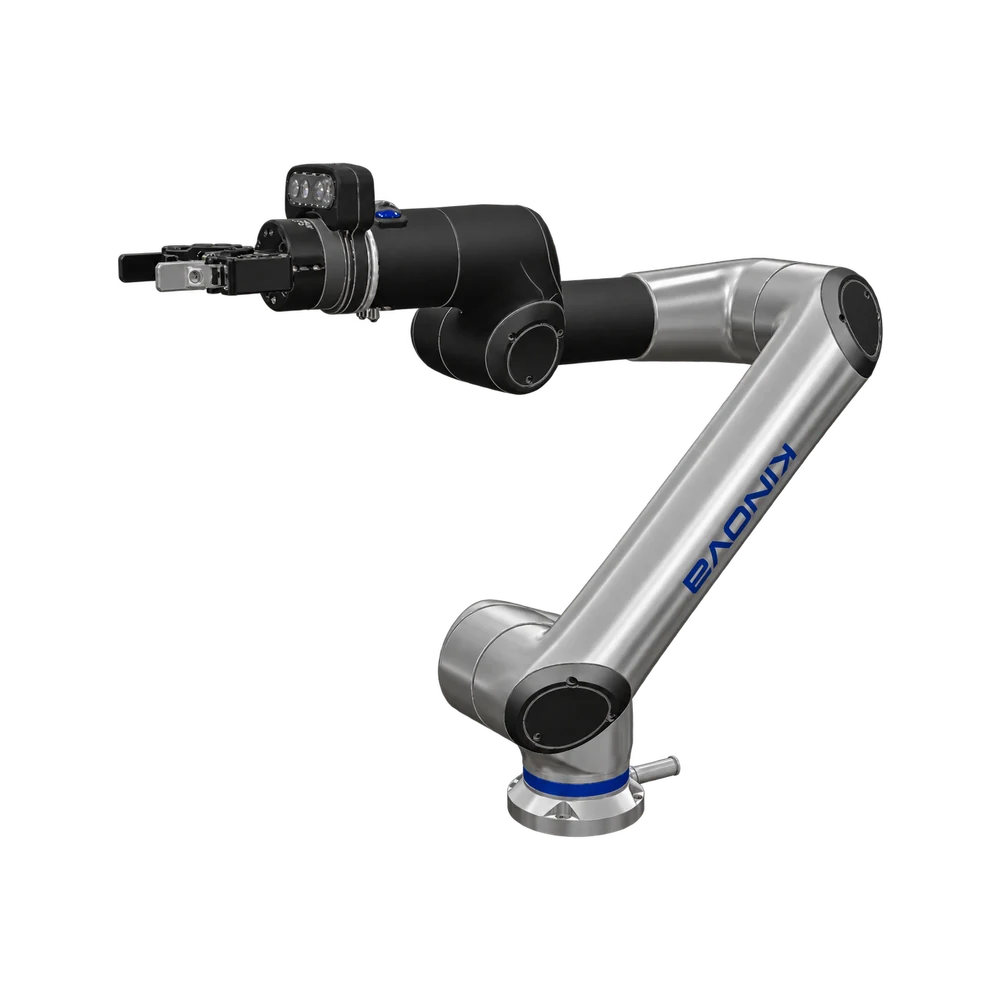
Kinova’s industrial cobot for assembly, packing and machine tending. Link 6 pairs hand guidance and graphical programming with a force and torque sensor built into the wrist, useful in processes involving contact with a part. Power and data run through the arm to the tool, reducing external wiring around the gripper. It serves lines with insertion, handling and finishing operations.
The 1000 mm reach helps you position the base relative to the pickup and drop-off points. Check the tool angle when testing the path.
The built-in sensor measures force and torque on six axes. You can monitor contact while the arm inserts or finishes a part.
Power and data run through the arm to the wrist. The tool can receive up to 4 A at 24 V.
Guide the arm by hand to teach the points, then set up the sequence in the graphical interface without writing code.
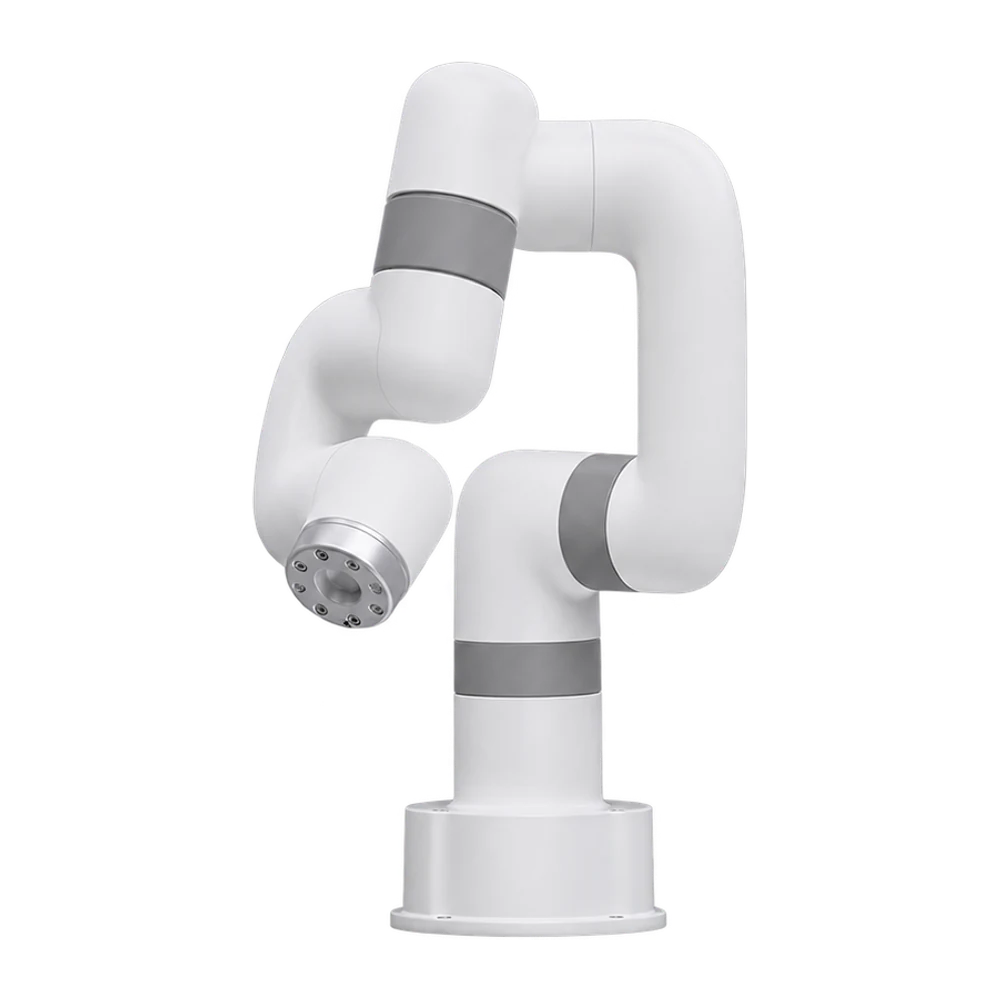
The UFACTORY desktop cobot for research, teaching and light-automation prototypes. Lite 6 offers the orientation freedom of an articulated arm in a format suited to small tools and lab samples. Its compact base leaves bench space for holders, test objects and measuring instruments. Python, C++ and ROS support makes it suitable for programming and motion-planning projects.
The 440 mm reach helps you position the base relative to the pickup and drop-off points. Check the tool angle when testing the path.
Rated repeatability is ±0.5 mm. This measures how closely the arm returns to the same position when it repeats a programmed move.
Set up a movement in UFACTORY Studio and integrate the experiment with Python, C++ or ROS.
The base measures 130 × 140 mm. Six axes let you orient a tool in a workspace suited to bench experiments.
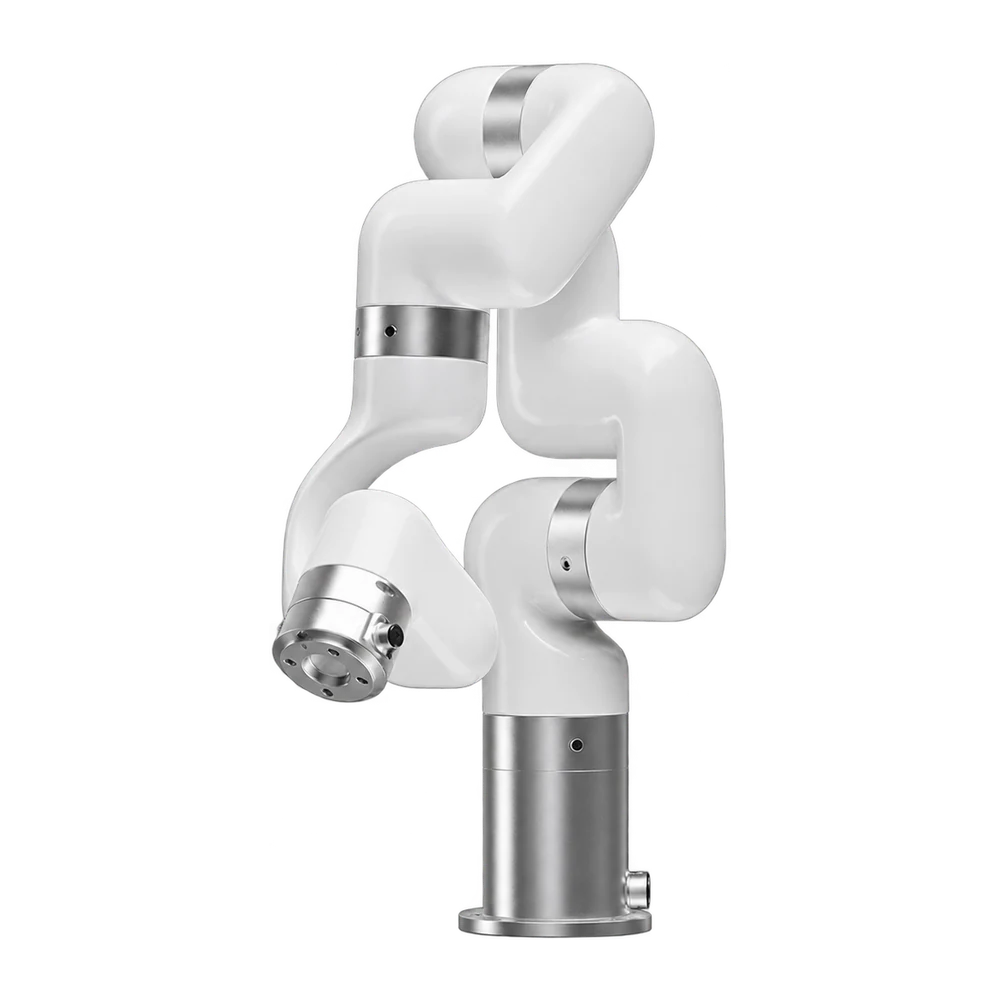
The UFACTORY arm for taking a manipulation project from prototype to small-batch production. xArm 6 combines a lightweight body with the capacity to handle components and working tools over a larger workspace than Lite 6. Its orientation freedom suits picking, placement and assembly with an angled approach to the workpiece. Open software tools link bench applications with development in Python, C++ or ROS.
The payload is 5 kg. Count the part’s weight first to see how much capacity is left for the gripper.
The 700 mm reach helps you position the base relative to the pickup and drop-off points. Check the tool angle when testing the path.
Set up a movement in UFACTORY Studio and integrate the experiment with Python, C++ or ROS.
Six axes let you orient the gripper to match the part surface, even when the approach is not vertical.
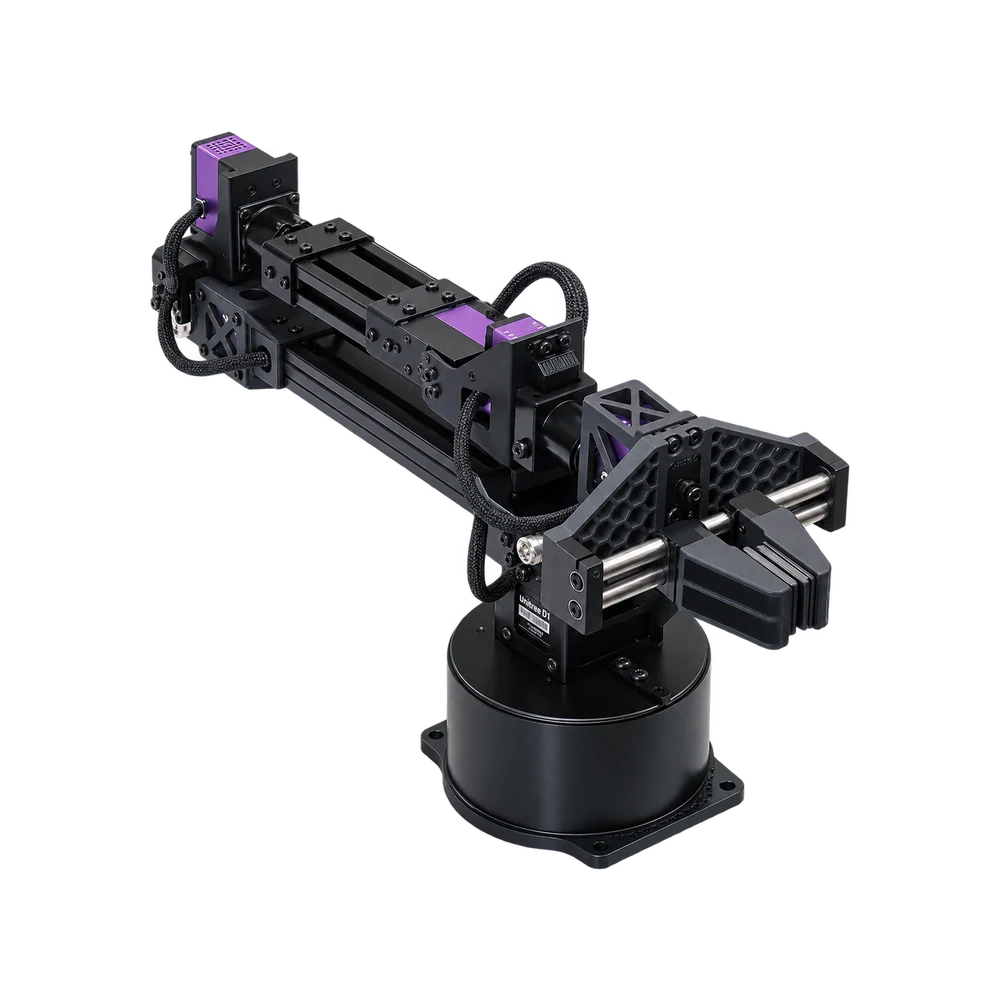
The Unitree arm for teleoperation and demonstration collection in manipulation research. In D1-T systems, D1 reproduces the operator-guided grasp and movement using articulated joints and a gripper. Position, velocity and force control provide access to different aspects of the physical gesture. Multi-arm kits suit labs collecting data for robot learning and studying grasping, transfer and release tasks.
The gripper opens and closes independently of the six arm joints. You can record the grasp alongside the motion leading up to it.
Reach is 550 mm without the gripper and 670 mm with it fitted. Use these dimensions to position samples on the bench.
The servomotors support position, velocity and force control. Choose which variable to command in a manipulation experiment.
D1-T is offered in two-arm and four-arm kits. Choose the configuration for the number of arms you need to control and record.
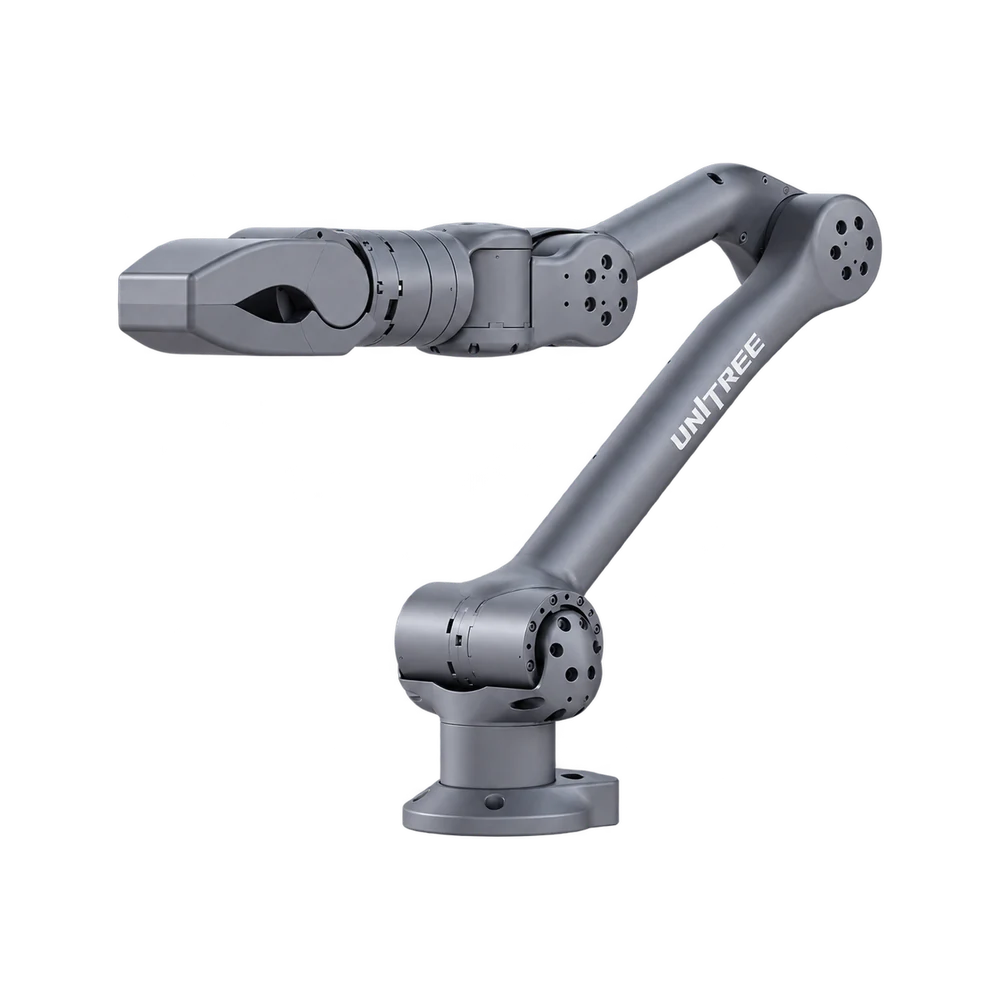
The Unitree manipulator for compatible mobile platforms and quadruped robots. Z1 gives a vehicle the ability to interact with objects it reaches during a mission. Its lightweight structure, torque-controlled joints and interface for different tools support mobile manipulation, logistics and research projects. Air and Pro versions offer a choice between onboard weight and lifting capacity.
The 740 mm reach helps you position the base relative to the pickup and drop-off points. Check the tool angle when testing the path.
Unitree lists a 2 kg payload for Z1 Air and at least 3 kg for Z1 Pro. The chosen version determines the available payload.
The Air arm weighs 4.3 kg and the Pro 4.5 kg. Include the tool and workpiece when sizing the mobile base.
The interface supports motor position, angular velocity and torque commands. This lets you experiment with how the arm responds to contact.
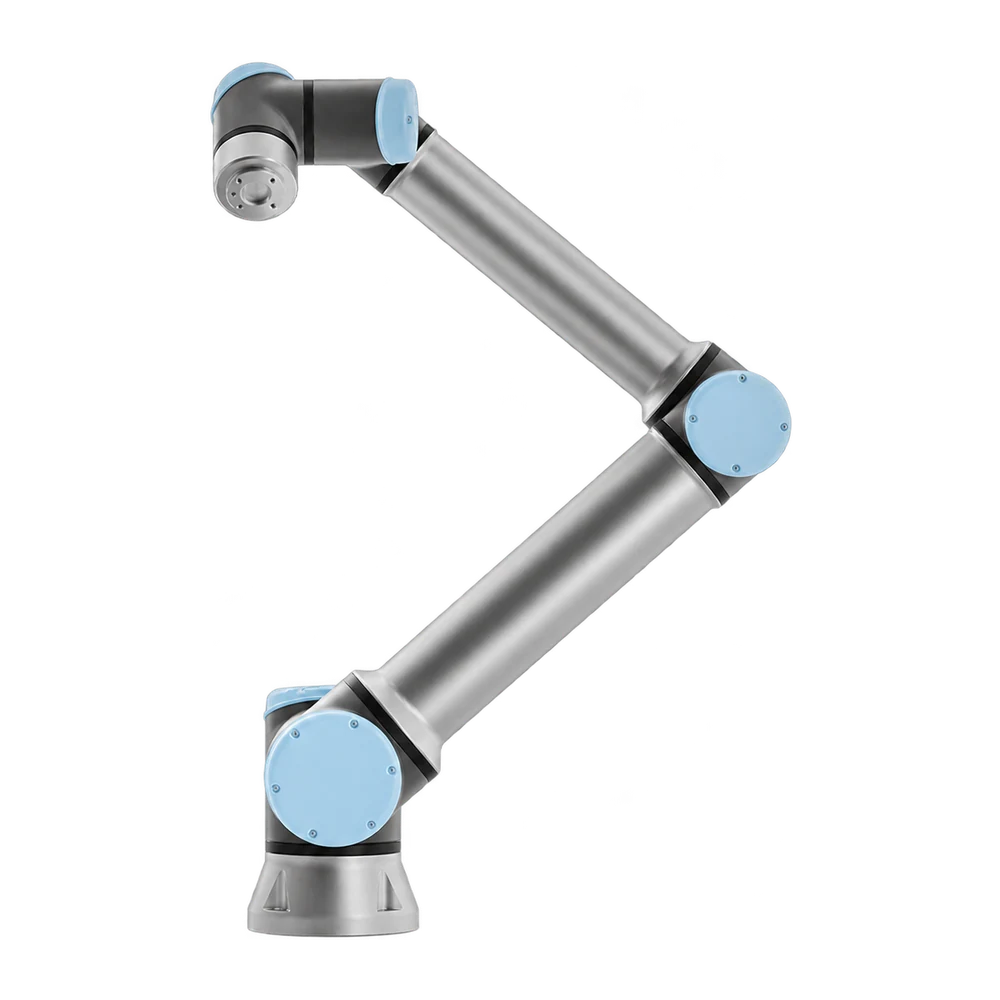
The long-reach e-Series cobot for machine tending and material handling. The UR10e name covers generations with different payload ratings, including the version later renamed UR12e. The arm links conveyors, machines and unloading stations and can also serve assembly and packaging workstations. It is a useful reference for extending an existing cell or identifying the arm already installed on a production floor.
UR10e units were supplied with 10 kg and 12.5 kg ratings. Use the serial number and machine documentation to identify the right rating before sizing the gripper.
The 1300 mm reach helps you position the base relative to the pickup and drop-off points. Check the tool angle when testing the path.
The base measures 190 mm in diameter. Allow this much space for mounting, then check clearance for the moving arm.
Rated repeatability is ±0.05 mm. This measures how closely the arm returns to the same position when it repeats a programmed move.
The e-Series cobot for assembly, machine tending and transfers across an extended workbench. UR12e is the name for the higher-payload version of the UR10e and retains its geometry. The arm serves pickup and placement points around the station, including parts that must change orientation before assembly. It suits cells where one robot links component supply, processing and inspection.
The payload is 12.5 kg. Count the part’s weight first to see how much capacity is left for the gripper.
The 1300 mm reach helps you position the base relative to the pickup and drop-off points. Check the tool angle when testing the path.
Six axes orient the tool as the part moves from pickup to drop-off. You can test an approach from above or from the side.
Use PolyScope on the teach pendant to set the movements. Adjust a pickup point and run the cycle again at the workstation.
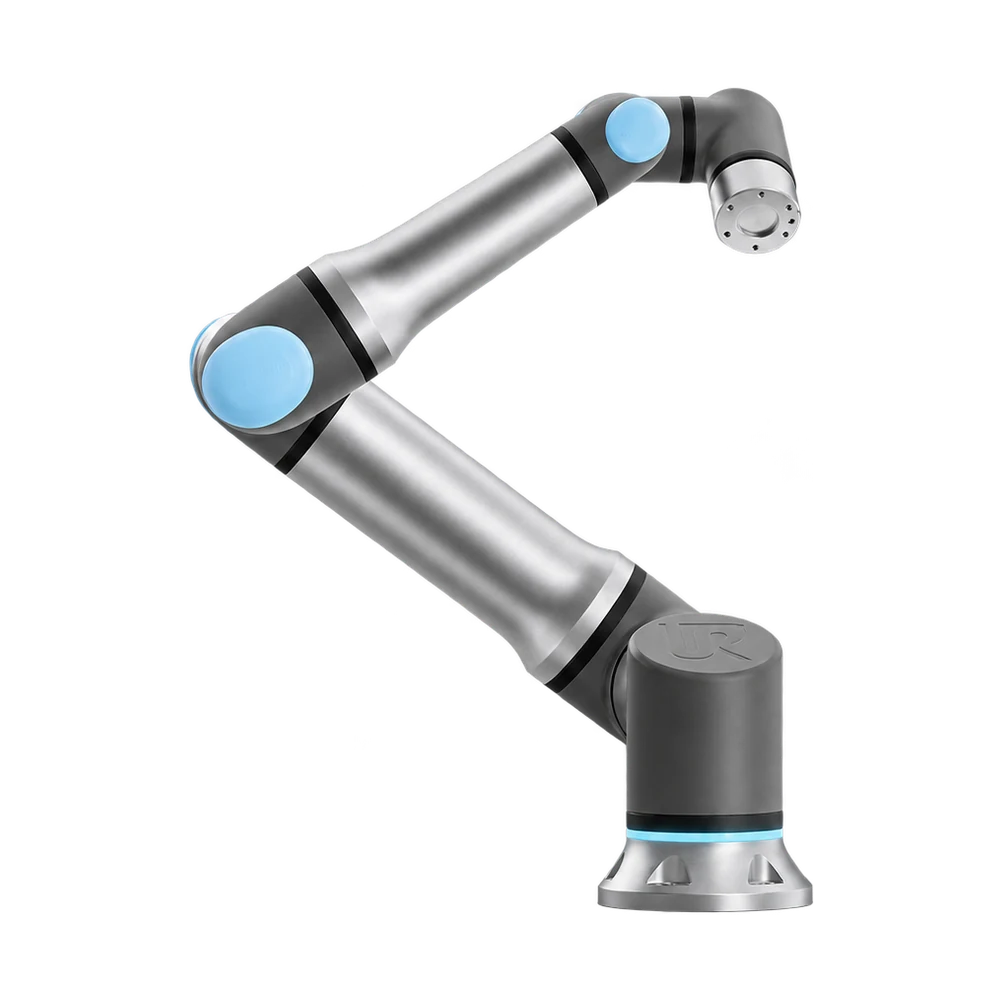
The high-payload Universal Robots cobot for full cases, heavy tooling and components loaded into machines. Compared with the UR20, it prioritises lifting capacity within a more compact radius. This suits pallets close to the conveyor and closely grouped loading stations. With a gripper configured for the component, the UR30 lifts and orients the load in one transfer. Typical applications include palletising and machine tending.
Nominal payload is 30 kg including tool and part. Up to 35 kg is possible under the conditions specified in the manual.
The 1300 mm reach helps you position the base relative to the pickup and drop-off points. Check the tool angle when testing the path.
Rated repeatability is ±0.1 mm. This measures how closely the arm returns to the same position when it repeats a programmed move.
Use PolyScope on the teach pendant to set the movements. Adjust a pickup point and run the cycle again at the workstation.
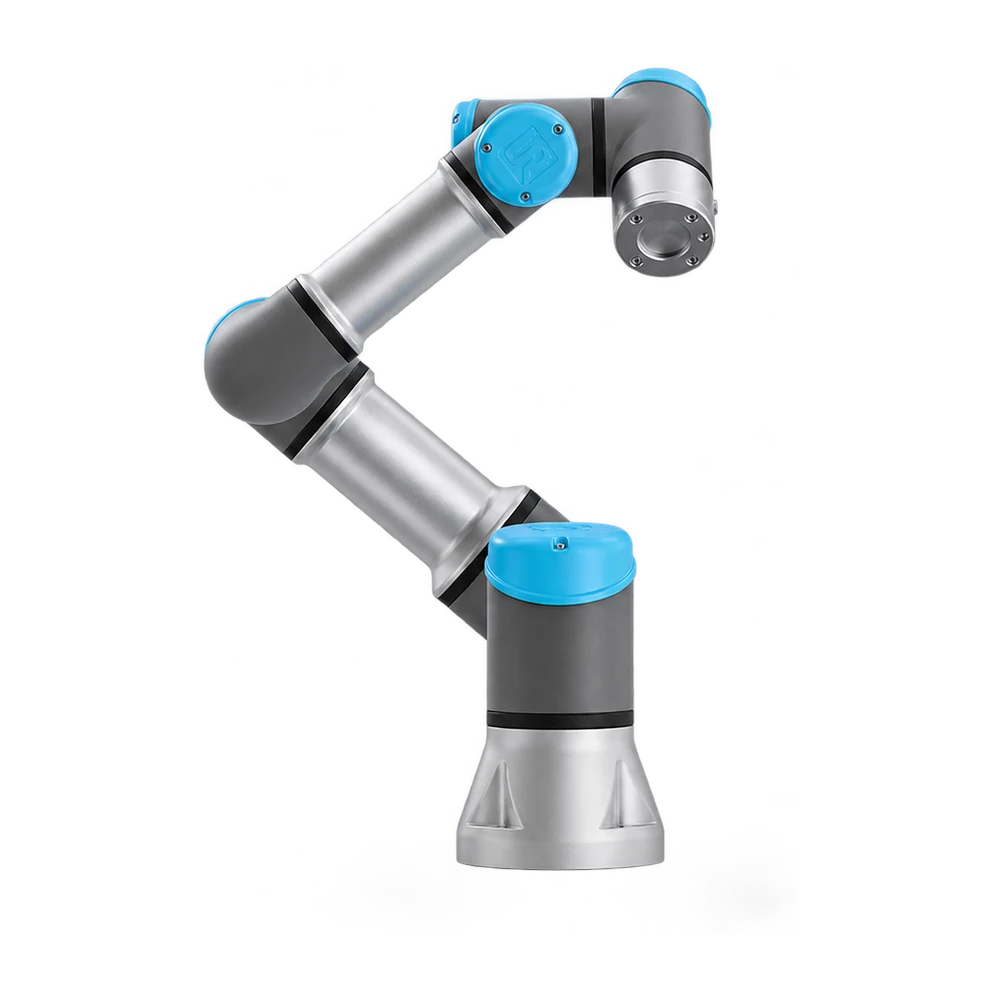
The most compact benchtop cobot in the e-Series family for small parts and light tools. The UR3e fits assembly benches, test stations and electronics cells. Continuous wrist rotation sets it apart for screwdriving, while the small base leaves space for trays and fixtures near the operator. It suits repetitive operations concentrated within a small working area.
The payload is 3 kg. Count the part’s weight first to see how much capacity is left for the gripper.
The base measures 128 mm in diameter. Allow this much space for mounting, then check clearance for the moving arm.
Rated repeatability is ±0.03 mm. This measures how closely the arm returns to the same position when it repeats a programmed move.
Use PolyScope on the teach pendant to set the movements. Adjust a pickup point and run the cycle again at the workstation.
The S1 is Astribot’s research platform for bimanual manipulation and coordinated motion development. Two seven-degree-of-freedom arms share a workspace, with a total span of 194 cm and a rated 5 kg per arm at horizontal reach. APIs, visual tools and simulation support connect model development to the physical robot. It serves labs studying complex manual tasks and robot learning.
Each arm has seven degrees of freedom. Vary the elbow position as the hand approaches the part.
With an arm extended horizontally, the manufacturer rates each arm at 5 kg. Use this posture when comparing with the weight of the part.
Its arm span is 194 cm from end to end. Allow for that span when laying out parts and bins on a bench.
It supports mains power as well as battery operation. Set up a fixed lab workstation for longer sessions.
The G1-D is Unitree’s bimanual platform for manipulation data collection and robot model training. Two arms on an adjustable column work in view of head and wrist cameras, capturing complementary perspectives on the action. Software tools connect acquisition, annotation and training. For universities and AI teams, hardware and data form part of the same development environment.
Each arm has seven degrees of freedom. Vary the elbow position as the hand approaches the part.
A stereo camera sits in the head and an HD camera at each wrist. View the same grasp both in context and close up.
Unitree’s tools collect, label and review sequences. Reuse the demonstrations to train and compare models.
Choose a two-finger gripper or an articulated three- or five-finger hand. The three-finger hand is also available with tactile sensors.
The H2-D is the H2 family’s bimanual manipulator for assembly, component handling and applied research. Each arm has a rated payload of around 7 kg, working with a tilting torso and vertical column to reach different heights. The range covers workstation configurations and a Flagship version with a powered mobile chassis. Integrators can develop applications at one bench or across several stations.
Unitree rates each arm for around 7 kg. Use the rated load to select the components the robot will handle at the bench.
The torso tilts and the column raises or lowers. Together they allow access from floor level to around 2 m high.
Choose a stationary or mobile configuration for the workstation. The Flagship version incorporates the powered mobile chassis.
Each arm has seven degrees of freedom. Vary the elbow position as the hand approaches the part.
The R1-D brings dual-arm manipulation to Unitree’s compact range for technical education, research and prototyping. A5-D and A7-D offer different arm kinematics, with five or seven degrees of freedom per side. Binocular vision combines colour and depth while open interfaces support dedicated tools and software. Optional grippers and hands extend applications from part picking to dexterous manipulation.
A5-D and A7-D offer five and seven degrees of freedom per arm respectively. The choice changes the available approaches to a part.
The stereo module supplies colour images and depth maps. Match the outline of a part to its position in space.
The end interfaces accept optional two-finger grippers or three- and five-finger hands. Try several tools at the same workstation.
Open interfaces expose arm, vision and audio controls. Coordinate a grasp, a camera reading and a spoken cue in one program.
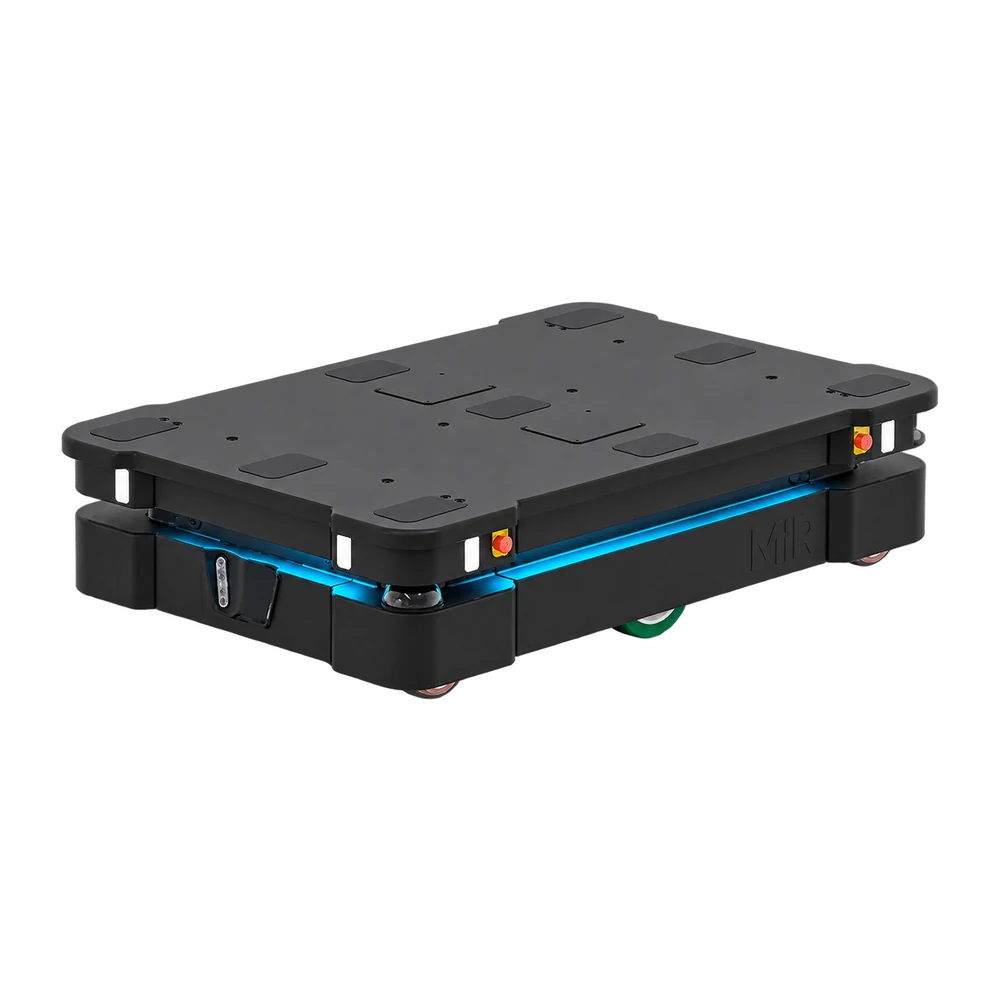
MiR’s autonomous transporter for its heaviest loads carries up to 1,350 kg on the base. It suits warehouses and plants moving large quantities of material between receiving, production and dispatch. The IP52 chassis protects against dust and dripping water. With the optional Euro pallet lift it picks up loads of up to 1,250 kg from a dedicated stand and delivers the pallet intact, with no need to split the goods.
The base carries up to 1350 kg of materials or equipment. Include the weight of the mounted transport module when calculating the load.
The optional Euro pallet lift handles up to 1,250 kg. The robot drives beneath the dedicated stand and lifts the pallet to take it to production.
Its maximum travel speed is 1.2 m/s. When estimating the run from storage to the line, include the time spent collecting and dropping off the load.
The IP52 enclosure protects against dust and dripping water within the limits of that rating. Compare that rating with conditions in each department on the route.
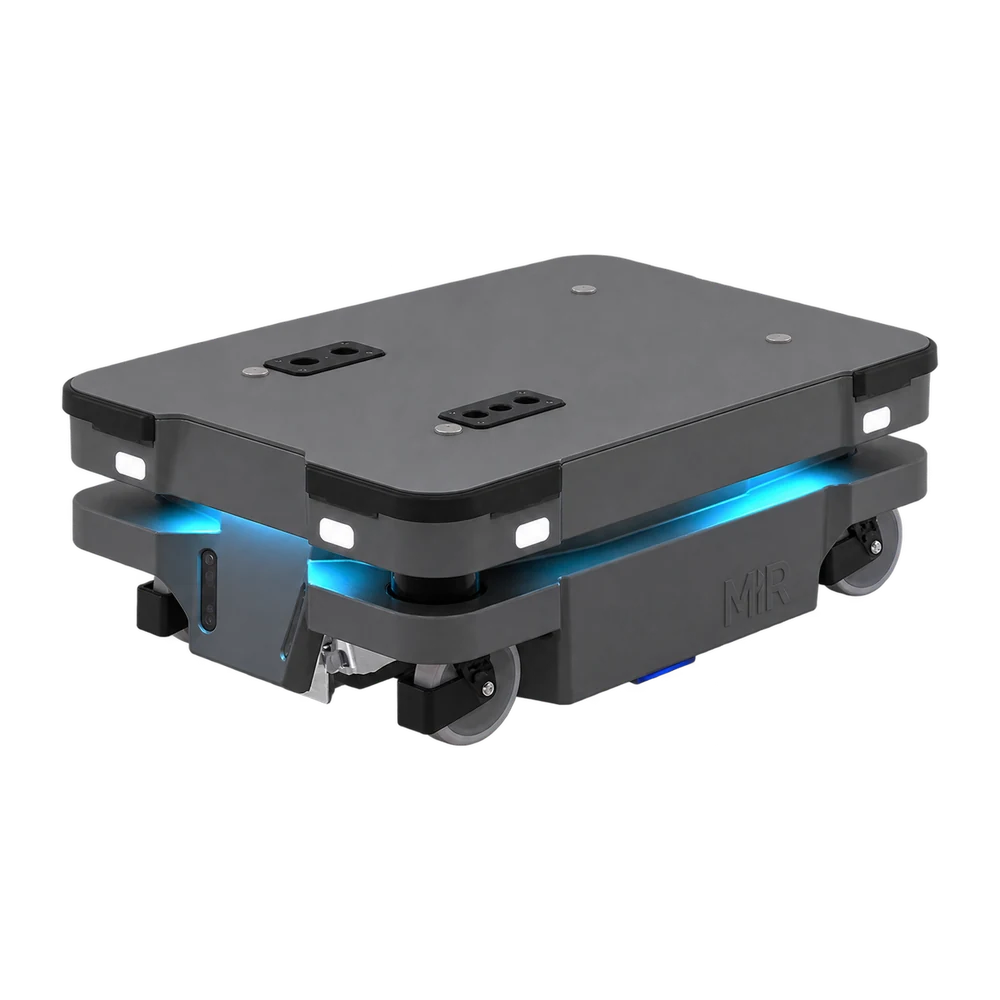
MiR’s compact mobile robot pairs an 80 cm long base with a 250 kg payload. It supplies multiple workstations with bins and parts, including on routes through narrow doors or corridors. Two dedicated accessories extend the types of delivery it can handle: an automatic hook for carts and a carrier for mobile shelving. Materials can travel in the sequence originally prepared in the warehouse.
The base carries up to 250 kg of materials or equipment. Size a supply run by adding up the weight of the bins and their contents.
The base measures 58 × 80 cm and stands 30 cm tall before a module is fitted. The manufacturer specifies a minimum clear passage of 80 cm for the robot.
The optional hook detects the cart and hitches it for towing. This suits bins that stay on the same cart right up to the workstation.
The optional Shelf Carrier module collects and delivers shelves. In this configuration, the shelving and its contents travel together.
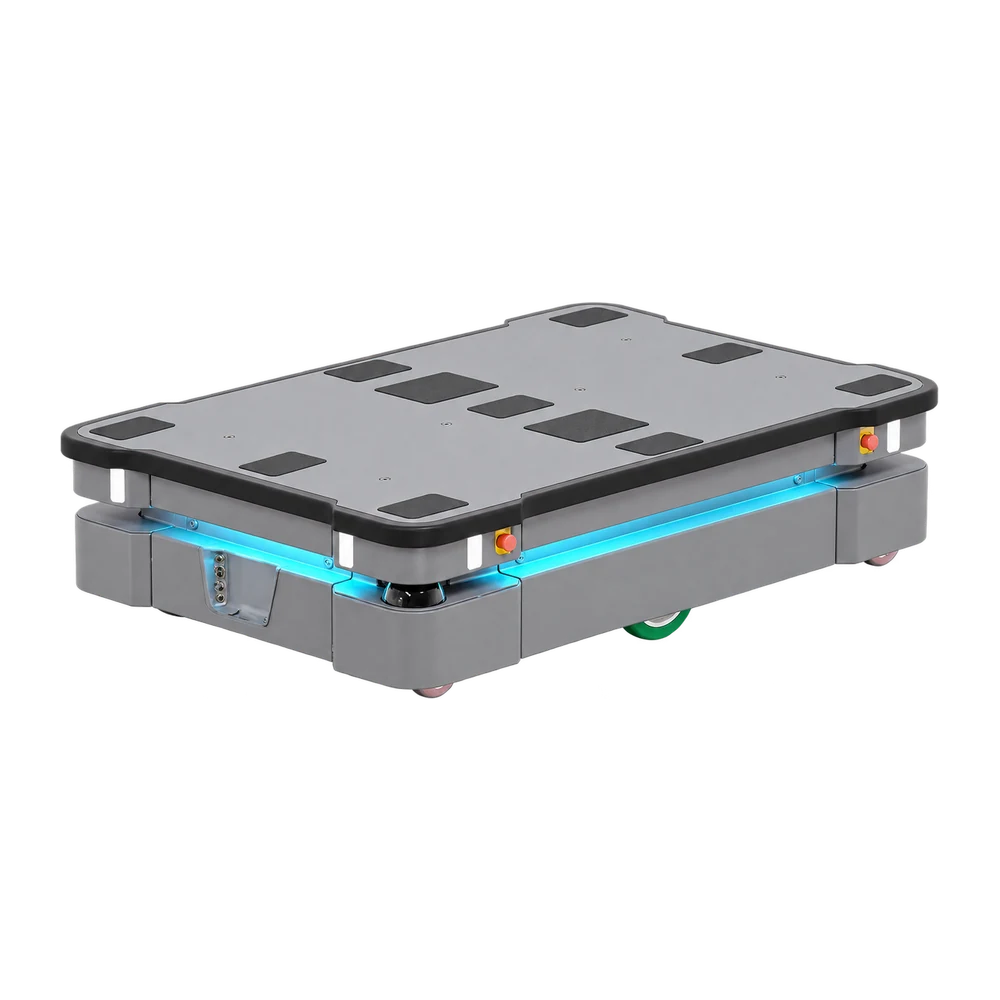
MiR’s 600 kg model is an autonomous platform for warehouse-to-line transfers. It combines heavy material transport with travel speeds up to 2 m/s. Its strength is the choice of top module: the Shelf Lift moves prepared carts and racks, while the Euro pallet lift picks up loads up to 500 kg from MiR stands. These optional configurations serve two different approaches to line replenishment.
The optional Euro pallet lift picks up loads of up to 500 kg from a MiR rack. It lowers after pickup for the journey to the line.
The optional Shelf Lift picks up carts and shelving for delivery. The load can stay on its shelves all the way to the point of use.
Its maximum travel speed is 2 m/s. To plan supply frequency, add the stops for exchanging loads to the travel time.
The IP52 enclosure provides protection against dust and dripping water. This rating applies to the base. Check the protection of the selected top module separately.
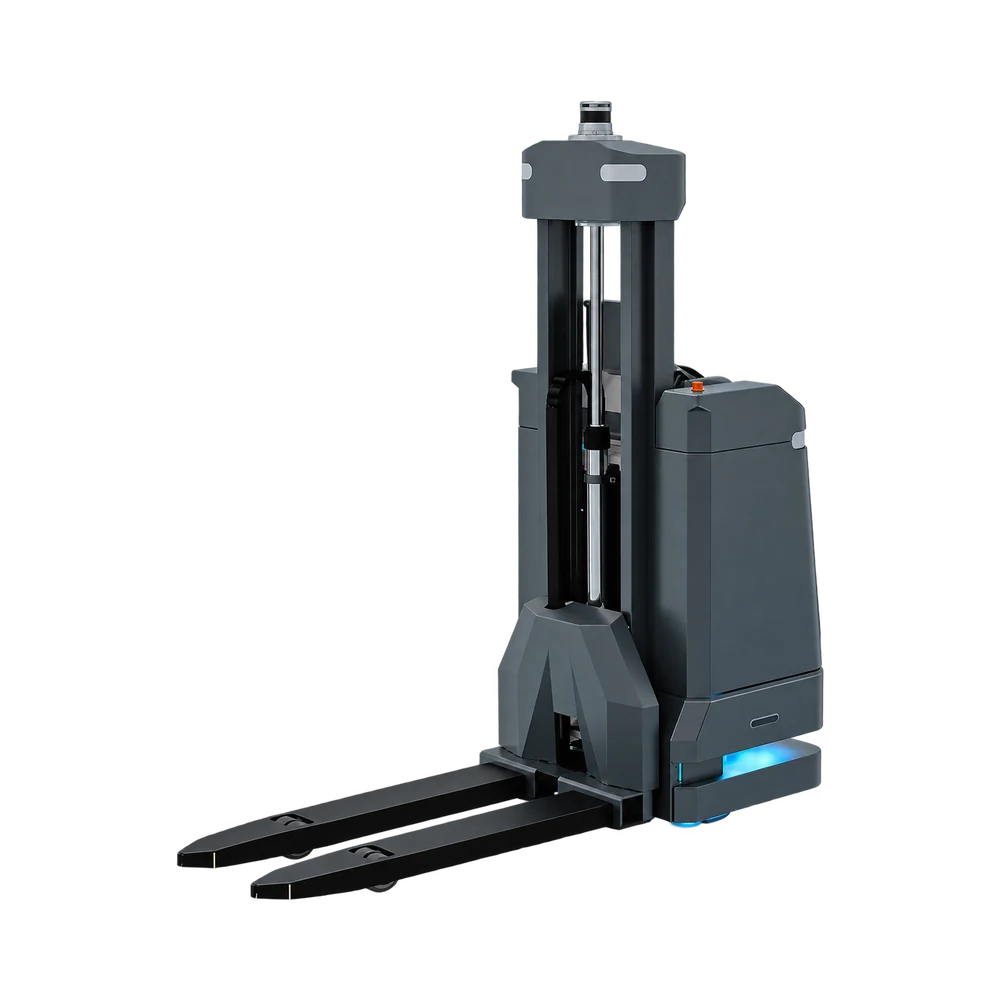
MiR’s autonomous pallet jack recognises and moves pallets weighing up to 1,200 kg using integrated forks and 3D vision. It serves warehouses and plants with repeated pallet pickups and drops throughout a shift. Visual recognition establishes the approach even when a pallet was set down slightly askew. Cameras and lidar detect obstructions at floor level and overhead, allowing the vehicle to adapt its delivery route.
It carries pallets of up to 1,200 kg per trip. Compare the fork capacity with the combined weight of the pallet and the goods on it.
The 3D cameras locate the pallet for fork entry. The robot uses that reading to approach in the correct direction.
Lidar and cameras check for obstructions both at floor level and overhead. This also covers objects projecting above the travel path.
If an obstacle blocks the aisle, the robot can recalculate its route. Cameras and lidar update the picture of available space as the robot travels.
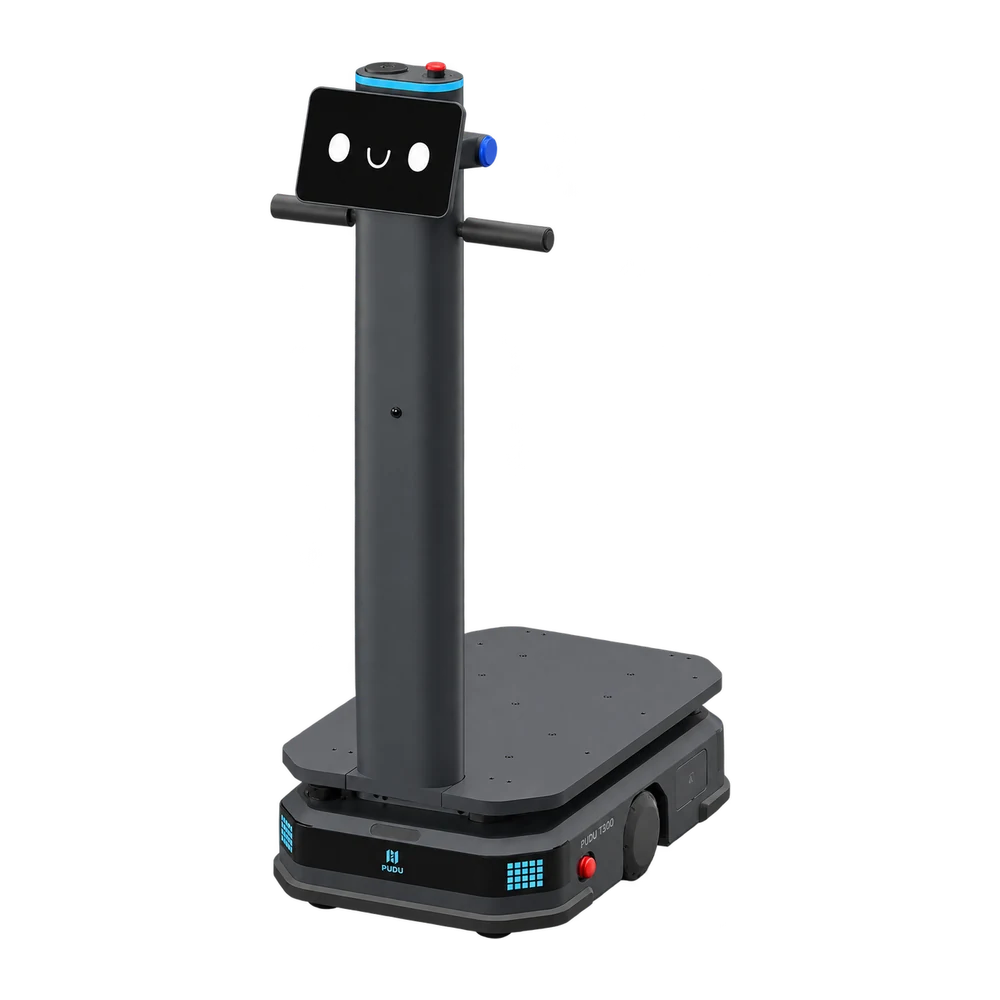
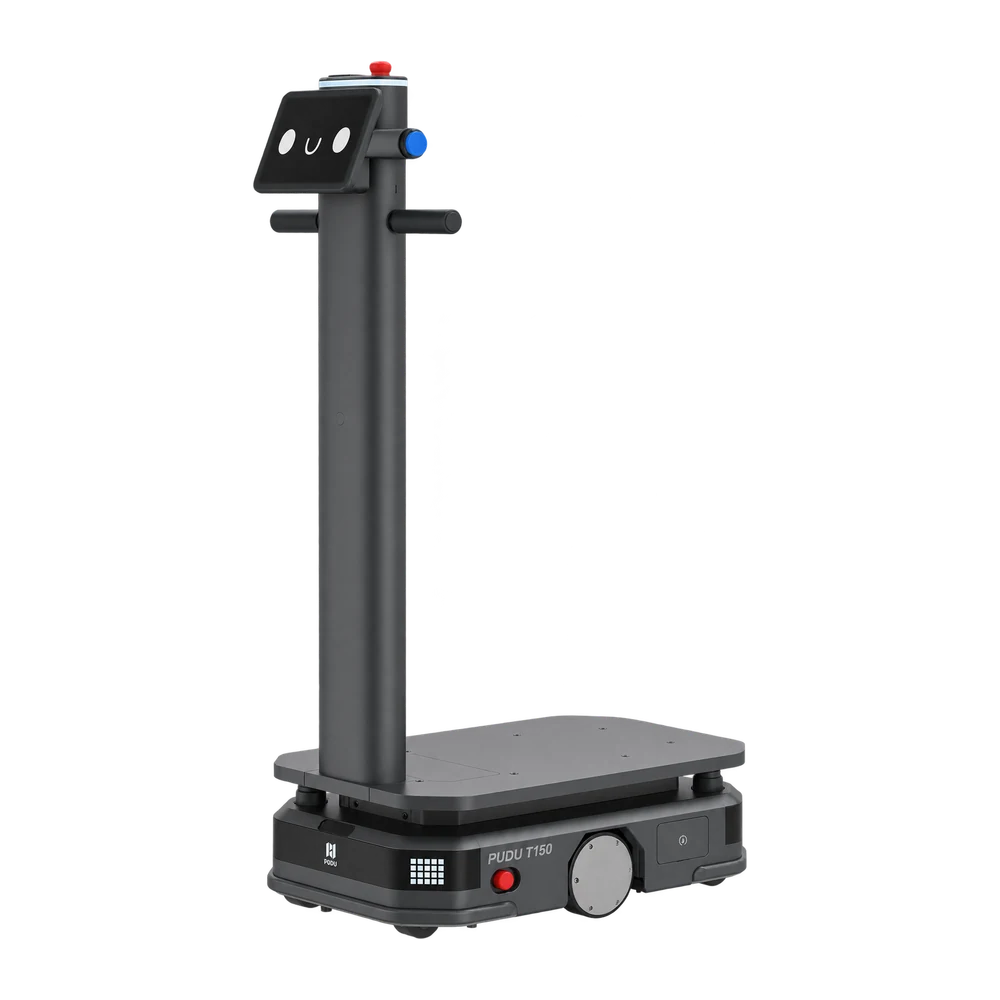
PUDU’s 300 kg shop-floor delivery robot combines autonomous deliveries, convoy travel and power-assisted pushing. It suits batch manufacturing, from supplying lines to taking samples for quality checks. The base fits through 60 cm openings and navigates using vision and lidar. Follow mode lets several T300s leave in sequence with materials prepared together, while electric assistance supports manual positioning.
The base carries up to 300 kg of materials or equipment. Load several bins of parts to supply multiple workstations on the same run.
The base needs a clear opening of at least 60 cm. Check the width of the load too. This matters particularly at doors and openings between departments.
Visual recognition lets several T300s line up and follow one another. Batches prepared together can therefore leave in the same group.
Electric assistance helps with manual pushing, including when mapping the site. The operator can guide the robot along the route being recorded.
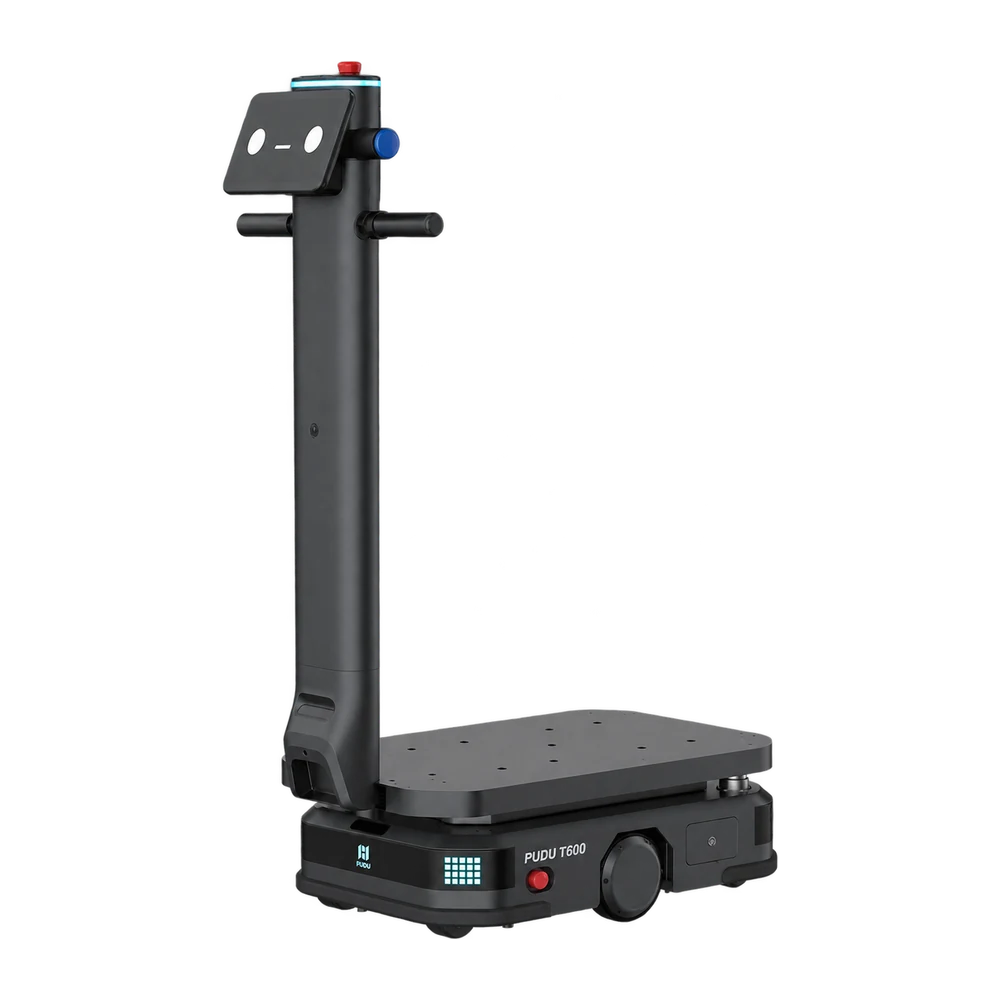
PUDU’s transporter for loads up to 600 kg serves heavier flows between storage and production. It recognises groups of racks and combines visual landmarks with lidar scans to navigate the aisles. VDA 5050 support suits sites coordinating multiple vehicles with a compatible fleet manager. Heavy replenishment jobs can therefore be scheduled alongside other internal transport.
The base carries up to 600 kg of materials or equipment. Group materials for one job and deliver them to the line in a single trip.
The base needs a clear opening of at least 70 cm. Check the width of the load too. Measure the narrowest point between storage racks too.
It combines visual mapping with lidar scans to navigate the aisles. Both readings contribute to its position estimate during delivery.
VDA 5050 lets a compatible fleet controller coordinate its assignments. T600 trips can then be included in the schedule for other transport jobs.
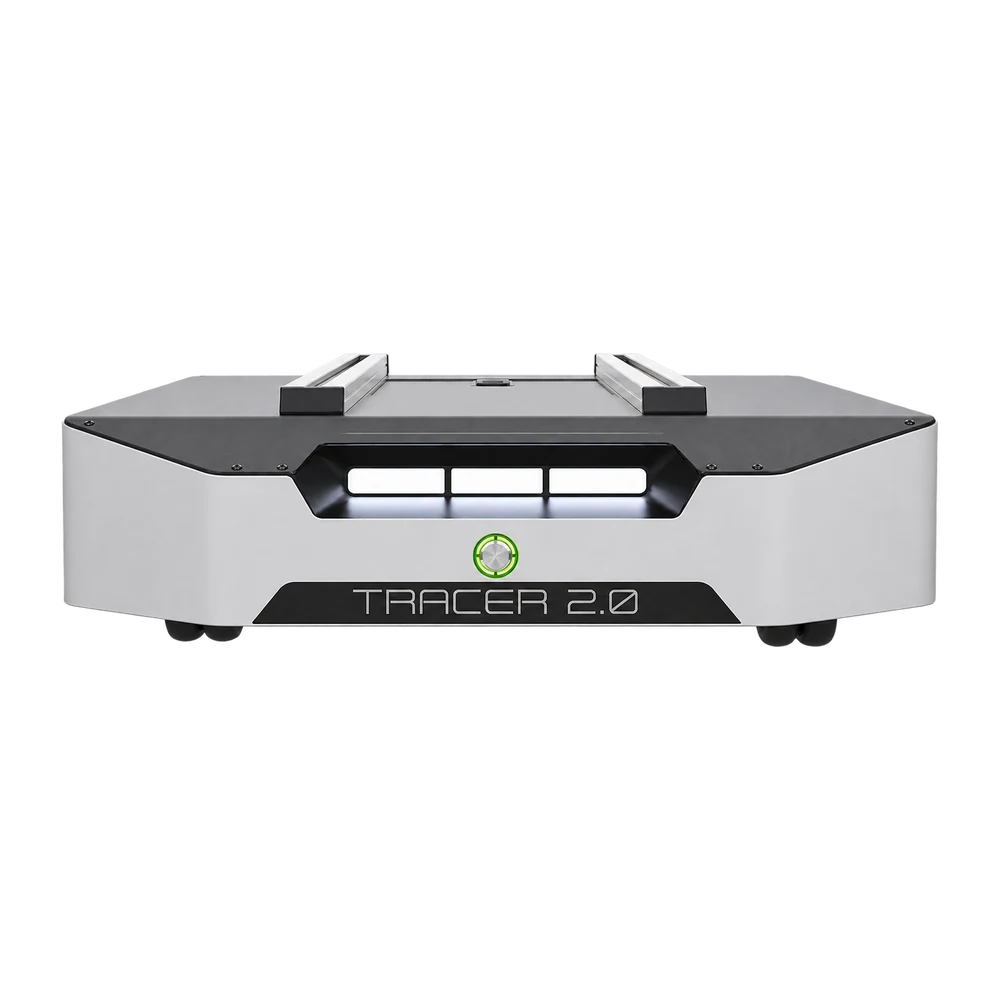
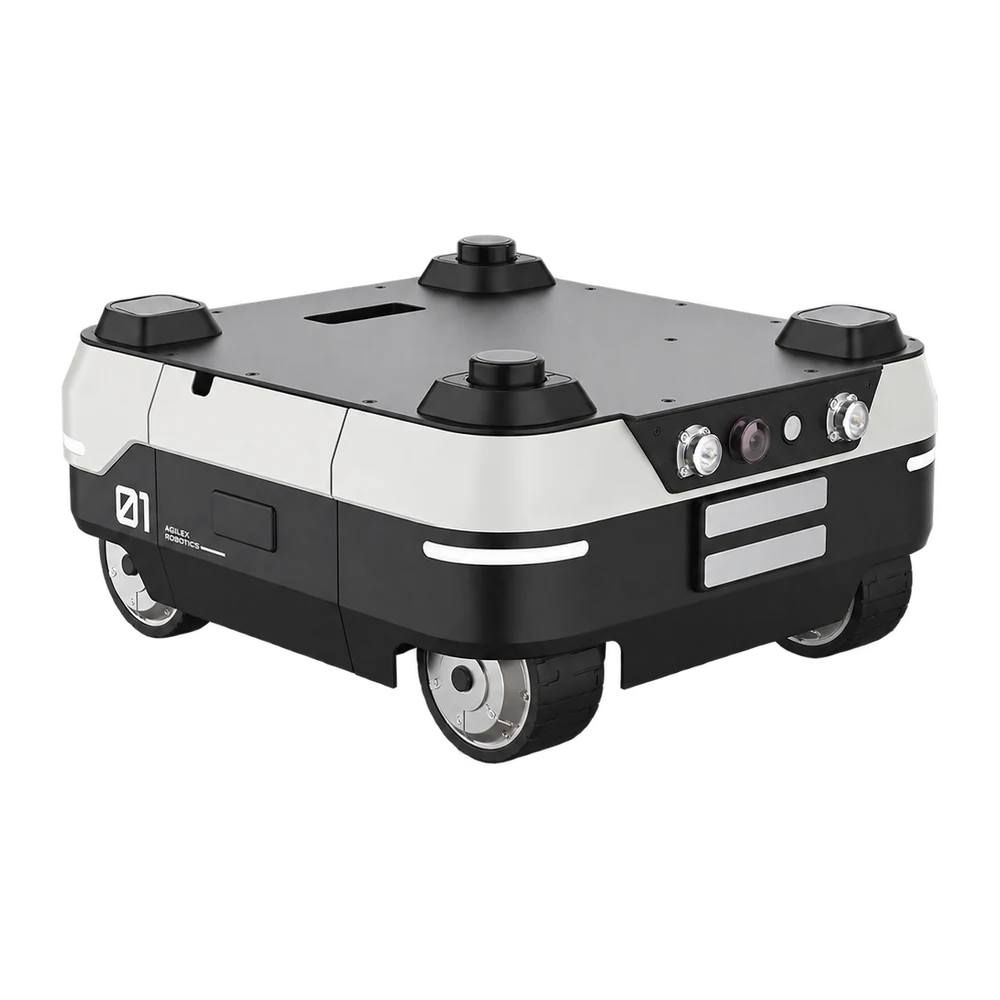
AgileX’s low-profile base is designed for teams developing transport vehicles for factories and warehouses. The differential-drive chassis carries up to 150 kg and lets the integrator choose shelves, handling equipment and sensors. Aluminium rails simplify mounting, while CAN and open software resources connect motion control to the developer’s own system. The resulting transporter can be built around the load it needs to serve.
The base carries up to 150 kg of materials or equipment. When designing the transporter, allow for shelves, containers and goods within the same payload.
It turns by varying wheel speeds on either side of the base. At delivery points allow room to turn the chassis towards the bench.
Its maximum travel speed is 2 m/s. Use this design figure to compare aisle lengths with the required transfer time.
Open interfaces let you add a computer, sensors or shelves for packages. The same chassis can be tailored to the size of your shop-floor bins.
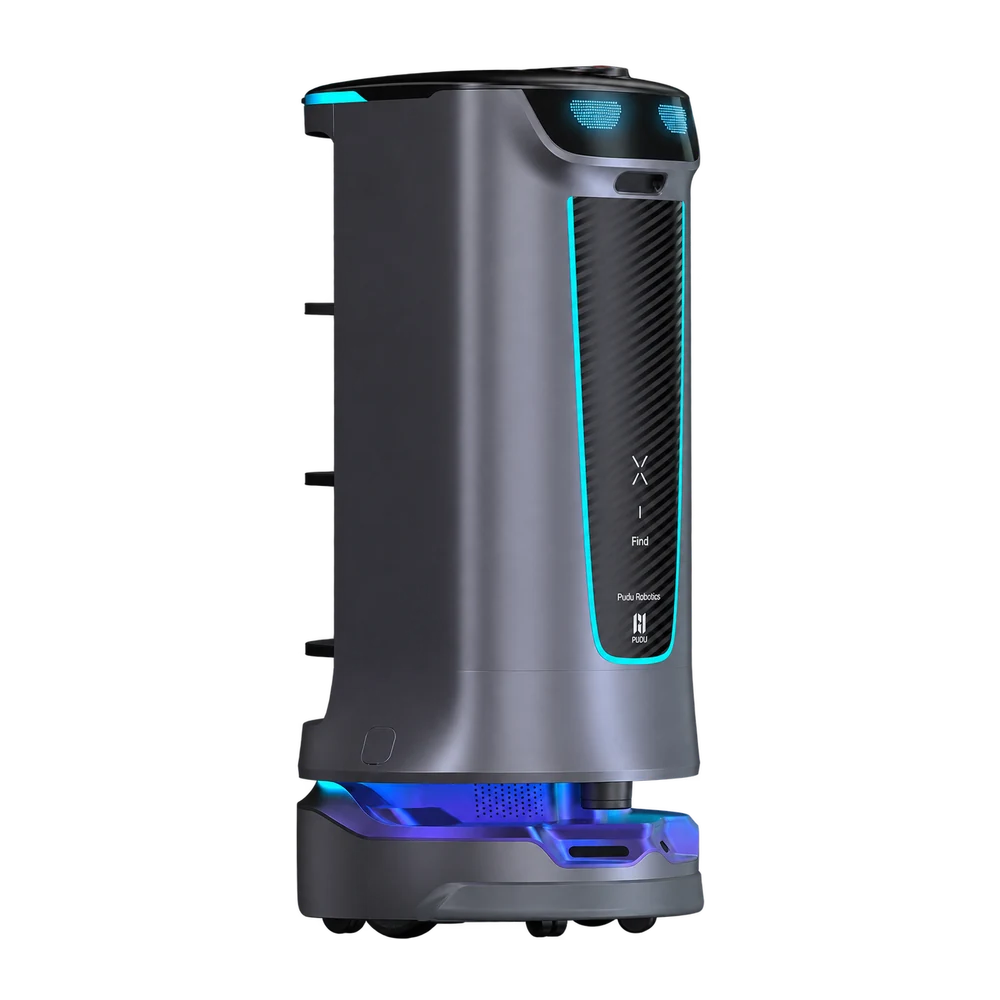
PUDU’s autonomous pallet handler combines a 2,000 kg capacity with storage-position detection and automatic fork alignment. It serves staging areas and warehouses where pallet positions vary slightly from one delivery to the next. The system locates the load and checks its clearance during transfer. Standard and narrow-fork versions suit different pallet openings.
The forks carry pallets weighing up to 2,000 kg. This rating applies to both the standard and narrow-fork versions.
Outside fork width is 620 mm on the standard version and 550 mm on the narrow version. Choose the version to match the openings in the pallets you receive.
It accommodates pallet offsets of up to 15 cm and angles of up to 15°. This tolerance helps when collecting pallets that have been positioned manually.
It checks whether the storage position is occupied before planning the drop. The same system locates the pallet for the next pickup.
The light-duty model in PUDU’s industrial range carries up to 150 kg and is designed for frequent deliveries of small components. It serves assembly stations in electronics and plastics manufacturing using map-based navigation. Its swappable battery lets deliveries continue while the depleted pack is charging. Alongside the standard model, the Lifting variant raises load carriers for transfer.
The base carries up to 150 kg of materials or equipment. This size suits small batches of plastic parts or electronic components.
Swap the battery between runs and recharge it separately. With a spare ready, supply runs can continue while the battery recharges.
The Lifting variant raises the load by up to 60 mm. Compare that stroke with the distance needed to lift your load carrier clear.
It navigates using both visual landmarks and lidar measurements. Both sources help locate the base as it moves from storage to the workstations.
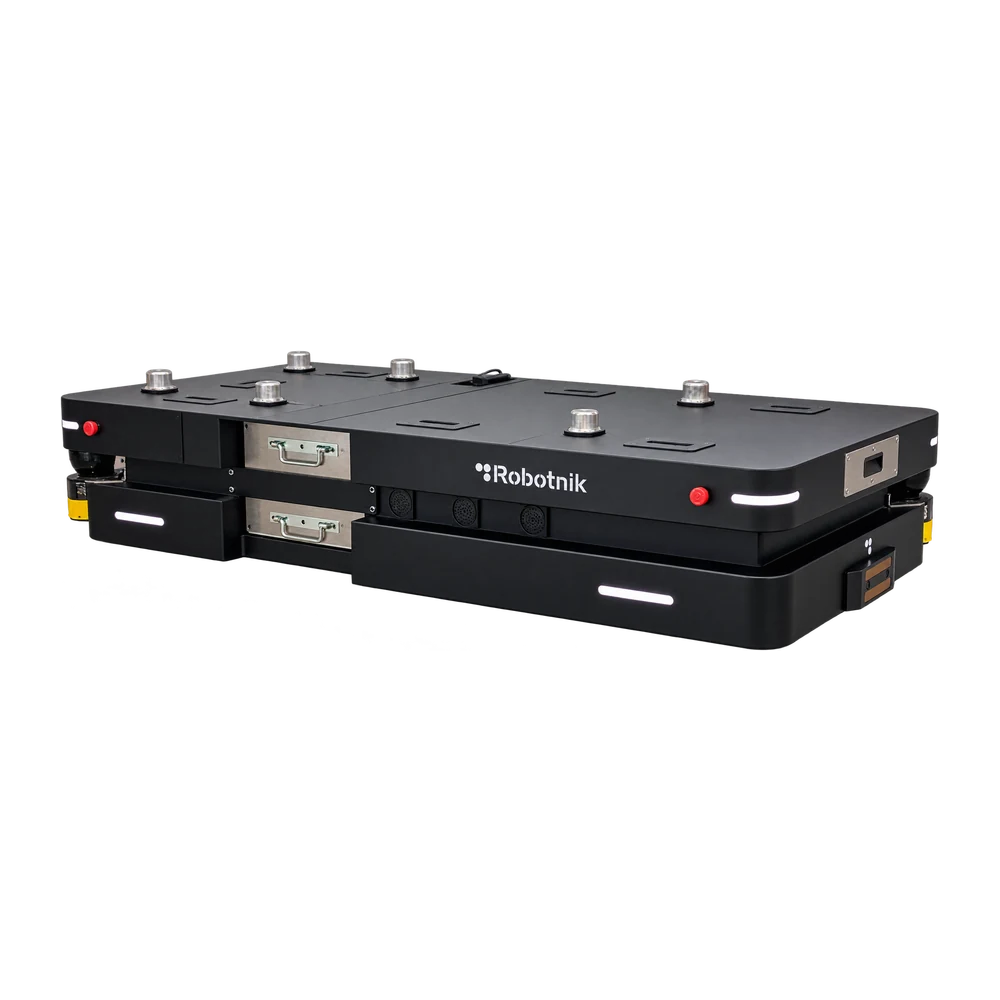
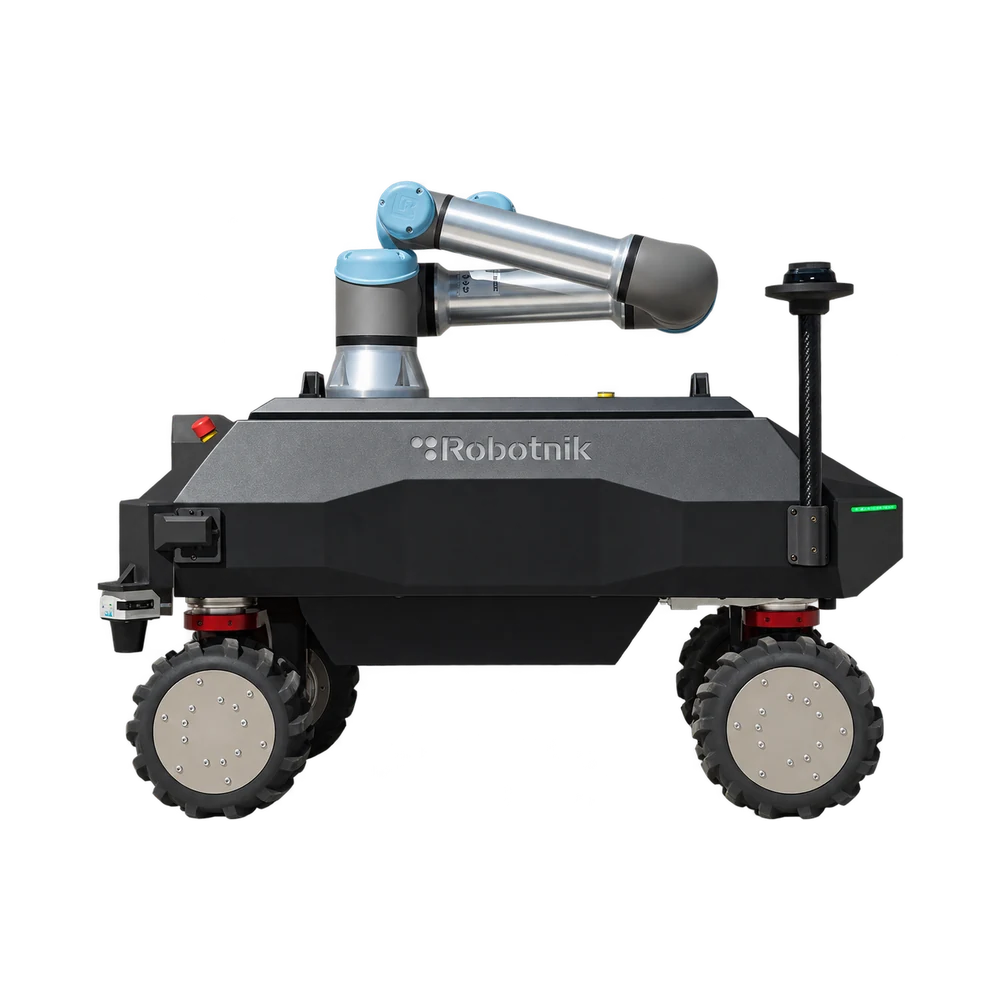
Robotnik’s one-tonne platform combines heavy industrial transport with the freedom of an omnidirectional base. It suits production departments where loading and unloading stations require a sideways approach. Upper mounting points support fixtures specific to the part being carried. Optional lifts, roller beds and belt conveyors adapt the handover to the equipment receiving the material.
The base carries up to 1000 kg of materials or equipment. Move a single bulky load between departments without splitting it into multiple deliveries.
The omnidirectional drive aligns the platform without turning the load. This is useful when the unloading bench runs parallel to the aisle.
Six upper anchor points secure the chosen setup. You can design the mounts for the structure supporting the goods.
An optional lift, roller bed or belt conveyor transfers goods to the line. Choose the module to match how the receiving station takes the material.
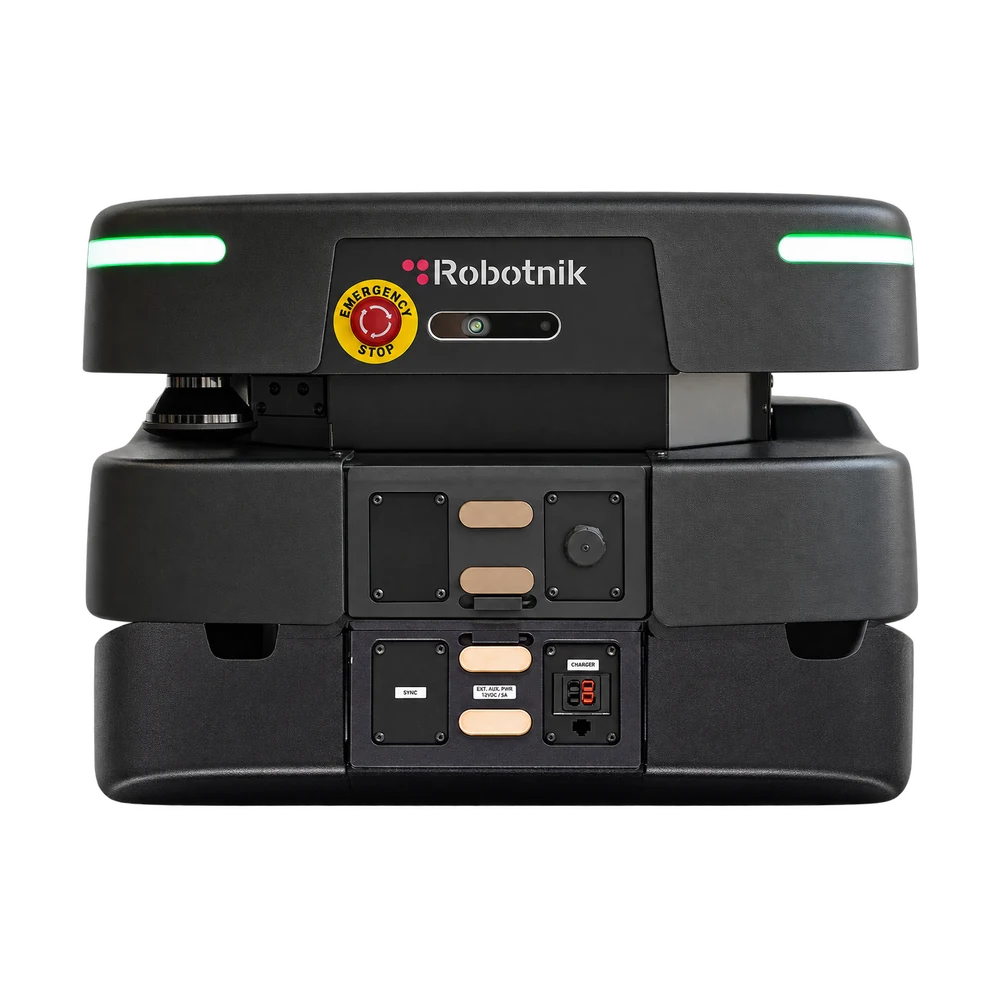
Robotnik’s modular indoor robot serves departments where people, materials and equipment share routes. It is designed for logistics, quality control and ROS 2 application development. Laser navigation and safety sensors let it stop or seek another route when an obstacle blocks the way. An optional lift or conveyor can be fitted on top to connect transport with workstation handover.
The 2D safety lidars and safety controller monitor the area around the base. The standard package covers the full 360° perimeter during travel.
The RGB-D camera supplies colour images and depth information. The image lets you distinguish nearby objects from those in the background.
At an obstacle it can stop or find another route to the next waypoint. The delivery point specified in the mission remains its destination.
A lift and belt conveyor are optional modules for load transfer. Choose between lifting a carrier and conveying a package onto the bench.
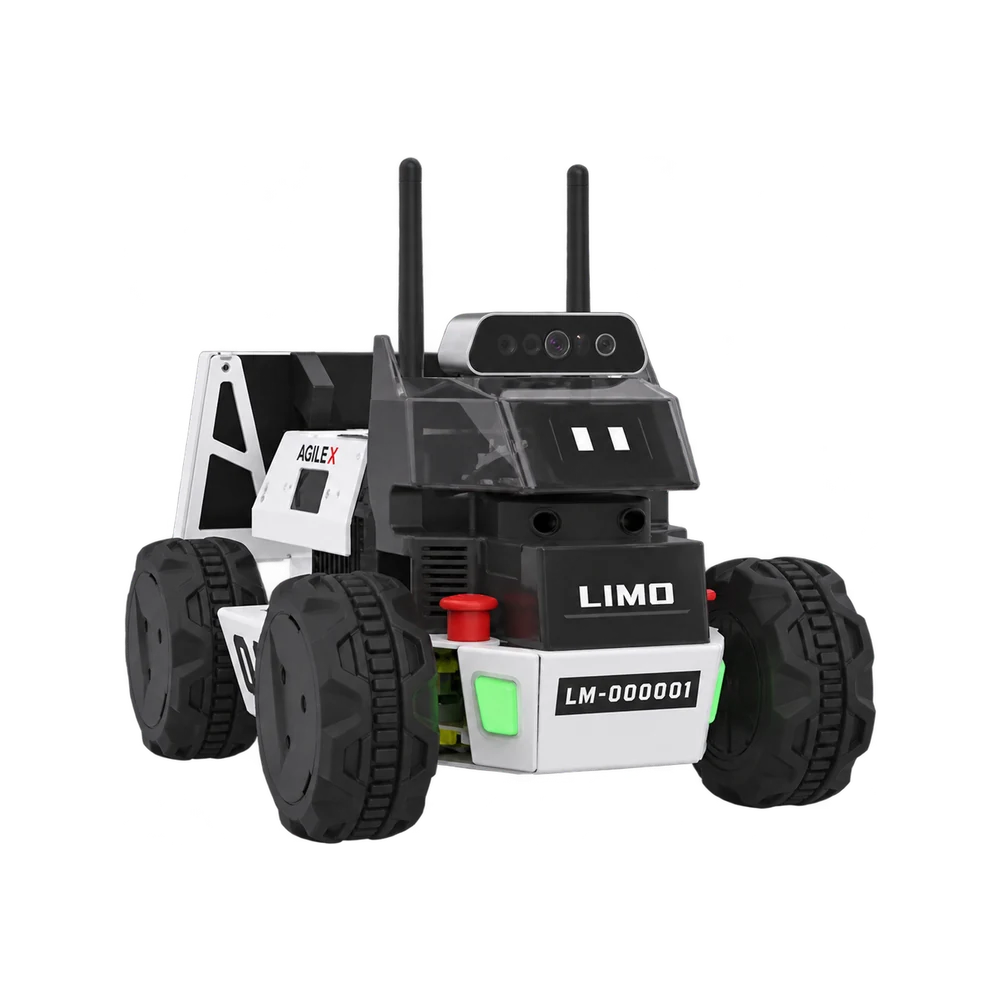
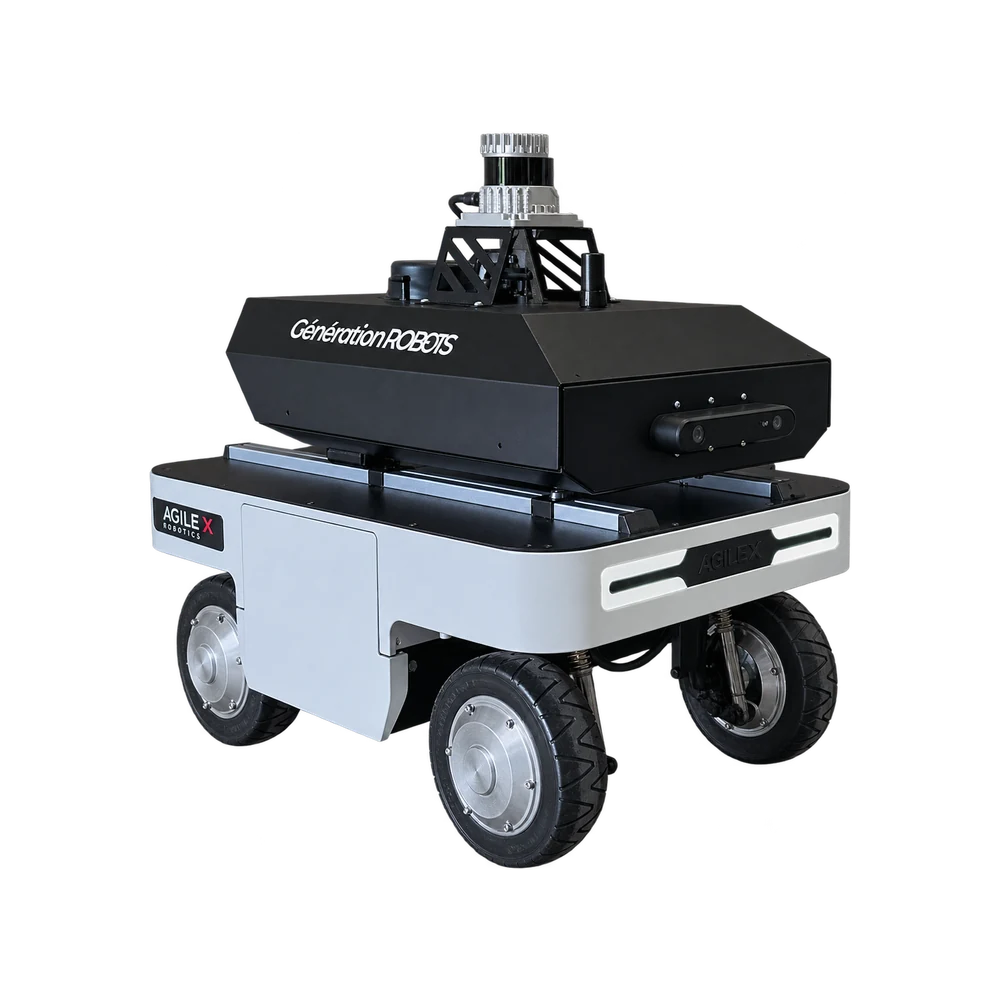
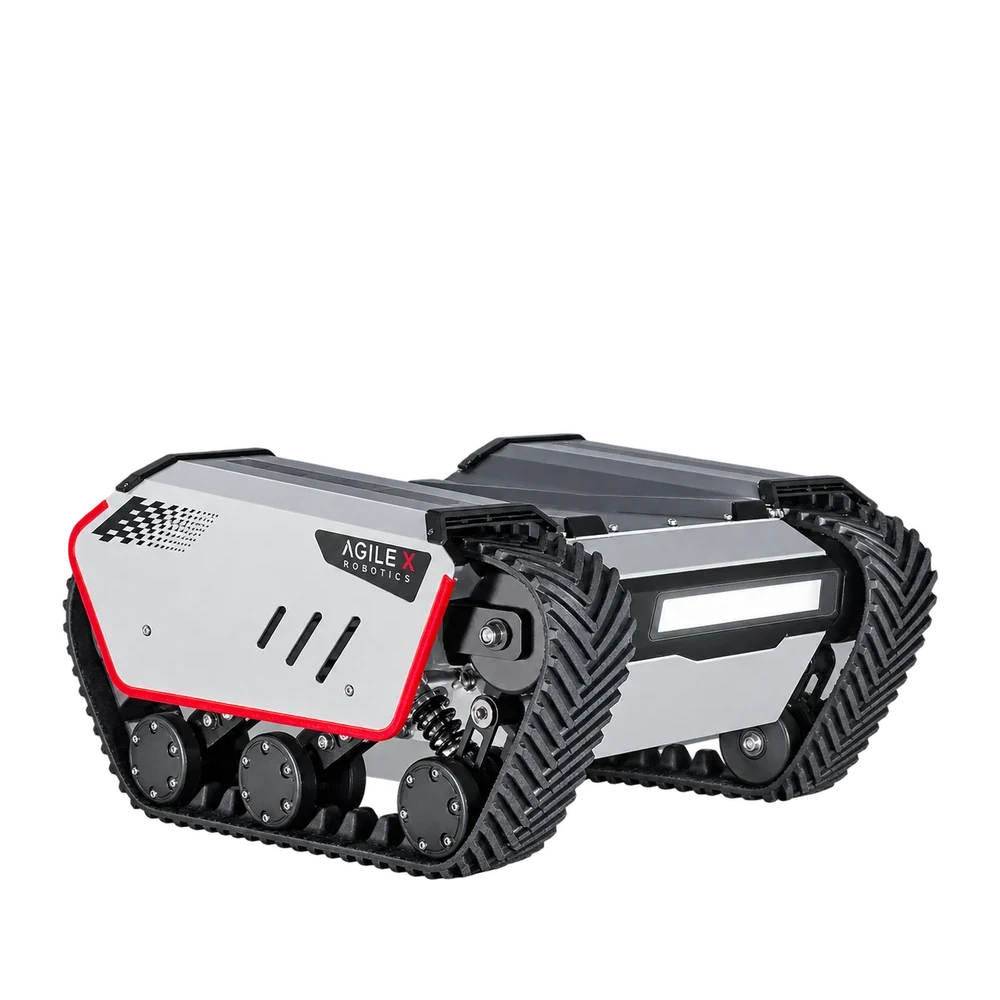
AgileX’s reconfigurable education platform brings four motion modes together in one lab robot. It suits mobile robotics courses, university projects and early ROS navigation experiments. Ackermann steering reproduces car-like handling, differential drive allows in-place turns, Mecanum wheels add sideways motion and tracks change contact with the surface. All four configurations can be compared on the same chassis.
The front wheels steer like a car to study turning radius. Record the resulting path at different steering angles.
In differential mode it can turn in place by varying speed on either side. Compare the manoeuvring space with that required in Ackermann mode.
Fit Mecanum wheels to test sideways motion without changing heading. In class, try following the edge of a bench with the robot facing sideways.
Fit the tracks to repeat the trials with a continuous contact surface. Compare its path with the wheeled setup on the same surface.
AgileX’s compact omnidirectional base is designed for mobile manipulation prototypes, from lab arms to humanoid upper bodies. Its 25 cm height provides a low mounting surface for integrated equipment, with a payload of up to 80 kg. Four driven, steerable wheels let the prototype approach a bench from different directions with the tool still facing the work. The arm, gripper and sensors are selected for each project.
The base carries up to 80 kg of materials or equipment. Count the torso or arm, mounting plate and electronics in the onboard load.
The base measures 552 × 500 mm and is 250 mm high before fitting the prototype. This lets you check the resulting height of the arm mounting point.
All four wheels are driven and steerable. The base can move the prototype along a bench while keeping it facing the work surface.
At full load the manufacturer specifies 2.5 hours of runtime. Use that figure to plan sessions with the fully assembled prototype.
AgileX’s omnidirectional field robotics platform combines a 120 kg payload with a compact chassis and 105 mm ground clearance. It serves labs and integrators moving instruments or prototypes between work points. Four driven, steerable wheels allow sideways movement while retaining sensor orientation. ROS and CAN support connect the base to the project’s control system.
The base carries up to 120 kg of materials or equipment. Mount the complete measuring setup if the instruments, brackets and computer fit within the payload.
There is 105 mm of clearance between chassis and ground. Allow for this clearance when designing brackets that extend beneath the platform.
Four driven, steerable wheels enable movement in any direction. Centre a sensor on its target with a sideways adjustment.
CAN interfaces and ROS drivers connect the base to your test software. Odometry lets you compare estimated motion with the motion requested.
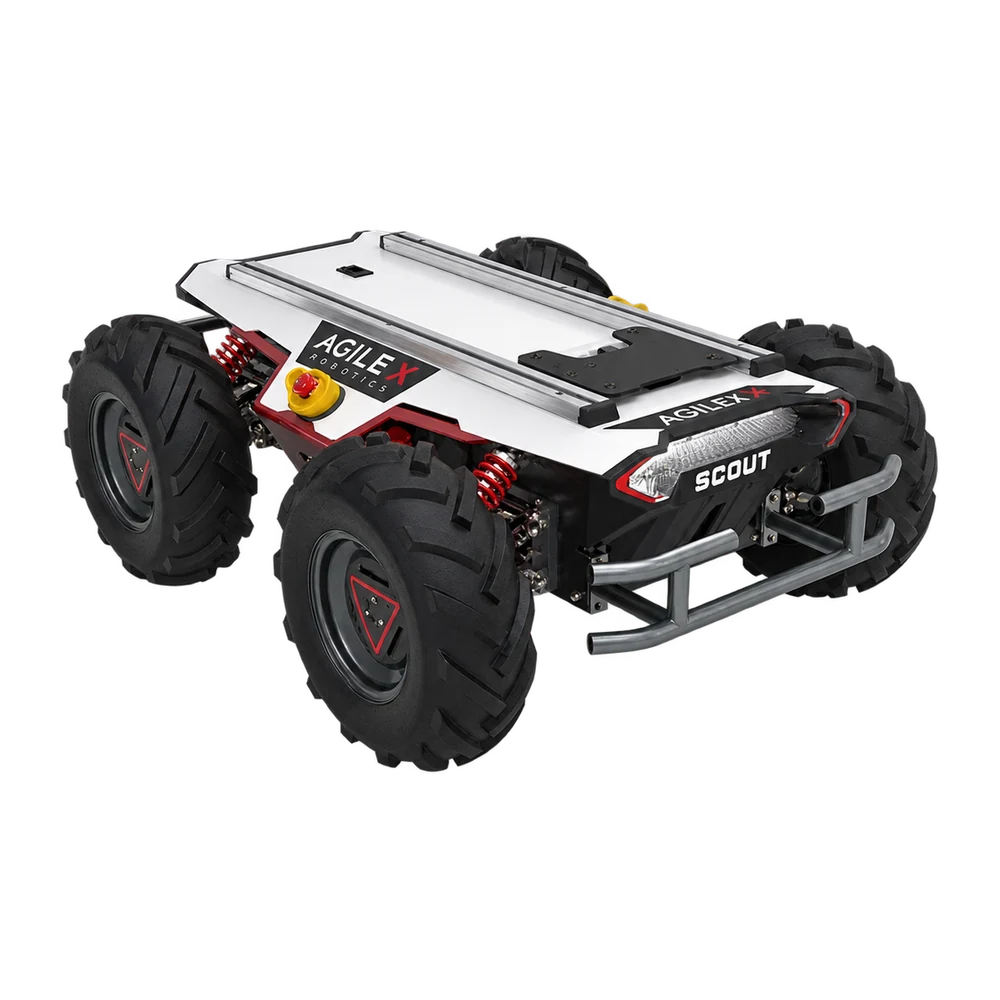
AgileX’s four-wheel-drive vehicle is a research base for up to 50 kg of sensors and equipment. It suits perception and navigation prototypes on uneven outdoor routes. Each wheel has its own motor and double-wishbone suspension to follow changes in terrain. Aluminium rails make it easier to change instruments between surveys, while CAN provides access to chassis control.
The base carries up to 50 kg of materials or equipment. Divide that capacity between field sensors, mounting brackets and the acquisition computer.
A 200 W brushless servo motor drives each wheel. Each wheel has its own drive as the robot moves across an uneven section.
Double-wishbone suspension with dampers lets the wheels follow uneven ground. The manufacturer specifies that obstacles up to 10 cm high can be crossed.
Aluminium T-slot rails accept sensor brackets and test kits. Sensor positions can be changed between two measurement series.
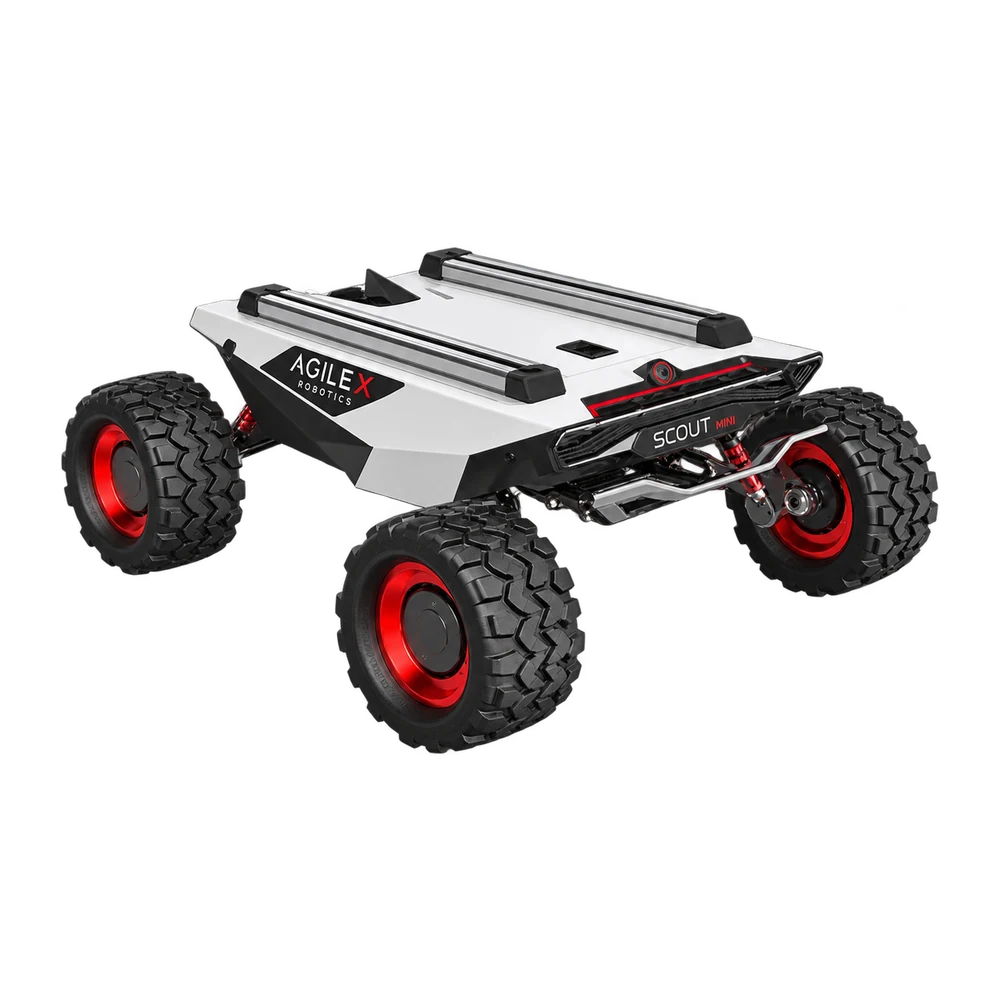
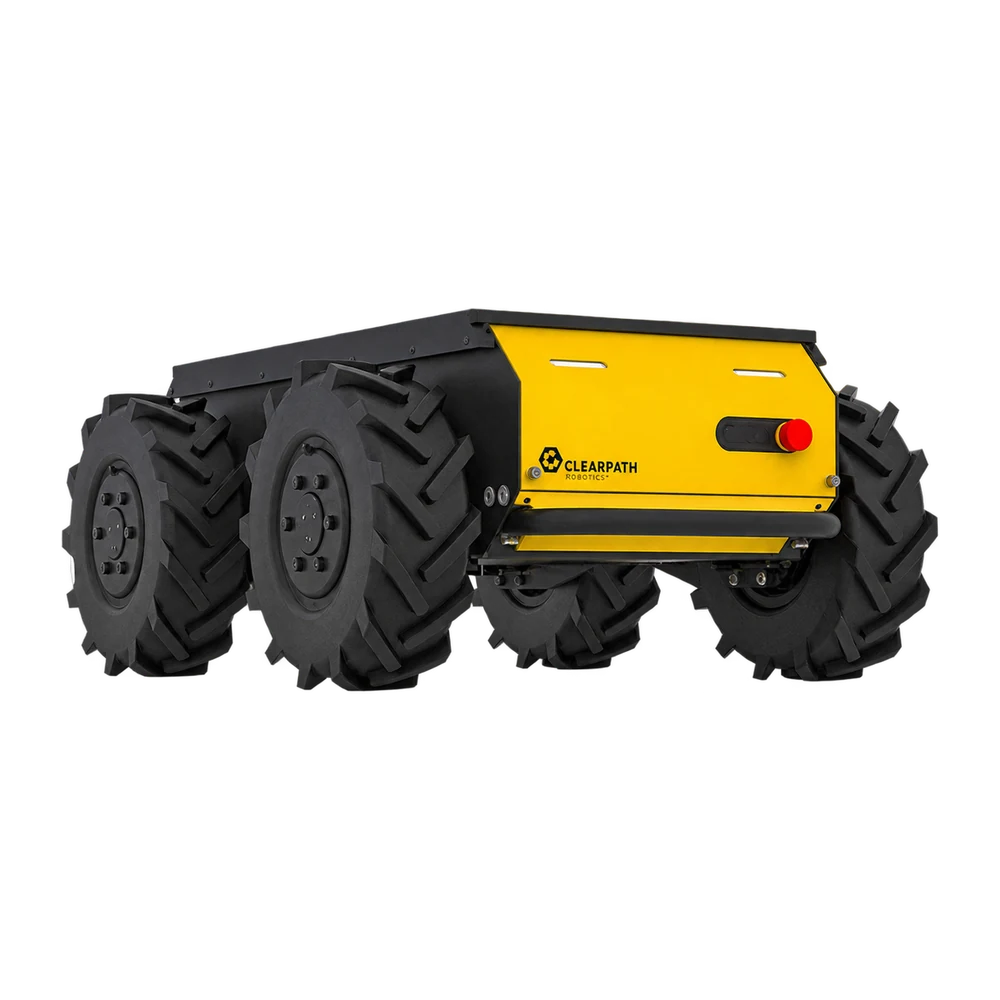
The compact research base in the Scout family brings four-wheel drive and independent suspension to projects with up to 10 kg of lightweight instrumentation. It suits universities and developers studying perception and motion in labs and controlled outdoor spaces. The chassis provides interfaces for project-specific computing, lidar and cameras, allowing navigation software and sensors to evolve with the prototype.
The base carries up to 10 kg of materials or equipment. Trial a compact perception setup before moving it to a larger machine.
Four-wheel differential drive lets you steer by controlling the two sides. Compare turns with different radii and speeds during a test.
Each wheel has independent suspension to follow the terrain. Repeat a route from the lab floor onto an uneven outdoor section.
For autonomous trials you can integrate lidar, a camera and an onboard computer. Choose them to suit the map type and the data needed for localisation.
Clearpath’s field platform is designed for research teams taking complex measuring equipment outdoors. The top deck accommodates up to 100 kg of instrumentation and the interface board distributes power to mounted devices. Three battery capacities suit different survey durations and instrument power demands. The setup can remain assembled for successive data collection sessions.
The base carries up to 100 kg of materials or equipment. Include brackets and cabling for your field equipment when checking that limit.
Choose a 40, 80 or 120 Ah battery to suit the planned survey. The choice changes the energy available to both the base and its connected devices.
The interface board provides eight power connectors for mounted devices. The outlets share the current limits of their respective power rails.
The centre-of-mass diagram helps position instruments for sloped terrain. Mounting the same mass higher on the chassis changes the stability of the base.
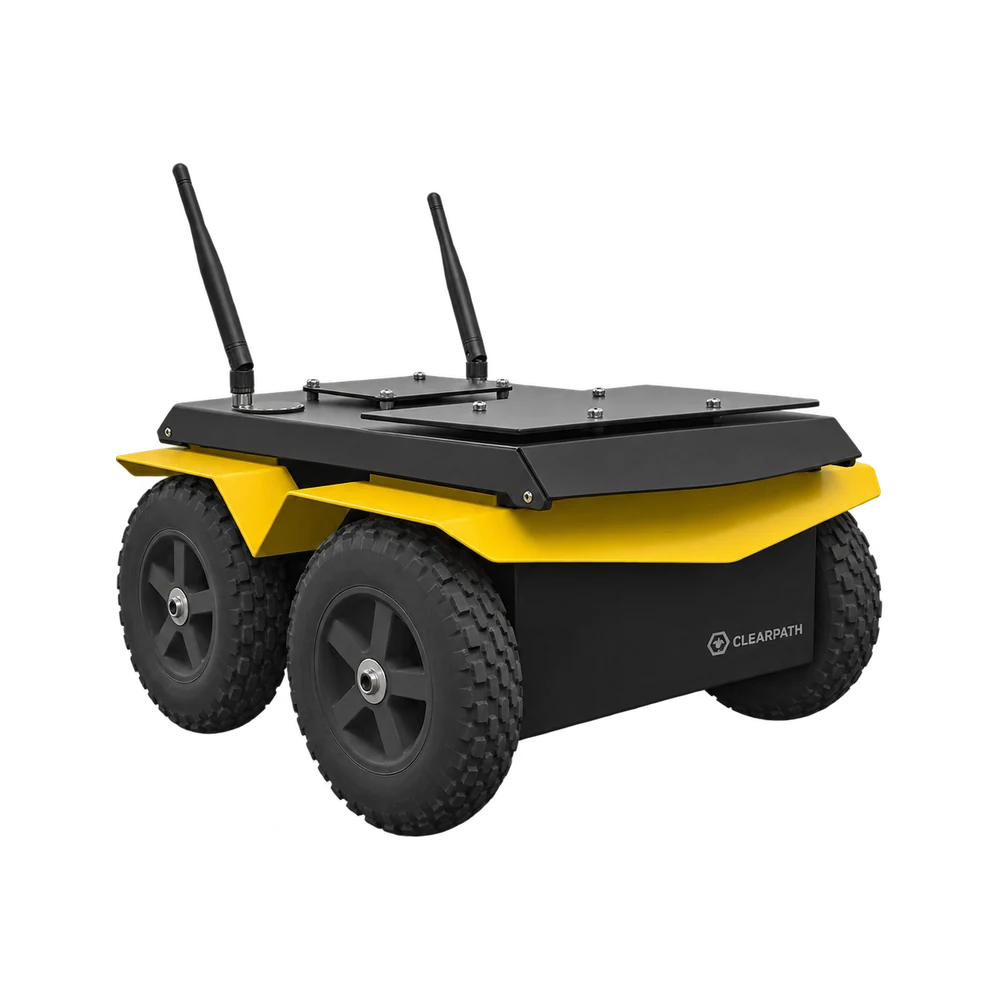
Clearpath’s lightweight field robot pairs a 17 kg base with a 20 kg instrument payload. It serves labs developing navigation systems across several sites, where transporting the vehicle and measuring setup together matters. A computer, GPS, inertial unit and odometry are already onboard for comparing motion estimates. The mounting deck accommodates additional project-specific sensors.
The base weighs 17 kg before test equipment is fitted. This is the starting weight when planning transport between test sites.
The base carries up to 20 kg of materials or equipment. Instrument weight can therefore exceed the empty vehicle weight of 17 kg.
GPS, the inertial unit and wheel odometry supply data for studying motion. Compare satellite position with the motion estimated from wheel rotation.
The lid has an 80 mm mounting pattern for additional instruments. Design the brackets for your experiment before heading to the field.
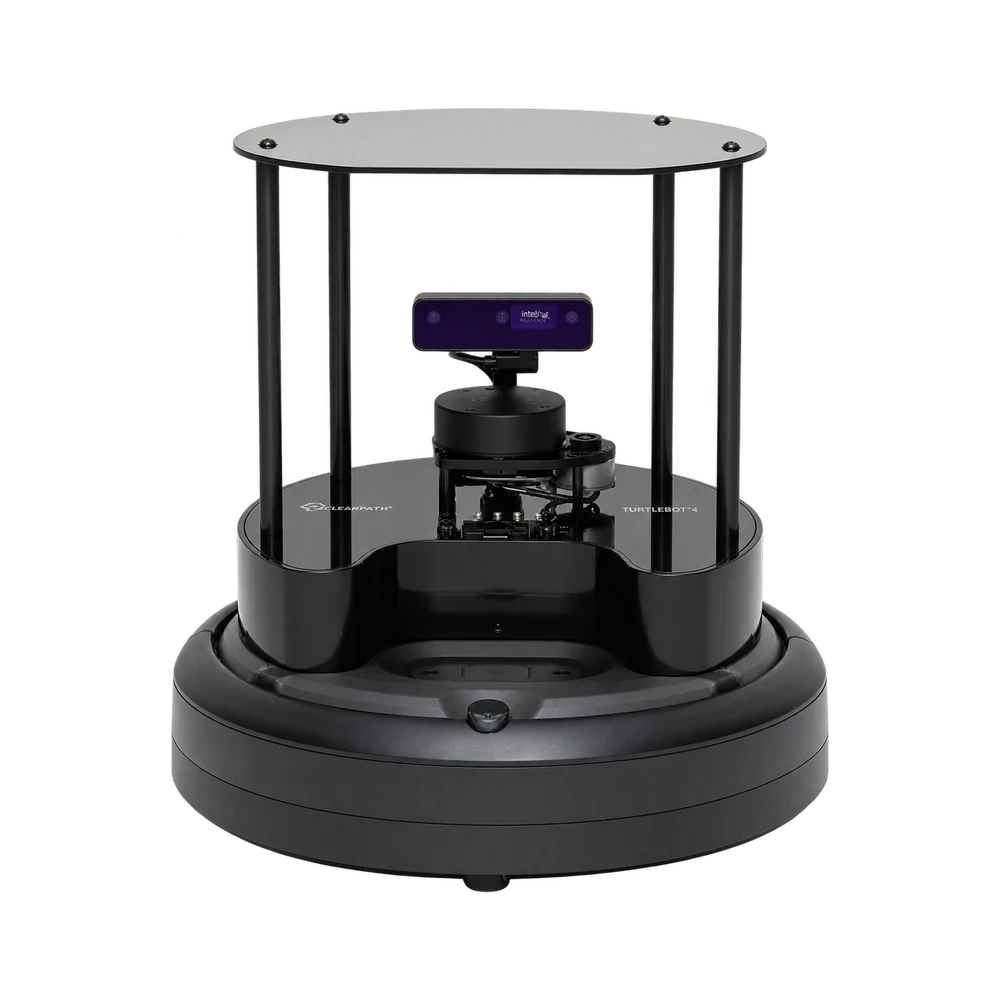
Clearpath’s education robot brings ROS 2 into the classroom as a complete platform for navigation, mapping and perception courses. The iRobot Create 3 base comes with a battery and charging dock, while 2D lidar and a stereo camera provide real distance and depth data. Readings are available over the network for programming exercises. Standard and Lite share the base and differ in camera and expansion options.
The iRobot Create 3 educational chassis comes with a battery and charging dock. Between exercises the robot can return to its designated charging point.
The 2D lidar measures distances around the robot for a floor-plan map. Students can compare the resulting map with actual measurements of the corridor.
The OAK-D stereo camera senses depth. The camera version differs between Standard and Lite. The Standard uses OAK-D-Pro and the Lite uses OAK-D-Lite.
Sensor data is published on the network as ROS 2 topics for practical exercises. Use the same readings for both mapping and localisation exercises.
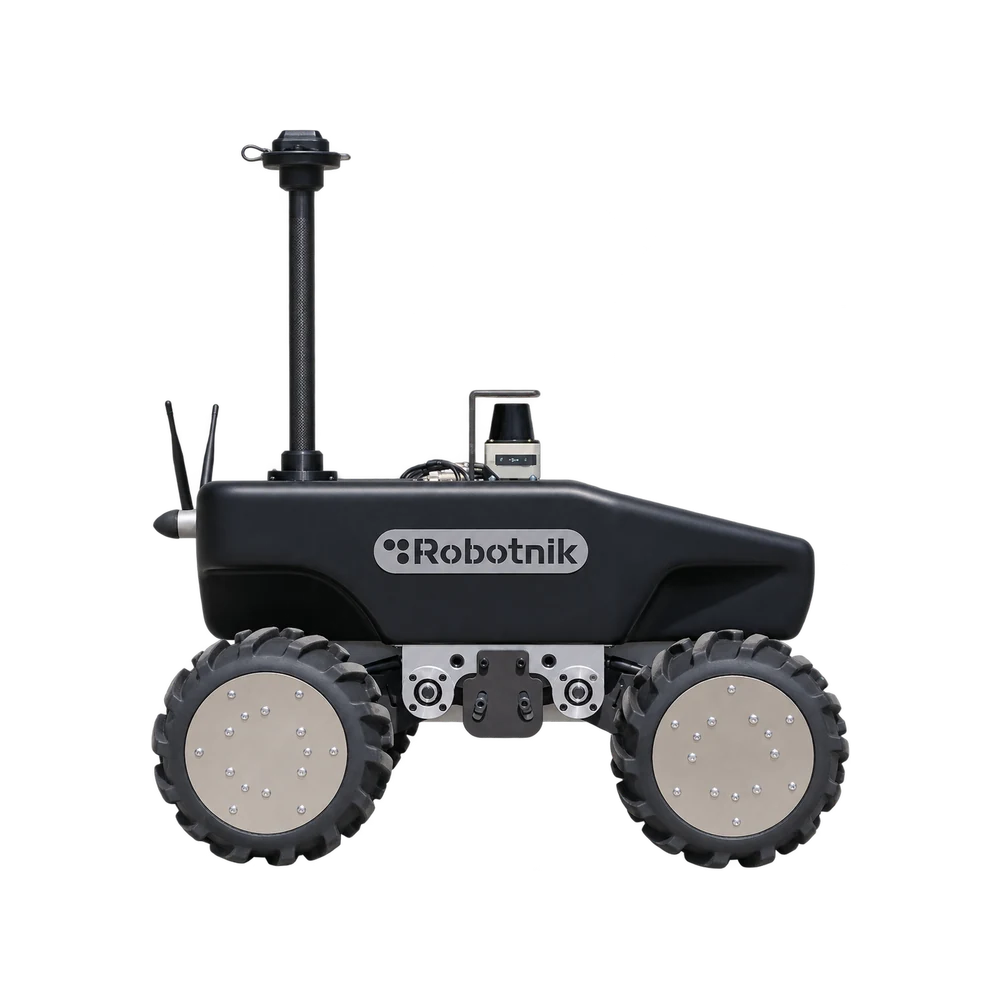
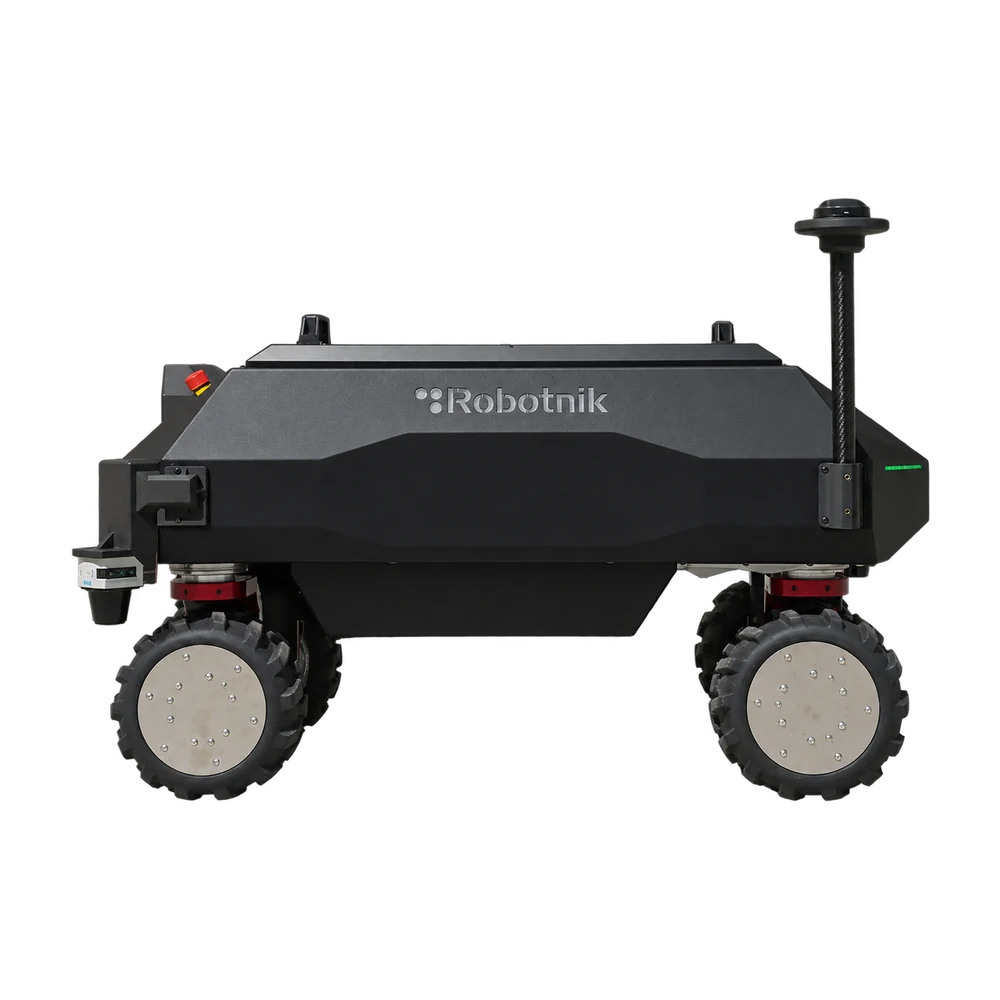
Robotnik’s indoor and outdoor research platform offers autonomous navigation, open ROS 2 architecture and a 50 kg payload. It serves teams developing transport, agriculture and inspection applications for simulation and subsequent field trials. Included 2D lidar and RGB-D vision provide environmental perception. Optional GPS and 3D lidar extend the platform to projects requiring geographic references or three-dimensional surveys.
The IP54 chassis protects internal equipment against dust and splashing water. Move from lab work to outdoor trials after checking exposure along the route.
The RGB-D camera delivers colour images with scene depth. Associate a visible feature with its distance from the robot during a test.
The standard 2D lidar package covers a 276° arc. The coverage angle indicates which part of the path appears in each scan.
You can add GPS or 3D lidar for outdoor surveys. The former gives a geographic reference, the latter measures three-dimensional geometry.
Robotnik’s outdoor omnidirectional base carries up to 150 kg in agricultural research, logistics and construction projects. Sideways mobility is its defining feature: instruments and materials can approach a crop row or workstation on uneven ground without turning with the vehicle. RGB-D vision supplies colour images and depth. ROS 2 architecture and optional positioning sensors support application development.
The base carries up to 150 kg of materials or equipment. This capacity allows supplies for the agricultural trial to travel on the same run.
The omnidirectional base shifts sideways without rotating the instruments. Keep optics pointed at the crop row while changing the imaging distance.
The RGB-D camera delivers colour images with scene depth. Associate what you see along each row with its distance from the camera.
GPS, a reference station and 3D lidar are optional survey equipment. Associate each reading along the row with a geographic position.
AgileX’s compact tracked robot combines a 57 cm width with a 25 kg payload for inspections and surveys in narrow spaces or over rough ground. Christie suspension and differential track drive help the chassis cross thresholds and small obstacles. IP67 protection suits outdoor projects exposed to dust and moisture. Optional cameras, environmental sensors and navigation kits complete the platform according to the data required.
The base carries up to 25 kg of materials or equipment. Sensors, enclosures and mounting brackets must fit within that combined limit during inspection.
Relative track speeds determine the direction of travel. Measure how much space a turn requires on each surface along the route.
The manufacturer specifies obstacle clearance of up to 100 mm at full load. Compare that height with thresholds along your inspection route.
Add a navigation kit to map the route and run autonomous rounds. The kit adds localisation along the route to the base platform.
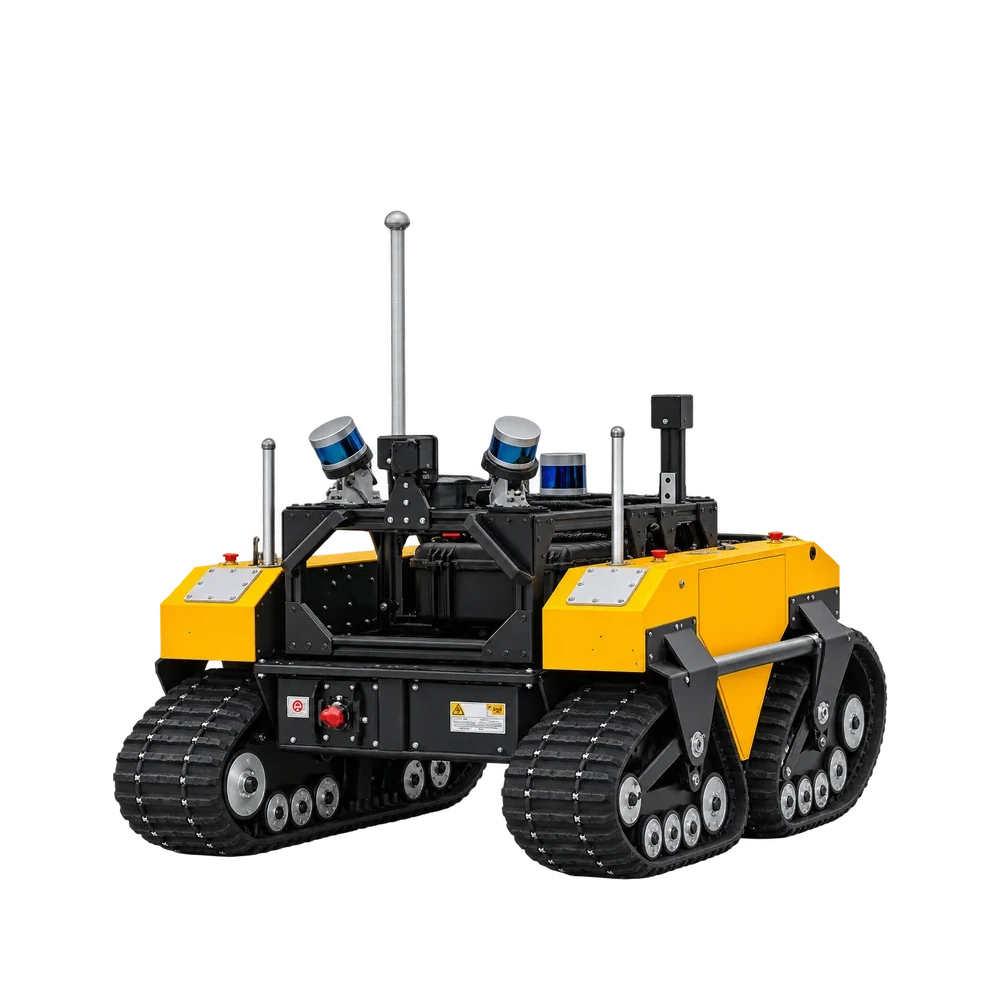
The four-track Warthog is an electric research platform for snow, sand and soft terrain. It serves field surveys where traction and low ground pressure matter as much as instrument space. Its large chassis accommodates surveying equipment and project-specific payloads. The optional teleoperation kit sends the onboard camera view to the station from which the operator monitors and drives the vehicle.
This configuration fits track units in place of wheels. Clearpath documents a separate software configuration for this drive arrangement.
The tracks draw more current, so the manufacturer recommends lower speeds to extend field runtime. Load and route affect the actual operating time.
Additional instruments or an arm mount can be fitted for the experiment. The software model can represent modules fitted to the base as well.
The optional teleoperation kit sends the operator live images during a survey. The communications station is part of that configuration.
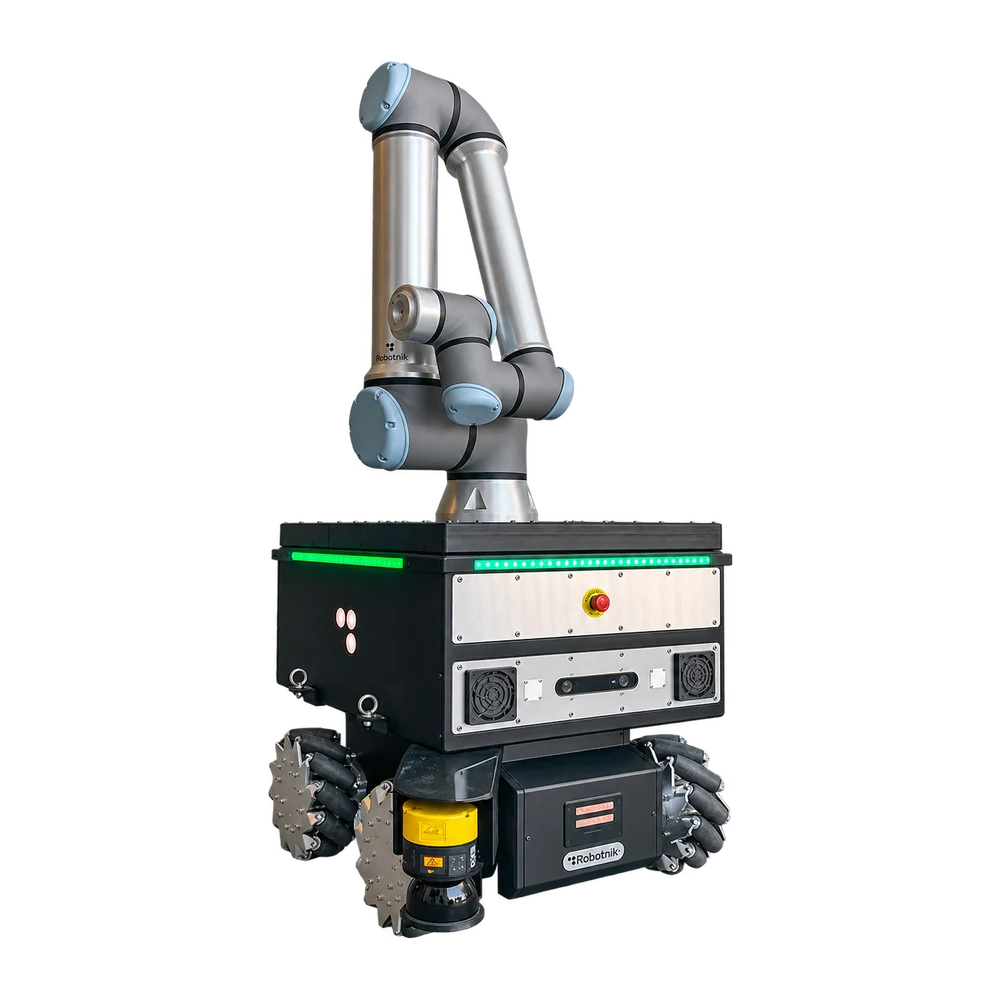
Robotnik’s industrial mobile manipulator combines an omnidirectional base with a Universal Robots collaborative arm to serve multiple machines in one department. Mecanum wheels enable sideways approaches while the arm picks and places parts. UR5e and UR16e configurations offer different payloads and reaches for machine feeding, packaging and quality control. The optional gripper or vacuum tool is selected for the material.
Mecanum wheels let the base pull alongside without turning the arm. It can line up with a bench even when arriving from a parallel aisle.
The UR5e version has a 5 kg payload and 850 mm reach. The UR16e offers 16 kg and 900 mm. Choose according to the part weight and depth of the machine.
Two 2D safety scanners monitor the area around the robot. Both are included in the standard package along with the safety controller.
Grippers and vacuum tools are optional and selected to suit the part. Include the weight of the selected tool in the arm payload.
Robotnik’s outdoor mobile manipulator combines VOGUI’s omnidirectional mobility with the positioning capability of a Universal Robots arm. It serves agricultural research, crop inspection and environmental data collection at specific locations. The base approaches the row and the arm brings the instrument to the required height and orientation. The UR5e configuration offers 850 mm of reach for application-specific sensors or tools.
Four steerable wheels enable movement in multiple directions in the field. Bring the arm to the next plant without reversing travel direction.
With the UR5e arm, wrist payload is 5 kg and reach is 850 mm. Use the reach to decide how close to position the base alongside the crop.
The RGB-D camera delivers colour images with scene depth. Depth adds a distance measurement to observations made along the crop.
Choose an optional gripper or a dedicated measuring tool to suit the trial. For a close-range trial, consider both the sensor’s mass and dimensions.
Pudu Robotics’ collection robot for table clearing and carrying used dishes. Its roomy compartment and adjustable shelves hold plates, glasses and containers from several tables for transfer to the washing area. The splash-resistant interior suits the conditions of this service. Designed for restaurants, canteens and catering operations with peak clearing periods, it also supports calls from the floor through an optional pager.
The 120-litre compartment carries up to 60 kg in total. One trip can collect dishes from several tables.
Remove trays or reposition them at five levels to make room for taller dishes. Collection boxes are sold separately.
An optional pager lets staff call the robot to a collection point while they are working on the floor.
The inner compartment has an IPX5 water protection rating. This is the area exposed to splashes when staff load used dishes.
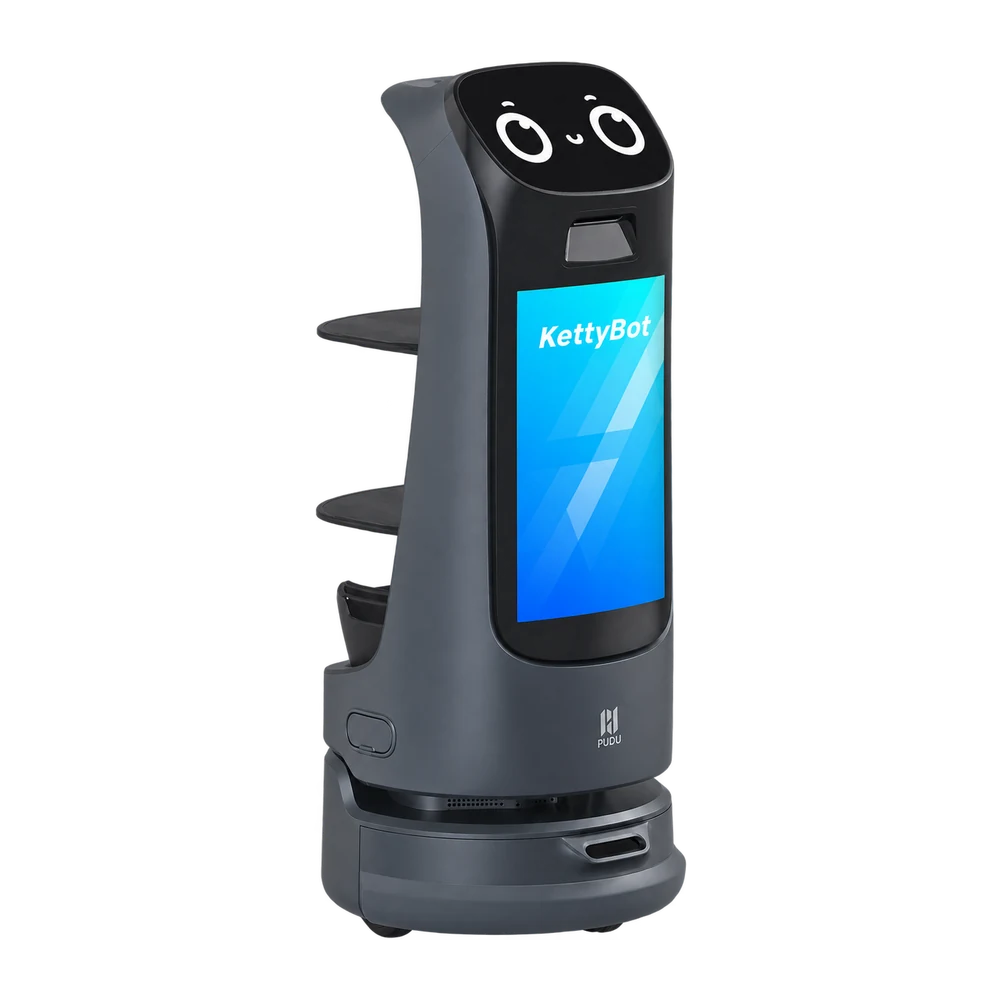
The Pudu Robotics reception and delivery robot with a front display for menus and promotions. KettyBot Pro escorts guests, presents tailored content and carries orders through the dining room. Its compact body suits aisles between tables and shelves, while pickup detection allows service to continue after delivery. A platform for restaurants and retailers combining wayfinding, communication and transport.
At the entrance, assign a table and the robot guides guests along a planned route through the dining room.
The front display shows custom content. You can select what to show as the robot passes through a particular area.
A wide-angle camera monitors the tray. The robot detects when an item is removed and can continue to the next delivery.
Multi-destination delivery lets staff set several stops and load dishes for different tables for a single run.
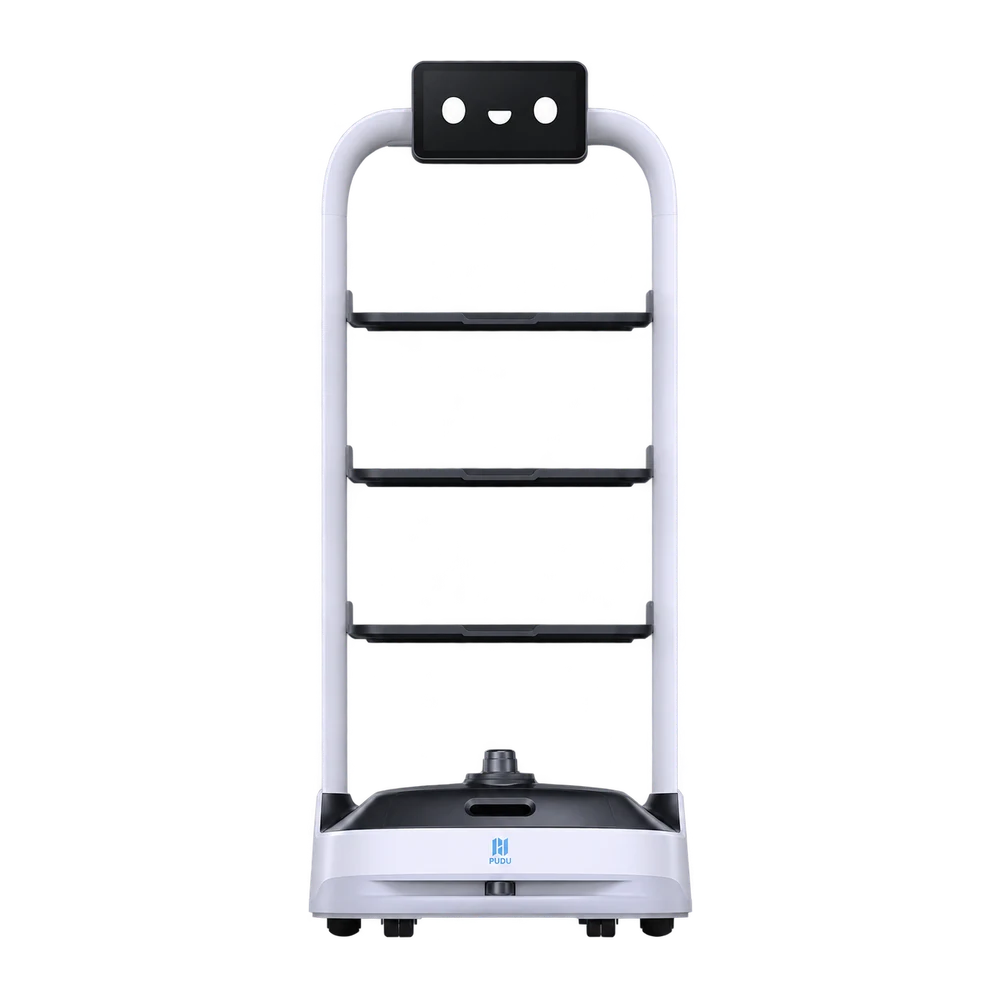
Pudu Robotics’ multipurpose delivery robot for restaurants, hotels and commercial venues. Its open shelves carry dishes, trays and small items between kitchens, dining rooms and service points. Navigation without ceiling markers also suits large, high-ceilinged spaces. Dedicated delivery, cruise and dish-return modes let the same robot serve different roles throughout the day.
The navigation system uses visual references without installed markers. PUDU lists operation in rooms with ceilings up to 30 m high.
Each tray measures 52 × 43.2 cm. Compare this with your plates and containers before planning a delivery round.
The total payload is 40 kg. Count the containers along with all orders distributed across the trays.
Delivery and collection modes let you assign both outgoing orders and the return trip for used dishes.
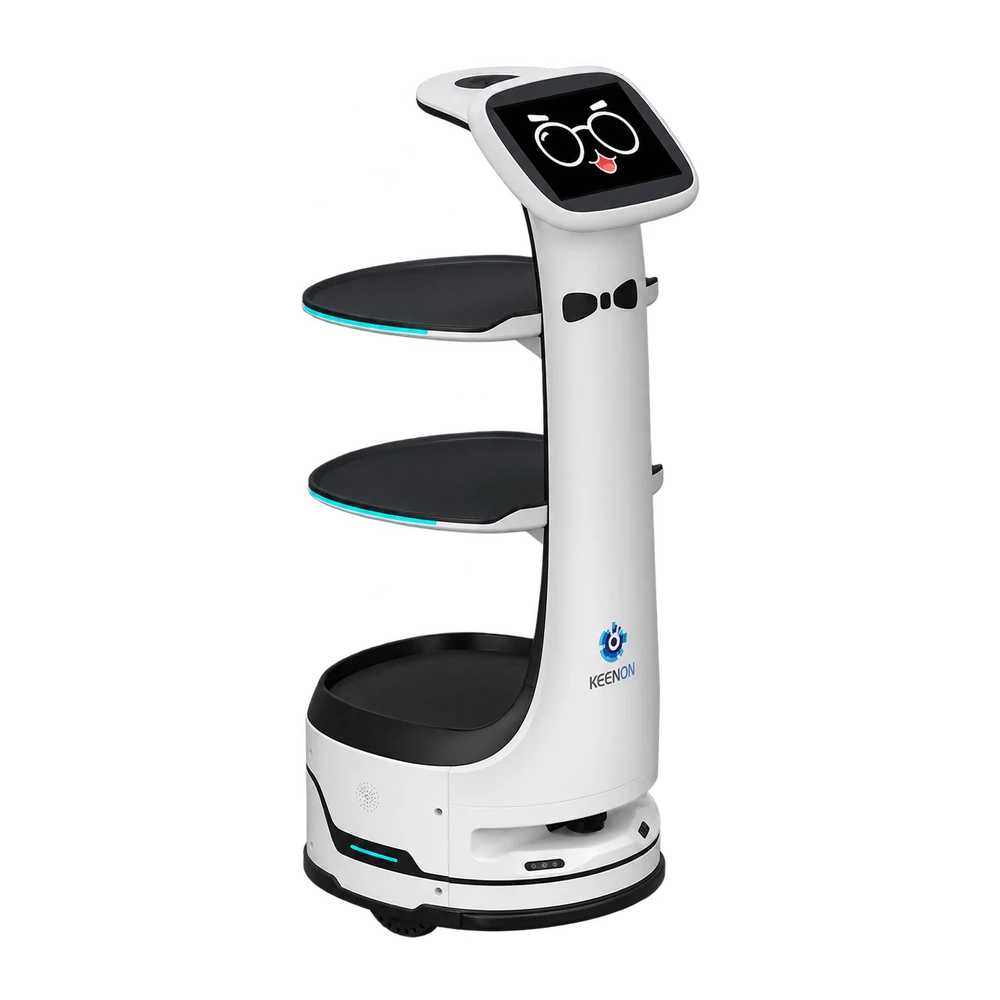
KEENON’s compact service robot for narrow aisles and closely spaced tables. DINERBOT T8 pairs a slim body with trays accessible from multiple sides, letting guests reach their dishes even where space in front of the table is limited. Tray sensors, voice prompts and a screen guide order pickup. It suits delivery in restaurants, cafés and venues where aisle width matters.
The manufacturer specifies a minimum passage width of 55 cm. Use this figure to identify the tightest sections of the route.
The trays have a 300° opening. At the table, guests can reach their dish from the side as well.
A 10.1-inch screen, tray sensors and voice prompts guide guests to the dish they should collect.
Three stereo vision sensors detect obstacles at different heights. This lets the robot spot low objects on the floor as well.
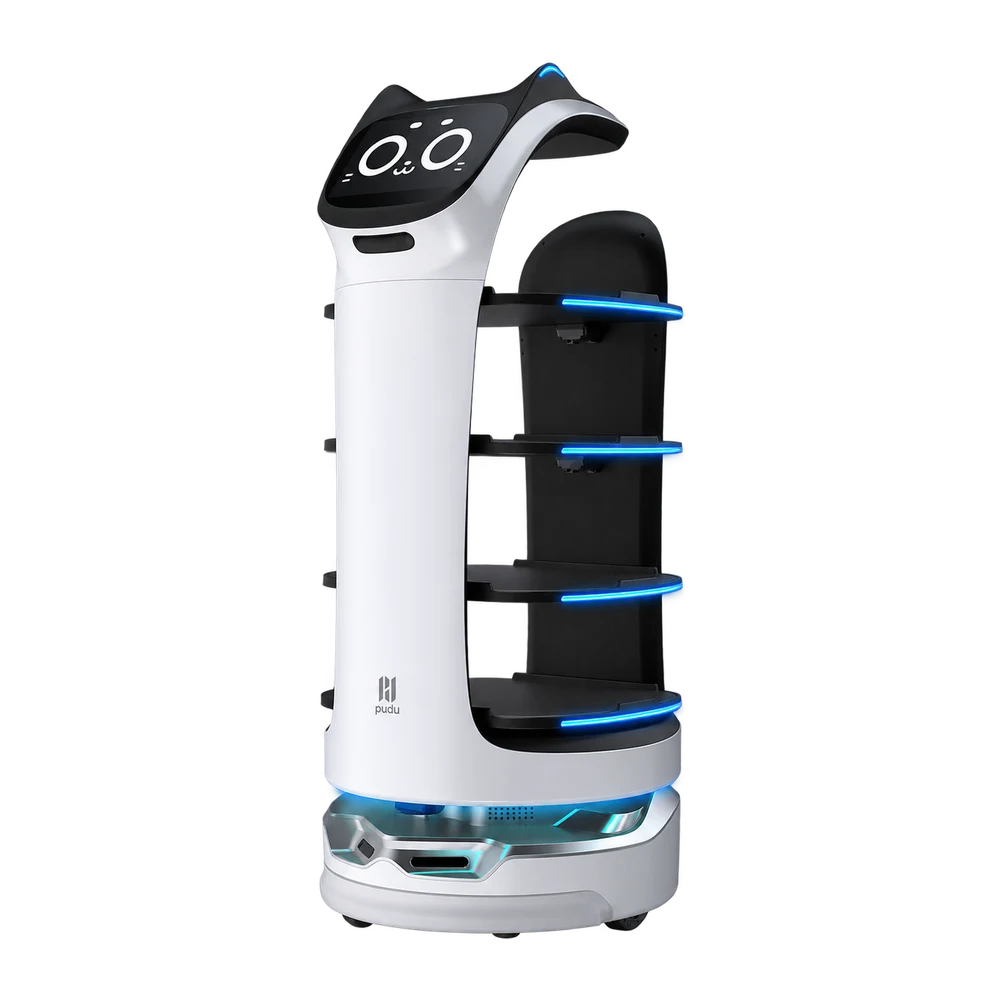
Pudu Robotics’ cat-faced delivery robot for customer-facing service. BellaBot delivers food and drinks to tables and interacts with guests through expressions, lights and touch responses. Removable trays with infrared sensors organise orders, while a swappable battery supports use across shifts when a charged spare is available. It suits restaurants and venues where delivery is part of the dining experience.
Distribute up to 40 kg of dishes and food across four trays. Each tray carries a maximum of 10 kg.
Infrared sensors detect the load on the trays. The shelves are removable so staff can access their surfaces.
An animated face, lights and touch responses let the robot interact with guests when it reaches the table.
Swap a depleted battery for a charged one to resume deliveries without waiting for the battery to charge on the robot.
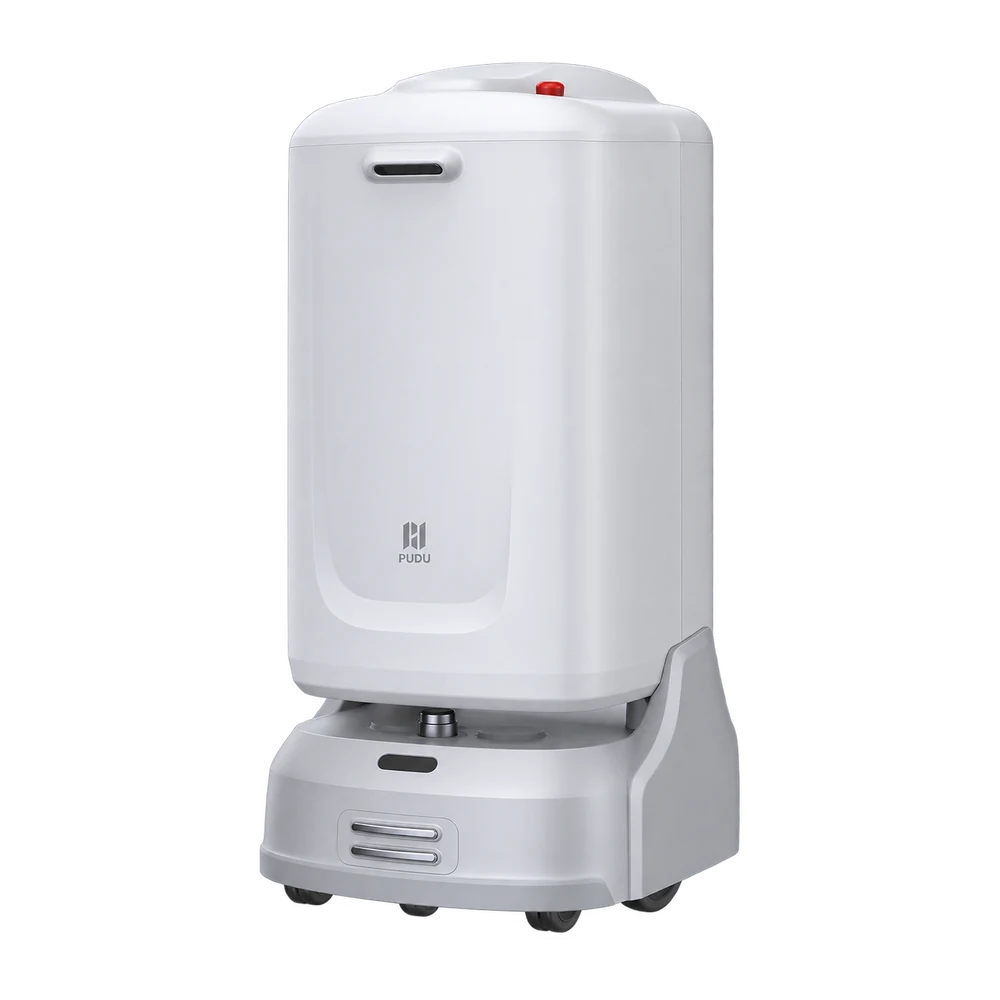
Pudu Robotics’ delivery robot for controlled handovers between floors in hotels and service buildings. FlashBot Max carries items in closed, configurable compartments with recipient verification at pickup when enabled. Integration with compatible lifts extends its route from reception to the guest-room floor. Separate compartments and controlled access distinguish it from open-tray robots used in dining rooms.
Divide the cabin into two, three or four compartments. Prepare orders for several recipients or leave more space for larger items.
A compartment can require a code, a phone number or NFC identification to open, depending on the configured method.
The robot can call and use the lift once it is integrated with the building controls. Check the configuration for each installation.
PUDU specifies 60 cm of clear passage. Check doors and corridors against this figure before planning stops on each floor.
When a bin of parts runs out on the shop floor, someone has to fetch another. We walk the route with the person who supplies the line to see which part of the journey a robot could take on.
We test doors, thresholds and junctions using your bins. If the route connects two buildings, we also check the surface and slopes outside.
With the people at the workstation, we choose where the robot stops, who unloads the parts and where empty bins go for the return trip.
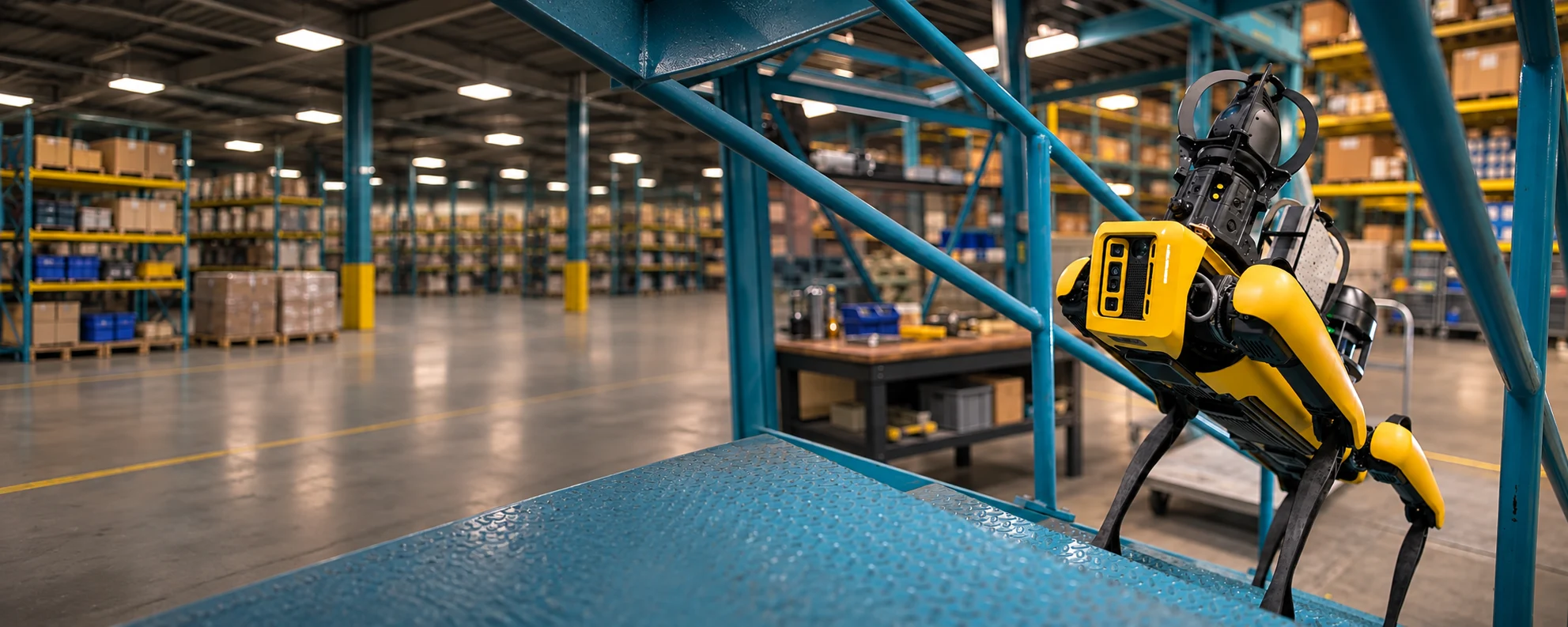
When an alarm comes in, the operator on duty needs to see what is happening at the plant. With your technician, we choose which panels to inspect and which instruments to read on routine rounds as well.
We set the stops for the automated round. At a pressure gauge, we test distance, lighting and camera angle until the scale is legible. You can then compare the photo with the previous shift’s.
We check where the connection is available. From the control room, the operator can drive the robot to the reported location, aim the camera and decide whether to send a technician.
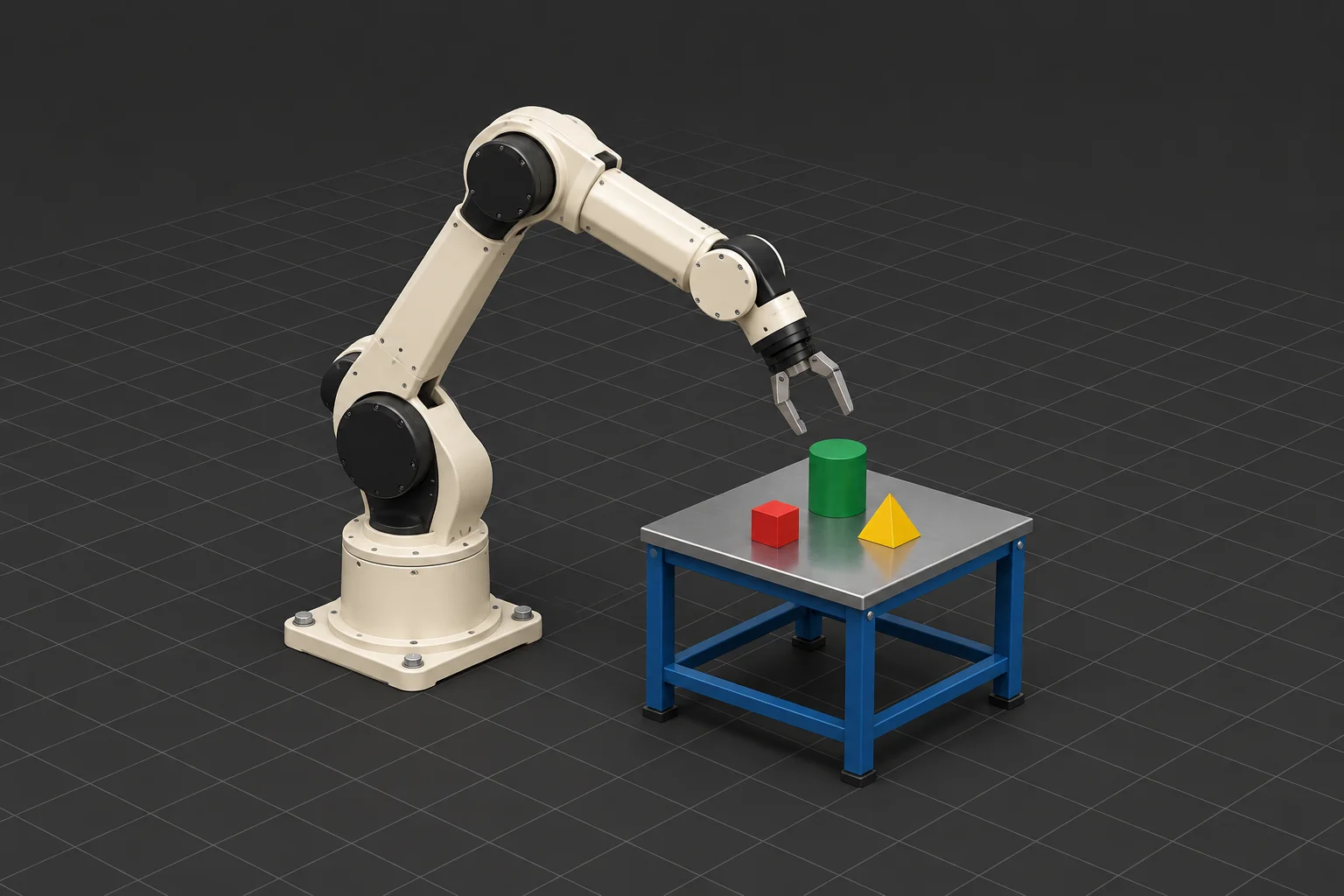
If you teach robotics or are preparing an experiment, we start with a question you can test. For instance, can an arm still pick up the same object if you move it across the bench?
We recreate the bench and choose the objects with you. Students try the movement and change one thing at a time, such as the part’s position or the gripper opening.
We move to the physical arm and record when the grip holds and when the part slips. You can repeat the exercise with the next group under the same conditions.
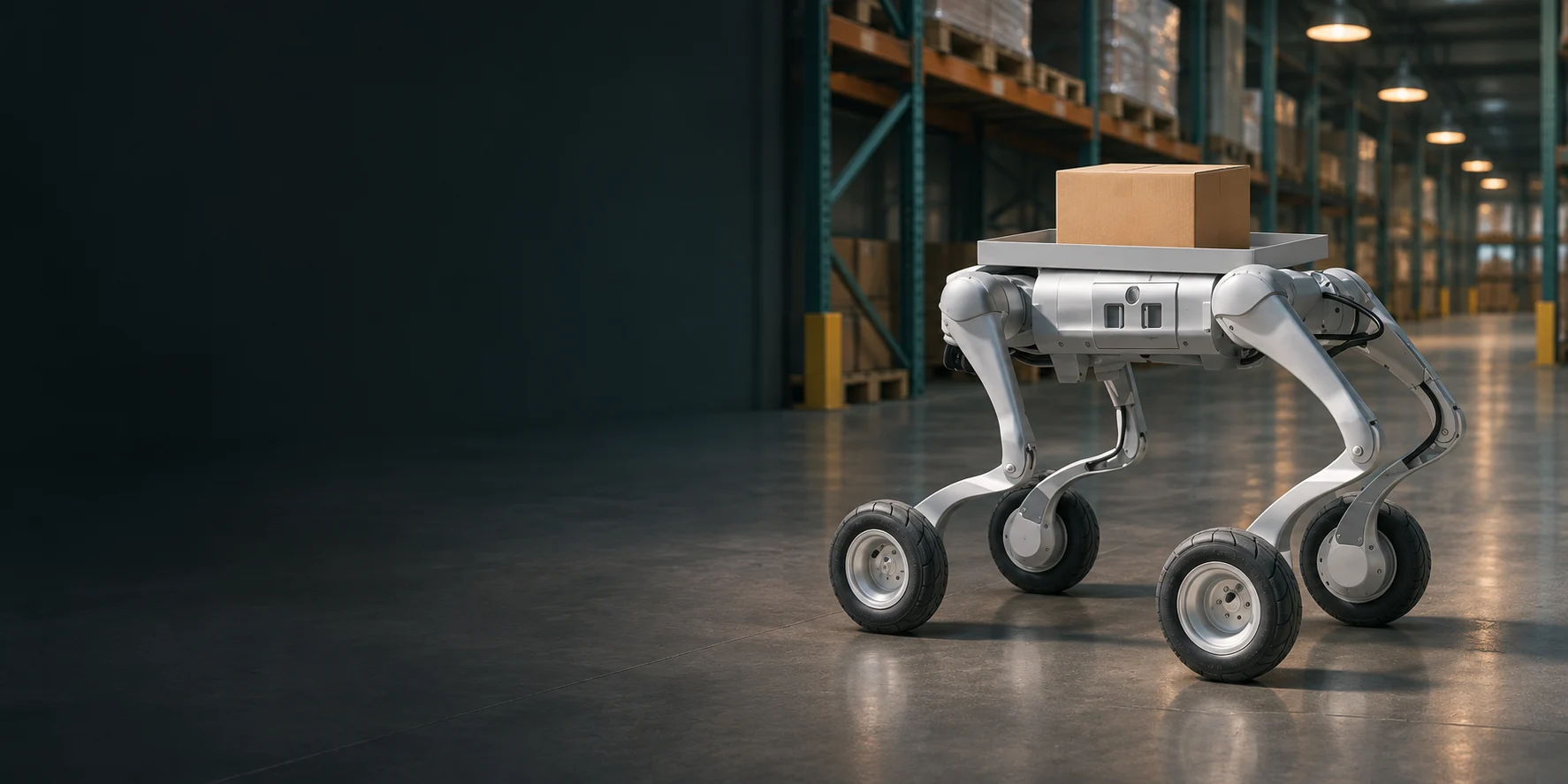
We follow an order with your dispatch team, from the pick list to the bin ready for packing. Together we choose a workstation and a few items the team handles regularly.
We test the arm with your packaging. We check whether it can read the code, keep its grip and place the parcel in the bin without crushing the cardboard.
We check with you how to record the item in your system. If a code is unreadable, we agree where the parcel is set aside and who checks the order before closing it.
Before the site visit, tell us what you need to document. It might be the condition of a section of line or progress on an excavation before it is backfilled. We agree the shots with the people overseeing the work.
On the site plan we mark where the robot should stop and which way the camera should face. We use the same reference points on the next visit. If access changes, we record where the new photo was taken.
We organise the images by section and date. You can show the crew how far the work has progressed and mark points to check on the next round.
When the road ends and the crew continues on foot, what do they need to carry? Together we put together a typical day’s load, from the toolbox to spare batteries.
We weigh the equipment and try loading it onto the robot. With someone who knows the trail, we check how the loaded robot handles slopes, uneven ground and narrow passages.
During the trial we record travel time, stops and stretches where the robot needs help. You can then decide how far it should accompany the crew and where to unload the tools.
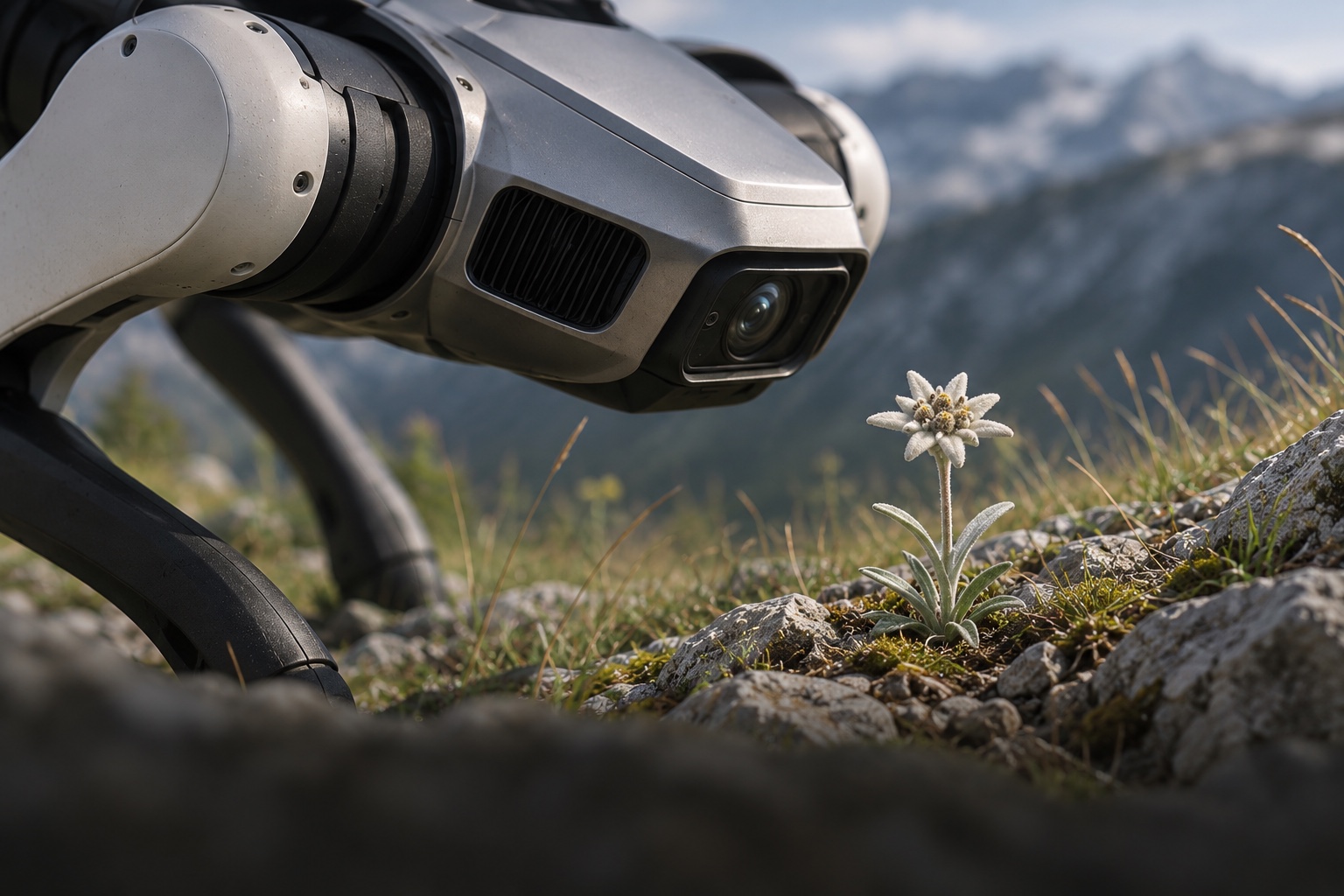
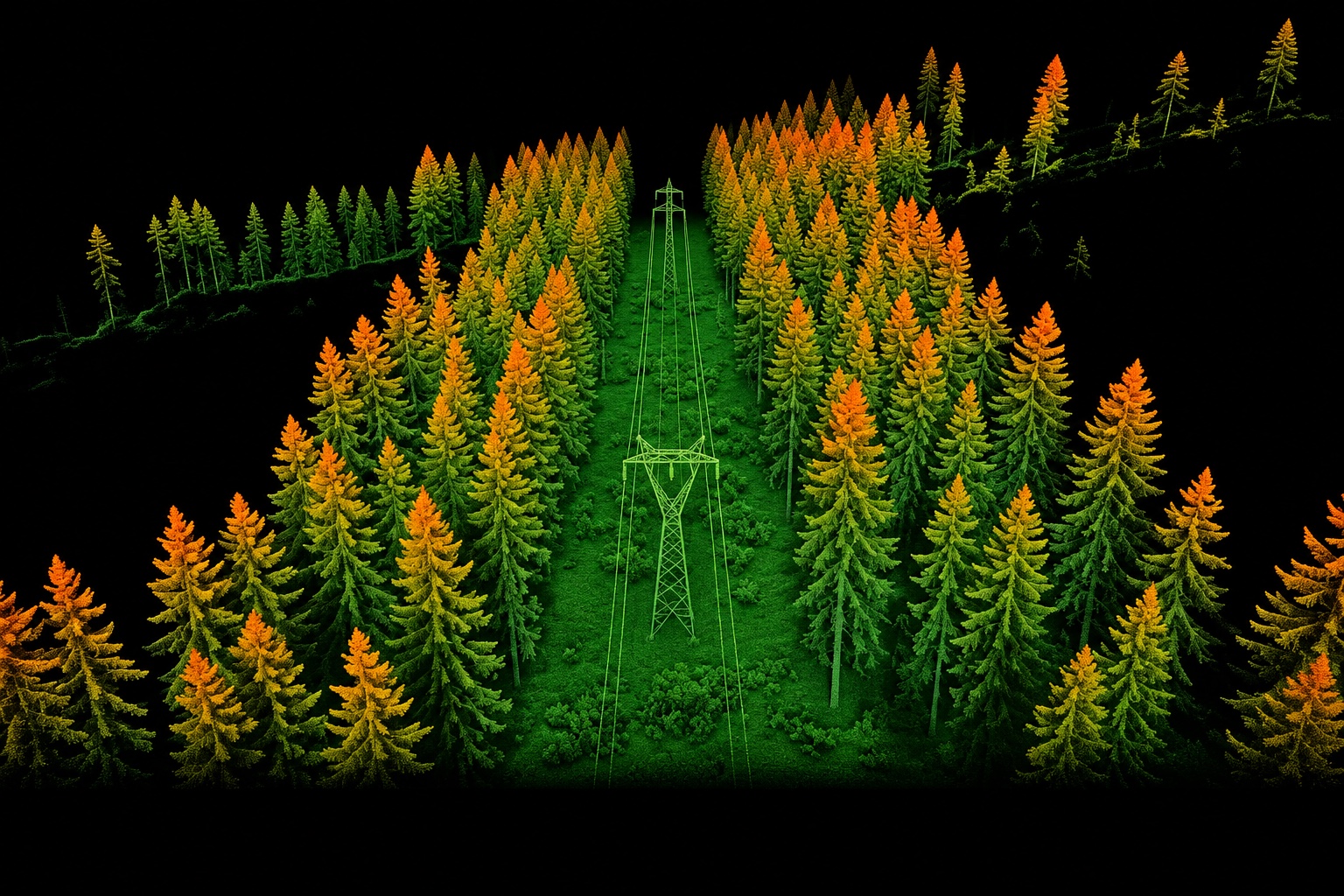
If you monitor vegetation on a slope, a photo is more useful when you know where and when it was taken. With the people who look after the area, we choose what to observe and which points the robot can reach.
We agree where the robot can travel, which areas to leave undisturbed and when to return. On the first visit we check that the detail you want to observe is visible in the frame.
For each point we keep the date, photos and field notes. You can compare two visits, follow flowering over time or flag an area for the field team to revisit.